Five Grief Communities Compared: Which One Fits How You Actually Grieve

The Dead Dads Podcast

The grief counseling market is projected to hit $4.03 billion in 2026 — growing at nearly 10% annually, according to GlobeNewsWire data cited by LastWithYou. Which means there are now a lot of places promising to help you through losing your dad. Most of them were not built with you specifically in mind.
The options range from peer-matched platforms to anonymous forums to podcast communities to dinner-table gatherings. The format differences matter more than most people realize before they sign up, sit awkwardly through one session, and conclude that grief support just isn't for them. It usually is. The format just wasn't right.
This is a comparison. Five communities, real differences, honest opinions about who each one actually fits.
The Question That Narrows This Down Fast
Before looking at any platform, answer this honestly: how do you actually want to show up? Not how you think you should. How you realistically will at 11pm on a Tuesday when the grief lands sideways and you have thirty minutes before you need to be a functional person again.
Four variables determine fit more than anything else. First: do you want to read and listen, or do you want to talk? Second: do you want to be anonymous, or are you okay being known? Third: do you want structured guidance, or do you need somewhere that just lets you exist without an agenda? Fourth: does it need to be men-only, dad-loss-specific, or is broader loss okay?
More than 57% of Americans reported experiencing a major loss in the past three years, according to Eterneva data. The demand is real. But most community platforms are still built around the assumption that you want to talk in groups on a schedule — which is exactly the format that a significant portion of men will never use, regardless of how much they need support. 2019 research cited by Healthline confirms that support groups can ease grief and reduce depression symptoms — but only for some people. Fit matters more than format.
So: pick the one that matches how you actually are, not the one that sounds most therapeutic.
For the Guy Who Wants to Listen First, Talk Later: Dead Dads Podcast
The entry point here is passive. An episode during a commute. Show notes at midnight. A clip someone sent you that made you feel, uncomfortably, like it was recorded specifically about you. That's how most people find Dead Dads — and the low-stakes start is part of what makes it work.
Hosted by Roger Nairn and Scott Cunningham, both of whom lost their own fathers, the show was built because, as Roger put it in a January 2026 blog post, "we couldn't find the conversation we were looking for." That's not a marketing line. It's the actual reason the show exists — and you can hear it in the episodes. The perspective is lived, not clinical.
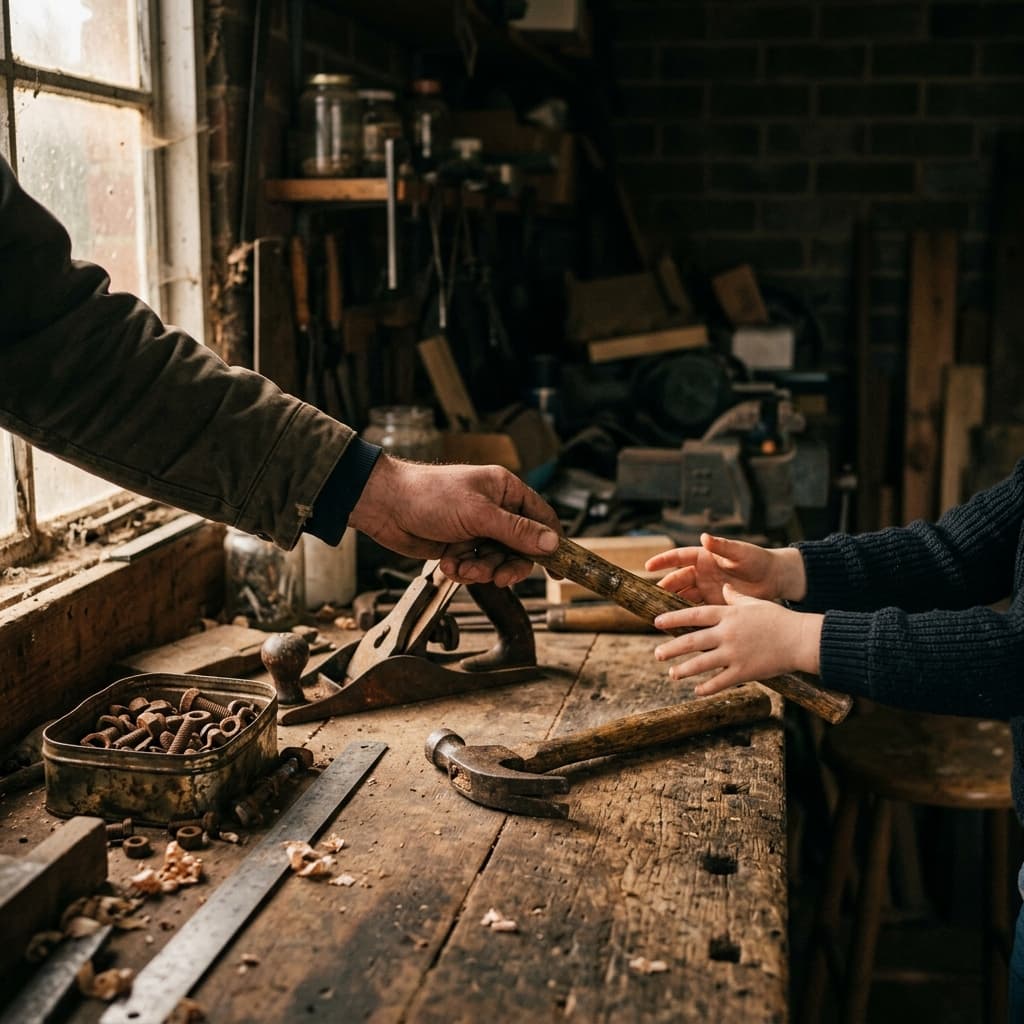
What Dead Dads covers that most grief spaces skip: the paperwork marathons, the password-protected iPads, the garage full of tools you have no idea how to use, the grief that ambushes you in a hardware store. Practical and emotional, in the same conversation. The tagline — Death. Jokes. Closure. Not always in that order. — signals immediately that humor isn't something to apologize for. If you've ever laughed at a funeral and then felt terrible about it, there's a whole post on how to use dark humor when your dad dies without the guilt that addresses this directly.
Listener Eiman A. wrote in January 2026: "It's the type of pain that I bottle up and keep to myself. I felt some pain relief…" That's from the verified reviews page, and it describes exactly what this format does — it reaches the guys who are absolutely not going to call a hotline or sit in a circle.
The community entry points on the website are deliberately low-barrier: leave a message about your dad, suggest a guest, write a review. No group therapy commitment. No live call you have to show up for. The show is available on Spotify, Apple Podcasts, YouTube, iHeartRadio, and more — and episodes are browsable by topic, so you can go straight to whatever's hitting hardest right now.
Best fit: Men who process privately. Men who want to hear themselves in someone else's story before they say anything out loud. Men who would rather skip the clinical framing entirely and just hear two guys talk honestly about what this is actually like.
For the Guy Who Wants a One-on-One Match: Grief in Common
Grief in Common is a peer-matching platform. It connects you with someone based on the specific type of loss you experienced — not grief in general, but your loss, mapped to someone who's been through something similar. Healthline named it best for all types of loss. Verywell Mind called it best for peer support.
The key differentiator is the match structure. You're not joining a group. You're not scheduling time with a therapist. You're getting one person who lost someone similar and is willing to talk about it. For men who are genuinely open to a real conversation but will not do it in front of a crowd — virtual or physical — this format removes the biggest obstacle.
There's no performance pressure. You're not sharing your story to a room. You're talking to one person who already gets the basic shape of it because they've lived something close. That's a very different experience from a moderated group session, and for a certain kind of person, it's the only format that will actually work.
Best fit: The guy who wants a real conversation but not a spotlight. The one who would open up one-on-one but shuts down the moment the audience gets larger than one.
For the Guy Who Just Needs to Know He's Not Alone: Grieving.com Forums
Grieving.com is anonymous, asynchronous, and always open. The Loss of a Parent subforum has 25,400 posts. Whatever you're feeling at 2am — the thing you haven't said to anyone, the thing that sounds unreasonable even inside your own head — someone in that forum has already typed it.
The format removes all social stakes. No profile photo. No name anyone recognizes. No group you have to show up for twice a week. You write what you need to write, you read what other people have written, and you leave. Or you stay and respond. No one's tracking your engagement.
This matters specifically for men who are not ready to use their name, their voice, or their face. The research on grief support consistently finds that anonymous formats reach people who wouldn't access help otherwise. You're not ready to call it grief support. Fine. Call it a forum you found.
Best fit: The guy who would never call a hotline, would never attend a meeting, but will type into a text box at midnight because there's no audience. He just needs to say it somewhere, even if no one answers.
For the Under-45 Guy Who Wants Real Life Back: The Dinner Party
The Dinner Party is structured around small gatherings — in-person or virtual — of people in their 20s, 30s, and early 40s who've experienced significant loss. It's built around a shared meal and conversation, which means grief is the context, not the entire agenda.
Verywell Mind named it the best option for young adults, and the reason is specific: it was built for people who lost someone young, when their peers hadn't yet. A 26-year-old who lost his dad doesn't have many friends who understand what that's like. His peer group is mostly intact. The isolation isn't just about the loss — it's about being the only one in the room who knows what this feels like. What's Your Grief documented this exact problem in a reader question from a 26-year-old trying to build a support system when no one around her had been through anything similar.
The Dinner Party format solves for that. It puts you in a room — or a Zoom — where everyone else is also the youngest person in their friend group to have lost a parent. The grief isn't the whole conversation. The shared context is the entry point.
Best fit: The guy in his mid-20s to late-30s who lost his dad young and feels stranded in a peer group that hasn't been there yet — and wants connection that doesn't feel like group therapy, because he'd never go to group therapy.
The Trap That Makes None of Them Work
Most people join a grief community, lurk for two weeks, don't post, and quit. Then they conclude it wasn't for them — when the real problem was the format didn't match how they actually process things.
If you hate talking in groups, a live group session will confirm that you hate talking about grief. That's not a finding about grief support. That's a finding about group formats. The format was wrong; the conclusion was too broad.
It's also worth separating typical grief from something that may need more than community. An estimated 4% to 15% of bereaved adults develop prolonged grief disorder, a condition formally recognized in the DSM-5-TR since 2022, according to the American Psychiatric Association via LastWithYou. If what you're experiencing has been shutting down your life for an extended period — not just hitting hard, but paralyzing — a peer community is a starting point, not a substitute for professional support. The Dead Dads website maintains a grief resources page with crisis lines for Canada, the US, and the UK if you need somewhere to start with that.
Pick the format that matches the version of yourself that shows up at 11pm, not the version you wish you were. That's the one that will actually stick.
Where to Start
If the Dead Dads format sounds right — passive entry, honest tone, occasionally funny, built for exactly this kind of loss — start with one episode. Browse by topic at deaddadspodcast.com or subscribe on Spotify or Apple Podcasts. If you want to leave something behind — a message about your dad, a guest suggestion, a review — the site makes that easy too, with no commitment attached.
And if you're at the stage where you're also thinking about the conversations you haven't had yet, there's a related piece worth reading: what it actually costs you to keep putting off the talk with your dad. Some of the men reading this comparison are in both places at once.
Get the latest from The Fatherless Manual delivered to your inbox each week
More from The Fatherless Manual

How to Navigate Social Situations When You Grieve With Humor, Not Tears
You made a joke about your dad at the family dinner — a good one, actually — and the room went quiet like you'd said something terrible. That silence is its own

Why Grief Support Groups Fail Men — And What Is Quietly Replacing Them
Nearly a quarter of men say they would never consider professional therapy for mental health struggles, even when they're in crisis. Not because they don't need
How to Introduce Your Kids to the Grandfather They'll Never Meet
Your kid is going to ask about him. Maybe they already have — the casual, devastating "What was Grandpa like?" lobbed from the backseat on the way to soccer pra