
The Charleston property manager's guide to commercial gutter systems

GutterPros LLC
When heavy coastal storms hit the South Carolina Lowcountry, commercial property managers face the immediate challenge of protecting large roofs from catastrophic runoff. GutterPros LLC provides professional commercial gutter systems designed to handle the intense precipitation and high wind loads of the coastal region. This article outlines how to size gutters correctly, select durable materials, and position downspouts to prevent foundation erosion and water intrusion on local office complexes, retail centers, and multi-family housing units. By installing seamless 6-inch aluminum gutters and utilizing proper drainage strategies, commercial properties in Charleston, Dorchester, and Berkeley counties can successfully direct thousands of gallons of stormwater away from building foundations and walkways.
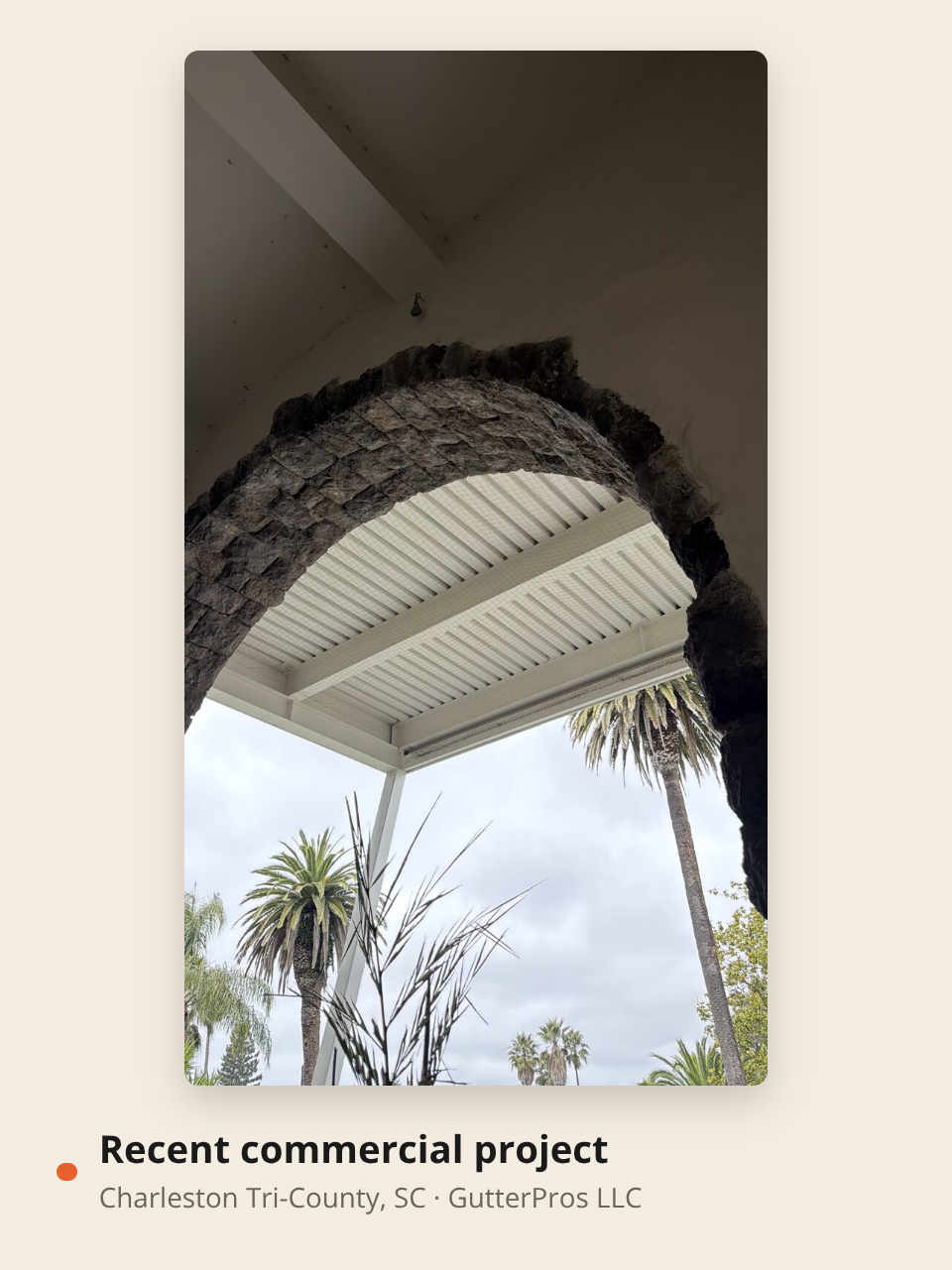
Sizing commercial systems for heavy rainfall volume
Let's start by addressing the sheer volume of water. Commercial buildings typically have expansive flat or low-slope roofs. When a summer storm dumps several inches of rain per hour, a roof of this size consolidates water at a rapid rate. If the gutter troughs are too narrow, water spills over the edge, drenching exterior walls and pooling at the building's base.
To avoid this, property managers must look beyond standard residential designs. Selecting the correct width and shape of the trough determines how well a building survives a torrential downpour. Here is how different gutter profiles compare when applied to properties in the Tri-County area:
| Gutter profile and size | Best application | Capacity profile | Key tradeoff |
|---|---|---|---|
| Seamless 5-inch aluminum | Residential homes, light office spaces, small retail fronts | Moderate water capacity; suited for shorter roof runs | May overflow on large commercial buildings with steep pitches |
| Seamless 6-inch aluminum | Standard commercial buildings, warehouses, retail plazas | High capacity; handles heavy coastal downpours | Requires stronger fastening systems due to water weight |
| Sectional gutters | Quick, temporary repairs or budget-constrained projects | Prone to leaks at the seams; limited overall capacity | High maintenance cost; joints fail regularly under heavy load |
Our team at GutterPros LLC frequently works with property managers who are dealing with the aftermath of undersized gutters. A standard five-inch system works well for average residential roofs, but it quickly becomes overwhelmed on commercial structures. For larger roofs, multi-tenant properties, and local retail centers, seamless 6-inch aluminum gutters are the industry standard because they hold significantly more water volume and prevent overflow during heavy cloudbursts. When comparing commercial options, it is helpful to review the structural differences detailed in the Charleston homeowner's guide to seamless gutters, sizing, and leaf protection to understand how water capacity changes between profiles.
Large roofs collect water from hundreds of squares of roofing material and funnel it into narrow channels. If your building has long roof runs or complex roof planes with internal valleys, you must size your gutter troughs and downspouts to manage peak rainfall intensity. Working with a professional gutter installation company ensures that the pitch of the gutters is accurately calculated so that water moves toward the downspouts rather than pooling in the middle of the run.
Managing Lowcountry environmental stress
The coastal environment of South Carolina introduces severe weather patterns that quickly ruin standard building materials. From intense tropical systems to persistent salt air, local commercial properties require highly durable gutter installations to remain operational. At GutterPros LLC, we have spent over 30 years helping property owners in North Charleston, Mount Pleasant, and Moncks Corner adapt their water management systems to these exact environmental stresses.
High wind resistance
According to local building codes, Charleston sits in a 140 to 150 mph ultimate design wind zone because of the constant threat of hurricanes and tropical storms. During a storm, wind uplift forces pull at the edges of the roof line. If a commercial gutter system is not securely fastened with heavy-duty hangers, the wind can rip the trough completely off the building. To counter these forces, gutter installations on commercial properties must use heavy-gauge aluminum and reinforced hangers spaced closer together than they would be in inland regions. This secure anchoring ensures the gutter remains fixed to the fascia even when subjected to extreme coastal wind pressures.
Salt air and corrosion
The proximity to the ocean means that salt-laden air constantly blows across the Lowcountry. This saline environment accelerates the oxidation of metals, causing standard steel gutters to rust, pit, and fail prematurely. Property managers should opt for high-quality aluminum gutters or specialty copper systems. Aluminum naturally resists rust and corrosion, making it the most cost-effective and durable choice for commercial structures near the coast. At GutterPros LLC, our seamless aluminum gutters are engineered with durable coatings that withstand the chemical degradation caused by salt air, preserving both the performance and the appearance of your facility.
Heavy debris loads
Commercial properties surrounded by mature live oaks, pines, and sweetgum trees face constant gutter blockages. When leaves and pine needles clog the downspouts, the gutter system fills with standing water. The weight of this water is immense; a single gallon of water weighs over eight pounds, and a clogged 100-foot run of gutters can hold hundreds of pounds of stagnant water. This excess weight causes hangers to sag, pulls the gutters away from the building envelope, and can rot the wood fascia board. Implementing a reliable leaf protection system, such as Klean Gutter Guards, helps keep debris out of the troughs while allowing large volumes of rainwater to flow freely through the downspouts. Even with guards, routine maintenance inspections are necessary to ensure the systems remain clear before the summer storm season begins.
Downspout placement and ground-level water management
Managing stormwater does not stop when the water leaves the roof line. The velocity and weight of water exiting a commercial roof can cause severe damage at ground level if the downspouts are poorly positioned. Large roofs collect and release thousands of gallons of water during a single heavy rainstorm, which can quickly erode professional landscaping, wash away flowerbeds, and pool against concrete foundations.
Properly configured water-management systems require engineered placement of downspouts to redirect water toward designated drainage basins or retention areas. Property managers must prioritize keeping water away from pedestrian walkways, loading docks, and customer entrances. When rainwater pours over walkways, it creates immediate slip hazards for employees and clients, increasing the property owner's liability. In colder months, these wet spots can freeze, while in the hot summer, they encourage the growth of slick algae and mold.
Additionally, commercial downspouts must be physically durable. Ground-level downspouts are highly vulnerable to impact damage from commercial landscaping equipment, delivery carts, and vehicle bumpers. If a downspout is dented or crushed, it creates a major bottleneck that backs up water into the gutters above. To prevent this, GutterPros LLC installs heavy-duty downspouts and protective boots at ground level. These heavy-gauge metal components absorb impacts without collapsing, keeping your drainage system flowing freely.
What most people get wrong about commercial gutters
In our three decades of field experience across Berkeley, Dorchester, and Charleston counties, we have observed two common misconceptions that repeatedly cost property managers thousands of dollars in unnecessary repairs.
Treating commercial roofs like large residential roofs
Many building owners assume that if a commercial building is relatively small, such as a single-story medical clinic or a suburban office park, standard residential gutters will suffice. This assumption ignores the total surface area and slope of a commercial roof. Commercial buildings often feature flat roofs with parapet walls that concentrate water at specific drainage points, or they have expansive metal roofs that shed water much faster than residential shingles. Standard five-inch residential gutters simply do not have the capacity or the structural strength to handle these rapid water volumes. A commercial gutter installation must be designed based on the actual drainage calculations of the roof, not just the physical footprint of the building.
Ignoring routine blockages until structural failure occurs
Another common error is taking a reactive approach to gutter maintenance. Many facility managers do not inspect their gutters until a tenant reports an active leak inside the building. By the time water is dripping through the ceiling grid or pooling in the warehouse, the gutters have likely been clogged for months. When water cannot flow through the downspouts, it backs up under the roofing shingles or behind the metal flashing, causing rot in the roof deck and structural framing. Proactive inspections and cleaning prevent these expensive emergency repairs. As highlighted by Holy City Gutterworks, a functional gutter system is essential to prevent soil erosion and structural foundation cracking, which are far more expensive to remediate than the cost of periodic cleanouts.
Maintaining business continuity during installation
For any commercial facility, keeping daily business operations running smoothly is a top priority. Construction and exterior remodeling projects can easily disrupt parking, block delivery bays, and create loud distractions for tenants and clients. Choosing a professional gutter contractor that understands how to work within a live commercial environment is key to minimizing these disruptions.
At GutterPros LLC, our installation process is designed specifically around the operational needs of active businesses. We perform on-site fabrication of our seamless gutters using specialized mobile equipment. This allows our technicians to roll-form custom lengths of aluminum gutters directly in the parking lot or staging area, keeping our physical footprint small and allowing us to complete installations rapidly. By avoiding long transit times for pre-made gutter sections, we reduce the time our crews spend on your property, ensuring that your parking areas and walkways remain clear for customers.
Investing in durable, professionally installed seamless systems also means fewer maintenance interruptions in the future. Sectional gutters require frequent service visits to reseal leaking joints and secure loose hardware. In contrast, our seamless commercial systems eliminate these weak points, providing long-term reliability and reducing the overall lifecycle cost of your building's exterior drainage.
Protecting your property before the next storm
Protecting your commercial property from the unpredictable weather of the South Carolina Lowcountry requires a proactive strategy and durable materials. Before the next major storm system approaches, have your building's exterior drainage evaluated by an experienced professional. GutterPros LLC offers comprehensive site assessments and custom gutter designs to ensure your property remains safe, dry, and structurally sound.
To safeguard your business investment and receive expert advice tailored to your property, contact the team at GutterPros LLC today. You can call us directly at (843) 200-7917 to schedule a free estimate and professional consultation for your commercial property in Summerville, North Charleston, Mount Pleasant, or the surrounding Tri-County communities.