Growth teams using Notch to test 40 or more ad concepts per week routinely achieve three times lower customer acquisition costs than teams testing fewer than 10. The central problem for performance marketers on Meta and TikTok is that manual multivariate workflows take too long and cost too much to feed modern delivery algorithms. Platform engines like Dynamic Creative Optimization (DCO) and Advantage+ Creative identify top-performing ads in the auction automatically, but only when supplied with a deep pool of acceptable variants. Switching to automated creative engines allows media buyers to bypass manual video production, feed delivery systems the asset volume they require, and drive sustainable growth.
The failure condition of manual multivariate testing
Most venture-backed growth teams test between 8 and 12 creative concepts every week. That limit is rarely strategic. It exists because manual video production forces a media buyer or creative strategist to juggle five different applications to assemble a single test candidate.
The traditional production stack requires writing scripts in a text editor, sourcing voiceovers, pulling stock footage or creator content, generating visual assets, and stitching everything together inside a timeline editor. Producing a single short-form video ad through this manual pipeline takes roughly five hours of editing time and costs upwards of $100 per asset. A standard human user-generated content creator charges roughly $200 per raw video, while specialized agencies bill around $50 per iteration.
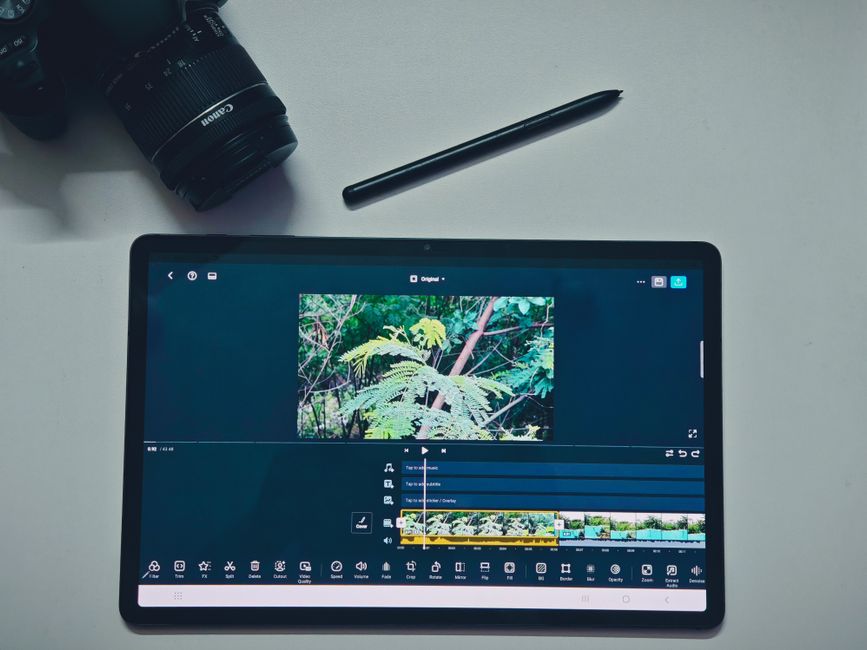
This friction creates a hard ceiling on testing velocity. When an ad creative team caps out at five or ten variations weekly, campaign performance becomes brittle. Meta creative fatigues quickly, with average click-through rates decaying significantly within 15 to 30 days of spend. If your pipeline produces only a handful of new ads per sprint, your winning ads exhaust their audience before replacement concepts clear testing.
The economic consequence is rising customer acquisition costs. Hand-built multivariate testing forces performance marketers to run isolated A/B tests where ad sets compete against each other for deterministic split delivery. Media buyers spend weeks waiting for individual variants to reach statistical confidence, burning ad spend on losing iterations while waiting for manual editors to deliver the next revision.
How DCO and Advantage+ actually pick auction winners
Modern ad delivery engines do not require deterministic, human-managed split tests. Instead of isolating one variable at a time across rigid ad sets, systems on Meta and TikTok use multi-armed bandit algorithms to allocate impressions dynamically based on real-time auction performance.
According to the official Dynamic Creative Developer Documentation, platforms construct ad units programmatically from a single asset feed. Rather than serving static video files to uniform audiences, the auction matches specific combinations of hooks, visuals, headlines, and primary texts to individual user segments based on conversion probability.
Understanding how machine learning models evaluate creative assets changes how growth teams approach testing. In research on Offline-to-Online Creative Optimization with Generative Models and Adaptive Testing, data scientists demonstrated that adaptive testing frameworks identify upper-tail creative performers far more efficiently than fixed-budget A/B experiments, capturing up to 45% higher engagement while minimizing traffic wasted on weak variations.
| Testing Dimension | Manual Multivariate Testing | Algorithmic Testing (DCO / Advantage+) |
|---|---|---|
| Creative Variation Capacity | 4–8 hand-edited assets per week | 40–100+ programmatically generated assets |
| Impression Allocation | Fixed, even split across ad sets | Multi-armed bandit weighting toward active winners |
| Cost Per Finished Asset | $100+ (plus creator and agency fees) | ~$15 per finished, publish-ready ad |
| Fatigue Vulnerability | High; replacement cycles lag ad decay | Low; rapid seed replenishment sustains spend |
| Optimization Speed | 2–4 weeks per experimental cycle | 24–72 hours to auction convergence |
The math of combinatorial testing on Meta
The asset feed specification for Meta DCO accepts up to 10 images or videos, 5 primary texts, 5 headlines, 5 descriptions, and 5 call-to-action buttons within a single ad set. This structure generates up to 1,250 possible asset permutations inside the delivery system.
When an ad set enters the auction, Meta's predictive delivery model analyzes incoming engagement signals across impressions. The algorithm evaluates initial watch time, hold rates, scroll-stop percentage, and immediate click behavior against historic user responses. Impressions shift quickly away from underperforming pairs and concentrate spend on the combinations generating the highest conversion value per impression.
The machine learning system does not test all 1,250 combinations equally. It explores promising permutations during the early exploration phase, identifies interaction effects between specific opening hooks and body copy, and then exploits the winning pairs. This algorithmic selection happens in milliseconds across millions of ad auctions.
Why algorithmic delivery requires variant volume
Algorithmic delivery systems possess one fundamental constraint: they cannot salvage bad inputs. As documented in Dynamic Creative in 2026: How DCO Picks the Winner, dynamic creative optimization simply identifies the top performer among the assets provided. If the seed pool consists of mediocre variations, the platform converges on the least bad version of an unprofitable ad.

To capture the lowest possible acquisition costs, platforms need high-quality volume. An ad set supplied with only two video options gives the delivery system almost no surface area to test against audience micro-segments. Conversely, feeding the engine dozens of distinct visual hooks and messaging angles allows the algorithm to match specific creative variations with different buyer intents.
When performance marketing teams provide 40 or more acceptable concepts, they give the platform enough asset variety to find true outliers. This combinatorial scale is what separates campaigns with declining returns from accounts that scale spend consistently.
The workflow for algorithmic ad iteration at scale
Transitioning from manual creative testing to automated ad iteration requires replacing fragmented editing steps with a centralized production system. Growth marketers cannot scale output by simply hiring more freelancers; the workflow itself must become automated.
The objective is to establish an continuous production loop: extract proven creative angles from market data, generate structured video variations programmatically, publish directly to ad platforms, and recycle conversion signals into the next testing cohort.
Market Data & Competitor Signals
               │
               ▼
Creative Angle & Hook Generation
               │
               ▼
Automated Video Production (Avatars, B-roll, Captions)
               │
               ▼
Direct Push to Meta & TikTok Ad Accounts
               │
               ▼
Algorithmic Distribution (DCO / Advantage+)
               │
               ▼
Winner Signal Extraction & Rapid Iteration
Extracting competitor signals for the creative seed
High-velocity testing fails if teams feed arbitrary ideas into the production engine. Every batch of variations must start from verified performance signals.
Rather than brainstorming concepts in isolation, experienced media buyers study the creative patterns of competitors running long-term paid campaigns. An ad that has remained active in the Meta Ad Library for six weeks is spending profitable budget. That longevity indicates the underlying creative mechanics—the hook pacing, problem framing, and proof points—are resonating in the auction.
Performance marketers refer to this structure as "creative physics." By studying the first three seconds of high-performing competitor videos, teams can identify whether a category responds best to negative-hook callouts, problem demonstrations, or split-screen comparisons. To systematize this step, teams often follow frameworks for how to extract winning hooks from competitor TikTok ads to build a UGC calendar before generating new assets.
Generating 40+ variants in a single session
Once a high-intent angle is validated, the production engine must spin that seed into dozens of distinct variations without manual editing delays. This is where an AI-powered creative platform like Notch transforms campaign operations.
Using autonomous AI agents powered by Claude, the platform accepts a product URL or creative brief and generates up to 40 complete, publish-ready ads in a single session. Instead of producing isolated clips that require manual post-production in external editing tools, Notch outputs finished videos complete with scripts, AI avatar talent, synchronized B-roll, captions, and background audio.
This system eliminates the common issue found in legacy AI video tools, which rely on the same small library of avatar faces across every client. By varying visual presenters, voice tones, pacing, and B-roll cut points, performance teams can build a complete testing matrix in minutes:
- 20 distinct hook variations testing alternate pain points and problem statements
- 5 structural format iterations shifting between direct response demos, UGC testimonials, and cinematic shorts
- 3 emotional angles reframing the core offer for different customer segments
With production costs dropping to approximately $15 per finished ad, teams can implement the frameworks detailed in our guide to build a high-volume creative testing framework for Meta ads without expanding headcount.

Finished creatives push directly to Meta Ads Manager and TikTok ad accounts through native integrations, closing the gap between asset generation and live deployment.
Scaling beyond the creative bottleneck
Algorithmic ad iteration transforms performance creative from a slow design process into a predictable testing system. Platforms like Meta and TikTok now have the machine learning infrastructure to evaluate, optimize, and distribute ad variations with unmatched precision. The primary competitive advantage for modern growth teams is no longer manual bid optimization or complex audience segmentation; it is the velocity at which you feed these platforms high-performing creative inputs.
Brands using Notch have demonstrated the impact of this operational shift. Digital education brand MyDegree scaled lead generation performance by 300% and expanded campaign volume 20X by automating their creative testing cycles. By eliminating production delays, their growth team unlocked the continuous variation pipeline needed to beat creative fatigue and sustain aggressive budget growth.
To stop losing auction efficiency to manual production bottlenecks, connect your Meta Ads Manager to Notch and drop in a product URL to generate your first batch of publish-ready ad variations.