Many self-taught learners and Hifz students practicing their Quranic recitation alone struggle to find a tool that catches subtle pronunciation errors instead of just matching words. Standard Arabic voice recognition apps often give high scores for memorization while completely missing misapplied rules like Ghunnah or Qalqalah. The free Android application QariAI solves this problem by using rule-level Tajweed correction that matches phonetic patterns against expected standards rather than relying on basic transcription models. By combining acoustic confidence-gated feedback with personalized practice loops, learners can now identify and fix specific phonetic mismatches in 2026 before their next session with a qualified human teacher.
The hidden pitfalls of practicing Quran recitation alone
Many students spend hours reciting a single Surah into their phone, feeling confident after receiving a perfect score from a standard memorization app. The frustration begins when they sit before a qualified teacher who immediately points out missed elongations or merged letters. This gap between automated praise and real-world accuracy causes a major issue in self-taught Quran learning.
When you practice a mistake repeatedly, your brain hardwires that pronunciation into your memory. Unlearning a deeply ingrained error takes twice as long as learning the verse correctly the first time. The muscle memory of the tongue and vocal tract is stubborn, meaning early corrections are vital to long-term progress.
This challenge particularly impacts parents trying to verify their children's home study sessions. It also affects adult learners who live in areas without access to local mosques or qualified Qaris. To bridge this gap, learners need a dedicated practice companion that listens with the precision of a trained ear. We built the About Us — QariAI project specifically to give students a reliable tool to run between their formal lessons.
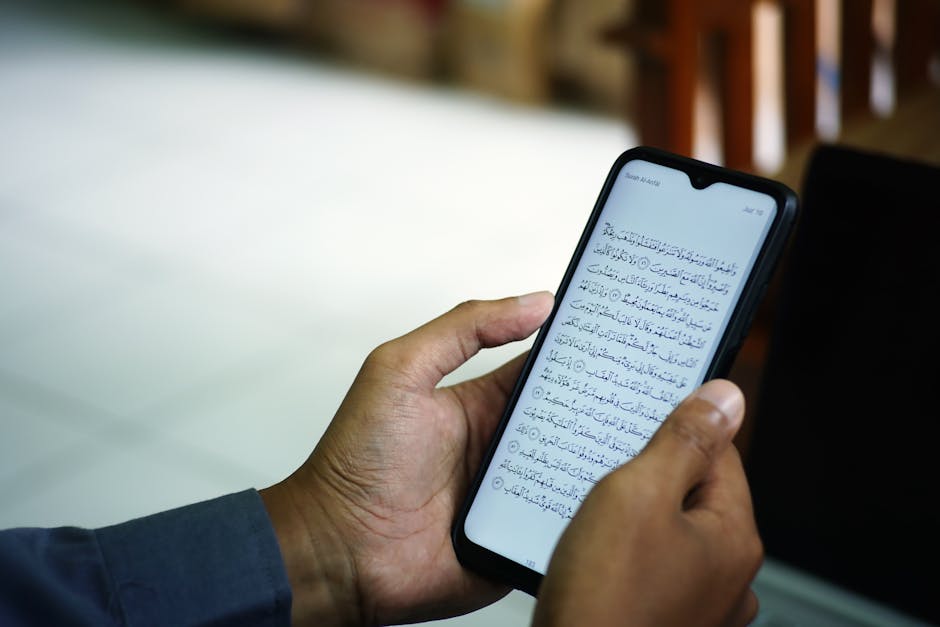
Why generic speech tools fail to detect Tajweed errors
To understand why standard tools fall short, we must examine how modern voice software processes Arabic speech. Most commercial applications rely on basic speech engines designed for daily transcription or voice commands. These engines are built to identify the word itself, completely ignoring the phonetic subtleties of classical Quranic Arabic.
The limits of standard Arabic ASR
Standard automatic speech recognition systems process your raw voice recordings into sound units called phonemes. However, the underlying models are trained on everyday conversational Arabic. These models are optimized to make sense of dialectal speech, meaning they often ignore the fine distinctions required for proper recitation.
In everyday speech recognition, a phenomenon known as phoneme collapsing occurs. The software will often treat emphatic and non-emphatic consonants as identical because the exact acoustic boundary does not change the core meaning of the transcribed word. For example, the software might not distinguish between a heavy and light letter, grouping them into a single general category.
Word recognition vs. rule-level correction
This technical setup creates a massive gap when applied to sacred texts. A standard memorization app answers one basic question: did you utter the correct sequence of words? If you say the right word but completely miss the rules of pronunciation, the transcription engine still marks you correct.
True rule-level Tajweed correction requires an entirely separate analytical process. As we explain in our guide on AI Tajweed Correction Explained | QariAI Academy, the software must evaluate exactly how you pronounced each letter. It needs to check the duration of your vowel elongations and the nasalization of specific letters rather than just translating your voice to text.
| Feature Type | Word Recognition (ASR) | Rule-Level Tajweed Correction |
|---|---|---|
| Primary Goal | Verifies if the correct words were spoken | Evaluates how those words were pronounced |
| Phoneme Analysis | Collapses similar sounds for translation | Maintains strict boundaries between consonants |
| Timing Evaluation | Ignores length of vowels and pauses | Checks exact durations for Madd rules |
| Feedback Resolution | Highlights whole words or sentences | Pinpoints specific letters and rule violations |
Assessing your tools for genuine recitation feedback
If you want to evaluate whether a mobile practice tool is providing real educational value or simply giving you false confidence, you should put it through a systematic test. Do not rely on high-level app store reviews. Instead, look for concrete signs of rule-level processing.
Use the following steps to test any digital Quran assistant:
- Deliberately omit a rule: Read a verse and intentionally skip a clear Qalqalah or Ghunnah to see if the system flags the specific error or lets it slide.
- Check for letter-level precision: Verify if the feedback points directly to the incorrect letter or if it simply highlights the entire word.
- Test in different acoustic environments: See if the application warns you about background noise or blindly attempts to grade your recitation regardless of audio quality.
The four-stage correction pipeline
To deliver accurate feedback, a highly specialized tool must process your voice through a structured series of checks. In our technical documentation on How AI Detects Tajweed Mistakes in Real Time | QariAI Academy, we detail the four stages that occur behind the screen within milliseconds.
First, the application performs raw audio capture to record your voice waveform clearly. Second, the phoneme extraction model maps your vocal patterns to distinct sound units, maintaining the crucial boundaries of classical pronunciation. Third, the system runs rule matching, comparing your spoken phonemes against an encoded template of Tajweed rules for that specific verse. Finally, the application uses confidence gating to filter the results.
Why confidence gating matters
Many commercial platforms make the mistake of presenting a definitive score even when the audio input is highly distorted. This false certainty can misinform your practice. An honest digital system must possess the ability to say "I do not know" when environmental factors interfere.
With confidence-gated analysis, if background noise, a poor microphone, or excessive speed degrades the audio signal, the system filters out uncertain assessments. It only shows you corrections when the model's certainty crosses a rigorous threshold. This prevents you from chasing false errors or developing unneeded anxieties about your recitation.

The boundaries of technology in sacred transmission
While QariAI serves as an advanced AI-powered Quran recitation coach, we maintain that technology has strict, unmovable limits. No machine can replace the deep relationship between a student and a spiritual mentor. Technology is an aid for independent practice, not a source of authorization.
You must transition to a qualified human teacher when you encounter the following situations:
- Struggling with physical articulation points: If you cannot produce the correct sound for letters like Makharij originating deep in the throat, an app cannot physically guide your muscle placement.
- Refining the artistic beauty of your voice: A computer model cannot evaluate the emotional resonance, breath control, or aesthetic pacing of your spiritual delivery.
- Seeking formal authorization: Only a human chain of scholars can grant an Ijazah or place you within the traditional chain of transmission.
As we explore in our article Can AI Teach Tajweed? An Honest Answer | QariAI Academy, the ancient tradition of talaqqi—the direct, face-to-face reception of recitation from master to student—remains the sole preservation mechanism of the Quran. The unbroken chain of transmission (sanad) back to the Prophet ﷺ is a living human lineage. A digital practice coach is like a metronome for a classical musician; it helps you stay on track during solo hours, but it does not make you a master.
Establishing a sustainable routine with QariAI
Integrating QariAI into your daily routine is simple once you establish a reliable environment. Correcting an error once does not mean it is gone forever. Real improvement requires systematic reinforcement.
To keep your pronunciation accurate over time, you must build a feedback loop that targets your personal weak points:
- Maintain a silent environment: Practice in a quiet room free of background conversations, fans, or street noise to prevent audio degradation.
- Keep steady device placement: Place your Android device on a flat surface roughly six inches from your mouth to ensure high-fidelity audio capture.
- Focus on your custom heatmap: Review your most common mistakes from previous days rather than jumping randomly between different Surahs.
- Use targeted repetitions: Spend your practice sessions running dedicated drills on the specific verses where the system flagged phonetic mismatches.
Using a steady setup ensures that the phoneme extraction model receives high-fidelity audio, reducing false detections and letting the software work at its highest level of accuracy. This structured approach ensures that you spend your valuable practice time only on the rules that need immediate correction, making your next live lesson with a human teacher far more productive.
To test your recitation against authentic rule-level correction, download the free QariAI app on Google Play today. Visit the QariAI homepage to learn more about our open evaluation methodology and explore further resources for your learning journey.