How to Use Dark Humor When Your Dad Dies — and Stop Feeling Guilty About It

The Dead Dads Podcast

You made a joke at your dad's funeral — or wanted to — and part of you has been quietly deciding what kind of person that makes you ever since. Maybe it was the pastor mispronouncing his name. The wrong song. Something he would have found genuinely hilarious that nobody else was going to acknowledge. The laugh came before you could stop it, and then the guilt arrived about half a second later, right on schedule.
Here's what the research actually says: it makes you someone whose brain is working exactly the way it's supposed to.
The Moment You Laughed and Then Hated Yourself For It
There's a specific kind of grief that comes with sudden father loss — the phone call, the heart attack, the accident with no warning — where the normal emotional processing script simply doesn't load. Your brain gets handed an event it has no template for, and it scrambles. Dark humor often fills that gap before conscious thought does. It arrives unbidden, fast, and often inappropriately timed. And then the judgment follows.
That judgment is almost always wrong.
What you did wasn't a failure to grieve. It was grief, in the form your nervous system knew how to handle in that exact moment. The laugh at the reception, the gallows one-liner when someone asked how you were doing, the absurd detail you keep returning to — these aren't signs you didn't love him enough. They're signs your brain was trying to protect you from a weight it couldn't carry all at once.
This isn't a guide for people who aren't grieving. It's for people who are — and who've been told, implicitly or otherwise, that the way they're doing it looks wrong.
What's Actually Happening in Your Brain (The Short Version)
Dark humor works during grief because it creates psychological distance from a threat the brain can't fully process. Death — especially sudden death — presents the brain with an event that defies its category system. It can't file it anywhere. Humor, specifically the kind that acknowledges the absurdity and horror of a situation, lets the brain engage with the threat indirectly. It reduces anxiety without requiring you to go fully into the pain. That effect is measurable.
A 2014 peer-reviewed study published in Communication Quarterly examined the communication of humor during bereavement and found it functions on two levels simultaneously: as an intrapersonal coping mechanism — managing your own emotional state — and as an interpersonal one — regulating the emotional environment of everyone around you. Both are real. Both are useful. Neither one means you're not grieving.
Charlamagne Tha God put it plainly in a widely shared post: dark humor is a psychological coping mechanism that reduces anxiety around things like death or trauma. That framing — public, casual, confident — matters here because it mirrors how the instinct actually talks to you. It doesn't announce itself as a coping mechanism. It just shows up. Knowing it has a name, and that the name isn't "something wrong with me," changes the conversation you're having with yourself.
The high-shock loss context is worth noting specifically. When there's no runway — no long illness, no preparation — the dark humor often kicks in faster and harder. That's not callousness. It's the brain using every tool available when it gets blindsided.
Why Men Specifically Default Here (And Why That's Not a Bug)
Men who lose their fathers are statistically likely to process grief privately — late at night, alone, in ways they'd never describe to a coworker. A 2025 Frontiers in Public Health study on men's bereavement experiences found that men bereaved by loss face heightened risk of adverse psychosocial outcomes, and that the way men seek support looks fundamentally different from what clinical models typically expect. The grief is there. The need is there. But the pathway to addressing it is different.
Dark humor is one of the ways men signal "I'm not okay" while staying in control of the moment. It's not dishonesty. It's a hand extended sideways rather than straight out. Understanding that dynamic changes how you relate to your own reflex — and it changes how you read other men in the room who are doing the same thing.
There's also a social function that doesn't get enough credit. The dark joke at a funeral or reception is partly a test signal. It identifies who in the room can go there with you — who doesn't need you to perform composure, who can hold the absurdity without flinching. Men often find their most honest grief conversations not through direct disclosure but through the shared laugh that cracks something open. Someone else chuckles at the wrong song, your eyes meet, and suddenly you're talking about the actual thing. That's not avoidance. That's how the conversation gets started.
The Difference Between Humor That Processes and Humor That Hides
Not all dark humor serves the same function. This is the part worth sitting with.
There's the joke that releases pressure so you can eventually feel the weight — and there's the joke that becomes a full-time job of not feeling anything. They can look identical from the outside. From the inside, if you're honest, they feel different.
As Help4HD's piece on dark humor and grief frames it: "It's not about making light of the pain or disrespecting the memory of the loved ones we've lost. It's about finding a way to breathe again." That distinction — humor as a breath, not an exit — is the right frame. A breath brings you back to the room. An exit takes you somewhere else entirely.
Processing humor has a "returning to" quality. You laugh, and then you feel something. A memory surfaces. Your chest tightens. The laugh was the door opening, not closing. Avoidance humor has a "running from" quality. You laugh, and then you check your phone, pour another drink, change the subject before anyone can follow the thread. One opens something. One locks it.
The question worth asking yourself — not during the joke, but later, honestly — is which one you're doing most of the time. There's no shame in either answer. But only one of them is sustainable.
Episodes like "What Happens After Your Dad Dies That No One Prepares You For" and "He Got the Call… and Had to Tell His Family His Dad Was Dead" on the Dead Dads podcast demonstrate this in practice. The humor in those conversations isn't decoration. It's an entry point into genuinely hard material — a way of establishing that the room is safe enough to go somewhere real. That's the model worth borrowing.
Finding the Room Where the Joke Lands
One of the most isolating parts of grieving with dark humor is doing it in the wrong room. The joke that gets silence. The uncomfortable shift. The person who visibly flinches. You spend the next ten minutes managing their discomfort on top of your own, and you learn to keep the next one to yourself.
The problem isn't the humor. The problem is the audience.
Direct Cremation Services of Virginia's piece on dark humor in grief notes that this preference is real, individual, and worth honoring — but that context matters enormously. Not every room is built for it, and that's not a judgment on the room or on you. It's just a compatibility question. The skill isn't suppressing the instinct. It's learning to read where it'll land and deliberately seeking out the spaces where you don't have to pre-edit yourself.
Those spaces exist. They're just not the office break room or the well-meaning aunt's living room.
The Dead Dads podcast exists specifically because hosts Roger Nairn and Scott Cunningham couldn't find the conversation they were looking for. In Roger's words from a January 2026 blog post: "We started it because we couldn't find the conversation we were looking for." That conversation includes humor — the kind that earns its place by going somewhere real afterward.
The listener response reflects what happens when men find that room. Eiman A., in a documented review titled "Connecting with Purpose" from January 30, 2026, wrote: "It's the type of pain that I bottle up and keep to myself. I felt some pain relief…" That's not a small thing. Pain relief from finally being in a room where the unspoken thing is being spoken — even if the door opens with a joke.
The reviews page has more of these. Worth reading, not because they're inspiring, but because they're accurate.
The Trap: Performing Okayness Until You Believe It Yourself
Men who lose fathers suddenly — no warning, no runway — are especially vulnerable to this one. You go from a normal Tuesday to a phone call. The humor kicks in fast because it has to, and it works. People around you take the cue. They stop checking in as much. You get described as "handling it really well." And somewhere in there, you start performing okayness so consistently that you've convinced everyone, including yourself, that you're fine.
The humor isn't the problem. The problem is when it becomes the only register you have — when it starts doing the work of the honest conversation rather than opening the door to one.
The question isn't whether you should be making dark jokes. The question is whether anyone in your life knows you're not actually okay. The two things — the jokes and the honest conversation — aren't mutually exclusive. The podcast is proof that they can coexist in the same forty minutes.
The humor you've been reaching for isn't a sign that you're grieving wrong. It's a sign that part of you is still looking for the conversation where that kind of honesty is welcome. That conversation exists. The Dead Dads podcast — tagline: "Death. Jokes. Closure. Not always in that order." — is where a lot of men have found it.
Listen on Spotify, Apple Podcasts, YouTube, or wherever you get podcasts. If you're not ready to listen yet, the "Leave a message about your dad" feature at deaddadspodcast.com is a low-pressure first step. You don't have to talk out loud. You just have to start somewhere.
Get the latest from The Fatherless Manual delivered to your inbox each week
More from The Fatherless Manual
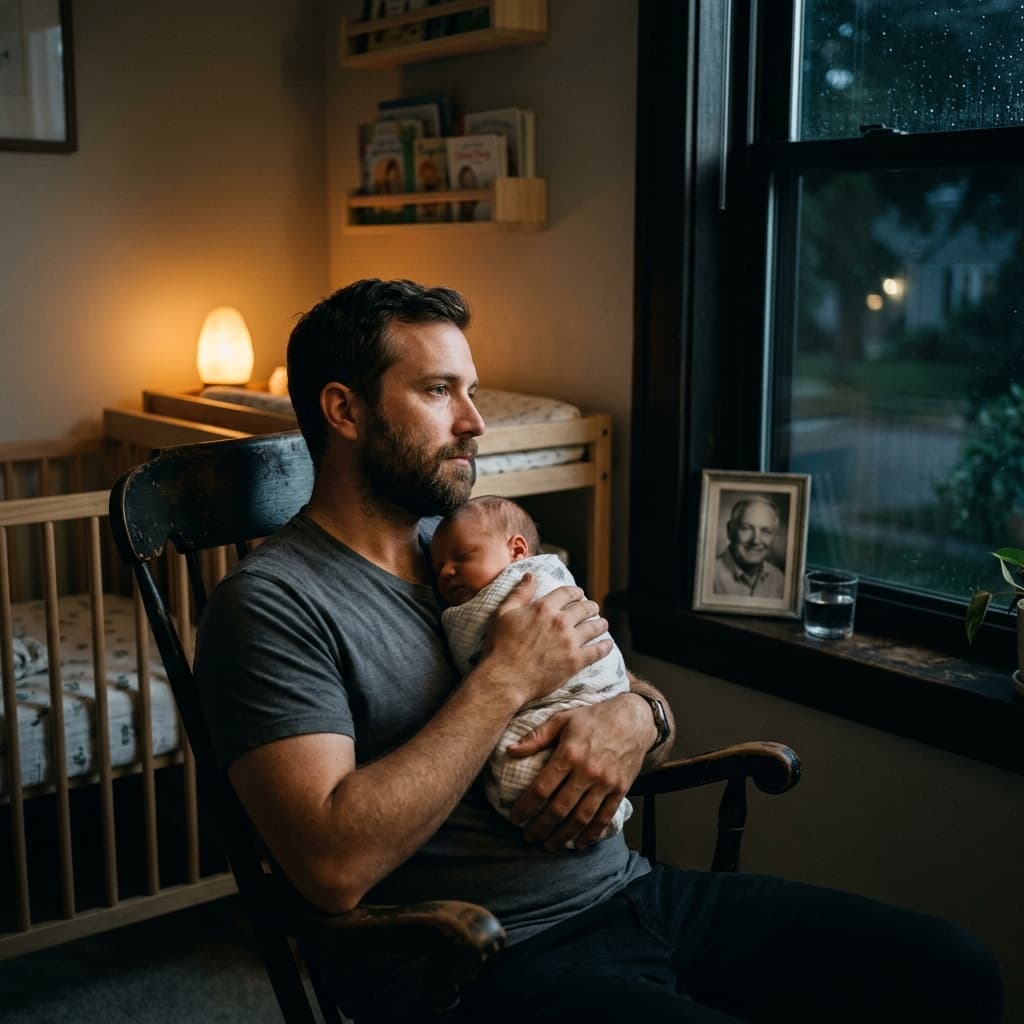
How to Be a New Dad When You Can't Call Yours for Advice
The first time your baby does something that breaks your heart open — first smile, first fever, first time they grab your finger and won't let go — your brain w
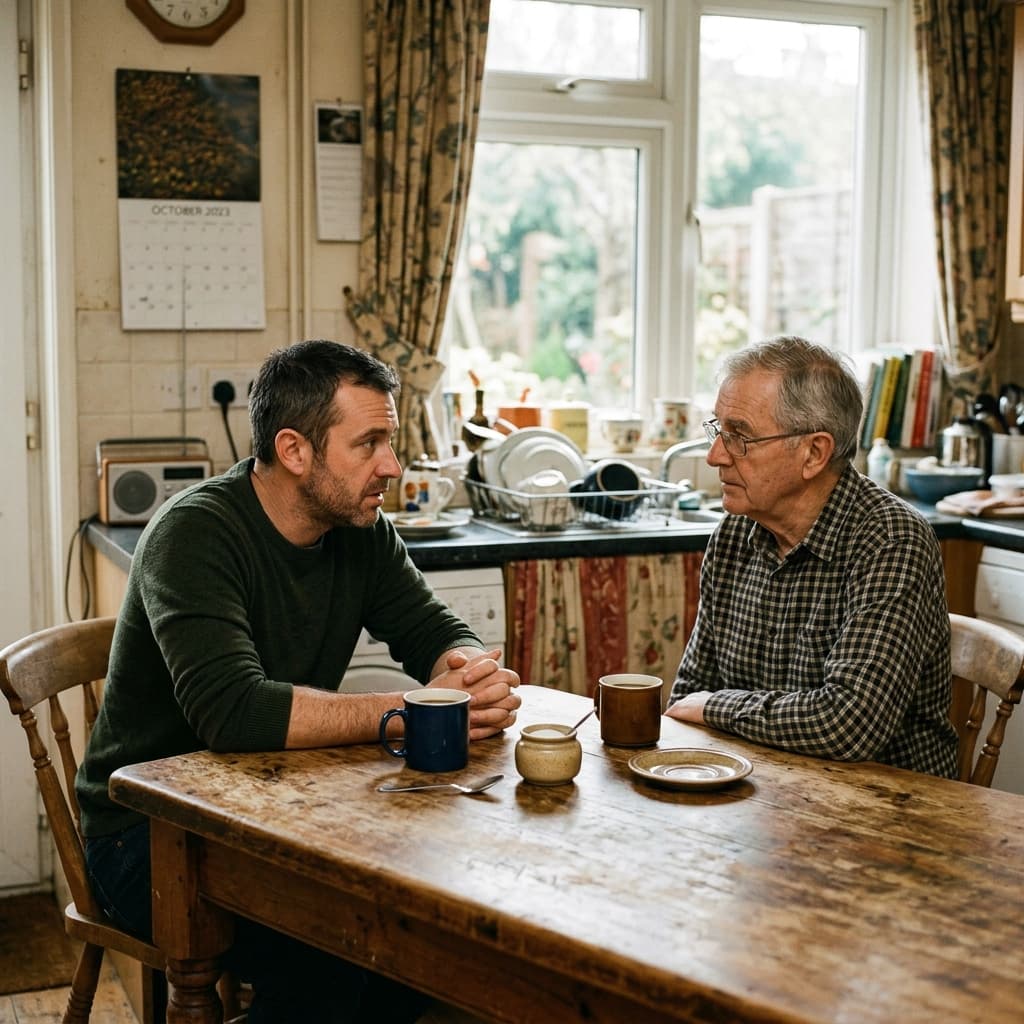
You Keep Putting Off the Talk With Your Dad. Here's What That Costs You.
meta_description: "You keep putting off the hard conversation with your dad. Here's why that delay is costly — and how to actually start the talk before you run

How to Use Dark Humor When Your Dad Dies — and Stop Feeling Guilty About It
You're at your dad's wake and something strikes you as genuinely funny. Maybe it's a joke he would have made. Maybe the casserole someone brought is so aggressi