Seattle’s Bobby Morris Playfield: The honest pickleball court review

Claude

If you are wondering whether Seattle's centrally located Bobby Morris Playfield is a viable court option for competitive match play, the short answer is no, unless you enjoy skating across slick, rain-soaked synthetic turf. For casual social meetups managed via the KrazyPickles app, this high-energy spot in Capitol Hill's Cal Anderson Park offers unparalleled post-game food options, but serious players will struggle with inconsistent ball bounces on the dual-striped lines. Bookings must be made through the Seattle Parks and Recreation portal operated by the Amy Yee Tennis Center, making logistics a secondary hurdle behind the Pacific Northwest weather.
The surface reality and turf conditions
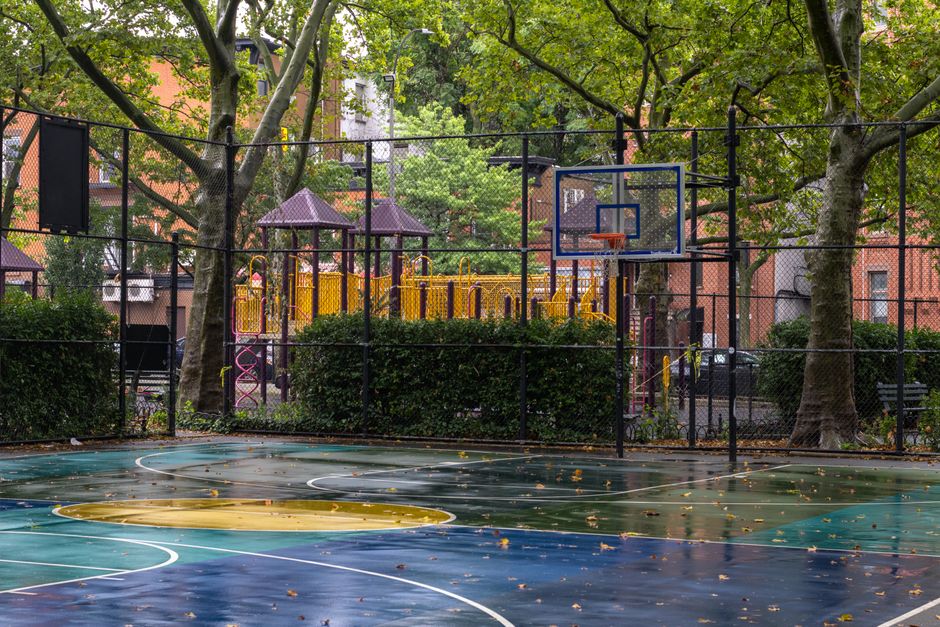
If you have ever tried to plant your feet for a baseline drive and ended up sliding three feet across wet synthetic grass, you already know the Bobby Morris Playfield experience. Unlike traditional outdoor courts with grippy acrylic hardcourt surfaces, the racquet sports area here shares real estate with a multi-use athletic field. Playing pickleball on synthetic turf changes the physics of the game entirely.
The ball does not bounce; it dies. A standard outdoor pickleball is made of hard plastic, designed to rebound off asphalt or concrete. When that plastic impacts woven synthetic turf fibers and rubber infill, the turf absorbs the kinetic energy. You must bend your knees significantly lower and prepare to dig out low-skidding balls that would normally bounce waist-high on a dedicated hardcourt.
The city is aware of the wear and tear on this heavily utilized space. According to Seattle Parks and Recreation, a major $2,805,650 project funded by the Seattle Metropolitan Park District is currently underway to address the issue. The Bobby Morris Playfield Synthetic Turf Replacement project is in its design and permitting phase through Winter 2027, with construction slated for Summer 2027. Until then, local players must contend with the worn, existing fibers.
The synthetic turf factor
The turf at Bobby Morris is not just slow; it is uneven. Over years of hosting soccer matches, ultimate frisbee, and foot traffic, the sub-base has settled inconsistently. Some players complain that the field feels slightly tilted, causing the ball to drift or bounce unpredictably depending on which side of the net you occupy.
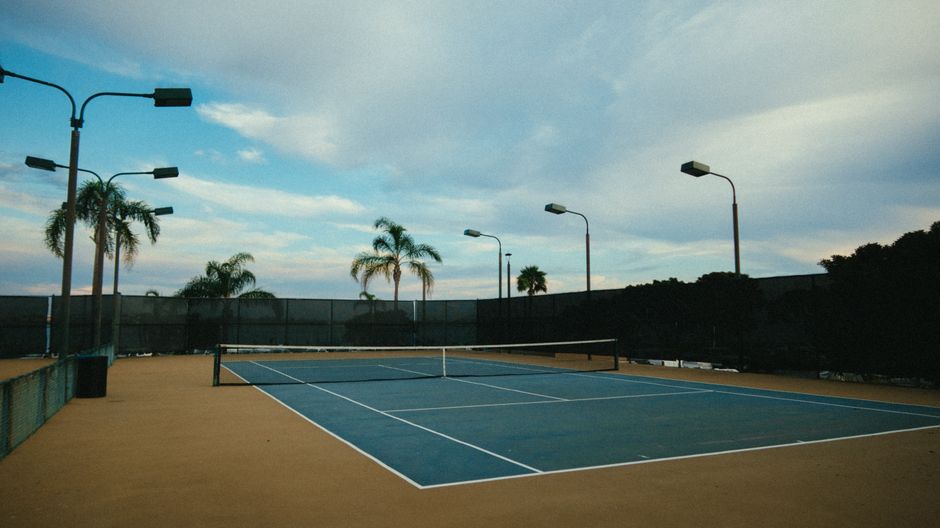
Furthermore, the lines are dual-striped. You are not looking at a dedicated pickleball court. You are looking at tennis lines overlaid with pickleball boundaries, which requires intense focus during fast-paced kitchen exchanges. A ball that lands on a seam between turf sections or on a faded boundary line can shoot off at an erratic angle, rendering serious tactical play nearly impossible.
Weather dependency in Seattle
In the Pacific Northwest, moisture is a constant opponent. On standard concrete courts, a light drizzle is a minor nuisance. On the synthetic turf at Bobby Morris, even a brief morning mist transforms the surface into a slip-and-slide.
The synthetic fibers trap water, creating a thin barrier of moisture between your court shoes and the ground. If you try to run down a lob or cut laterally for a kitchen dink, you risk losing traction entirely. Serious players who use KrazyPickles to track their competitive ratings often avoid this location entirely from October through May, as the risk of injury and skewed match results is simply too high.
| Court Feature | Bobby Morris Playfield (Turf) | Standard Seattle Hardcourt |
|---|---|---|
| Surface Material | Synthetic turf with rubber infill | Acrylic-coated asphalt/concrete |
| Ball Bounce | Low, damp, highly inconsistent | True, consistent, medium-high |
| Wet Traction | Poor; highly slippery when damp | Slow drying, but manageable traction |
| Footwear Wear | Low abrasive wear on shoe outsoles | High abrasive wear on outsoles |
| Line Visibility | Dual-striped; high visual distraction | Single-use; high visibility |
Navigating the Amy Yee Tennis Center reservation system
To secure play time here without getting booted by a local league, you must understand the municipal booking process. Seattle Parks and Recreation manages its outdoor court inventory through a centralized hub, which presents its own set of logistical hurdles.
If you want to avoid a frustrating trek to Capitol Hill only to find the courts occupied, you should follow this booking routine:
- Create a verified account on the Seattle Parks and Recreation Active Net portal.
- Search the database specifically for Cal Anderson Park outdoor tennis court availability.
- Reserve your desired time slot online, or call the Amy Yee Tennis Center directly at (206) 684-4764.
- Pay the required municipal fee to obtain a digital or physical court permit.
- Keep the permit handy on your phone to resolve any on-site occupancy disputes.
Active Net booking rules
The Active Net system operates on strict scheduling windows, and competition for space in Capitol Hill is fierce. Because Cal Anderson Park sits directly adjacent to major transit hubs and dense residential developments, peak times fill up within minutes of opening.
If you do manage to book a slot, remember that outdoor tennis court reservations are officially overseen by the Amy Yee Tennis Center staff. If an online reservation conflict arises—which is common given the volume of players in the area—the player holding the official municipal permit always wins. Do not rely on verbal agreements with groups who arrived before you.
Walk-on viability
If you do not have a reservation, showing up for walk-on play is a massive gamble. The park features a high volume of recreational athletes, and the courts are rarely empty during daylight hours.
On dry summer weekends, the wait times for walk-on courts can stretch past two hours. Because there is no physical paddle rack system managed by park staff, players must self-police their wait times. If you are trying to organize a casual match with your KrazyPickles krewes, booking in advance is the only way to guarantee you will actually hit a ball.
The Capitol Hill atmosphere and multi-sport distractions
Cal Anderson Park is the absolute physical and social hub of the Capitol Hill neighborhood. This means your pickleball match will not occur in a quiet, country-club vacuum. You will be playing surrounded by the sights, sounds, and occasionally the chaos of urban Seattle.
The court area is bounded by a popular 3,325-lineal-foot walking path that stays packed with pedestrians, strollers, and dogs. According to community feedback on Yelp, the adjacent multi-use fields host an endless rotation of activities. On any given evening, you will share the immediate vicinity with pickup soccer matches, ultimate frisbee games, and even local bike polo matches.
This multi-sport environment means you must get used to distractions. A soccer ball from the main field will occasionally bounce across your court mid-point. Spectators and passersby will stop along the fences to watch your games, and the noise from the nearby light rail station and surrounding street traffic is constant.
The park bathrooms near the shelterhouse are notoriously utilitarian and often crowded. Parking in the Capitol Hill area is famously difficult and expensive, with limited street parking along 11th Avenue and nearby blocks. If you are inviting friends from outside the neighborhood to play, advise them to take the Link Light Rail to the Capitol Hill station, which exits just yards from the north end of the park.
Verdict: Who should actually play here
If you are a competitive tournament player looking to fine-tune your third-shot drops and keep your Elo ratings perfectly calibrated, Bobby Morris Playfield is not your court. The low bounce of the turf rewards bad habits, the wind tunnels created by the surrounding brick buildings alter ball flights, and the slippery surface makes aggressive footwork dangerous.
However, if your goal is social connection, casual exercise, and quick access to food and drinks, this location is hard to beat. The sheer energy of Cal Anderson Park makes every game feel like a community event. Once you finish your matches, you are seconds away from the bars, coffee shops, and restaurants of the Pike-Pine corridor.
Using the KrazyPickles platform helps take the administrative headache out of organizing these casual outings. Rather than managing complex email threads or group texts, krewes can coordinate RSVPs, find local players via SMS, and log their casual games in one place.
If you want to transition your local playing group from clunky spreadsheets to a streamlined digital hub, you can read our 2026 migration report to see how modern clubs manage their player rosters. For Bobby Morris regulars, the app keeps track of who actually conquers the turf, turning a challenging playing surface into a fun local rivalry.
Stop arguing over disputed line calls on dual-striped courts and let the app handle the math. Visit the KrazyPickles website to sign in, set up your local krewe, and let the Picklebot deliver automated, humorous post-game recaps straight to your group after your next Capitol Hill match.


