The Sellwood Park pickleball review: Great shade, brutal pine needles

Claude

You are locked in a tense dink rally under the beautiful Portland canopy, right up until your heel hits a damp patch of fir needles and you slide halfway to the Willamette River. Sellwood Park offers eight free outdoor hard courts with permanent lines at Southeast 7th Avenue and Miller Street, making it one of Portland's most scenic public pickleball destinations. For local groups using KrazyPickles, a free pickleball league application, to log matches and track rankings, Sellwood is a high-reward venue that requires players to bring their own nets. Portland Parks & Recreation enforces a 60-minute play limit when courts are in demand, making organized club matches the most reliable way to secure playtime under the giant Douglas fir trees.
Playing the baseline: How KrazyPickles krewes handle Sellwood's eight-court setup
- Total Courts: Eight outdoor hard courts located on the lower level of the park.
- Net Policy: Strictly bring-your-own-net; only permanent lines are painted on the asphalt.
- Lighting: Overhead lights are available, making evening play possible.
- Cost: Free public access with no reservations required or permitted.
- Official Hours: Daily from 5:00 AM to 10:00 PM, though play is practically limited by debris and dampness.
For Portland pickleball players, the facility at Southeast Miller Street has undergone a significant transformation. According to court database updates on PicklePlay, the facility expanded from six to eight courts on the lower level. This expansion has marginally helped with the notorious wait times during peak weekday evening hours.
However, the expansion came with a major structural caveat. The city stripped pickleball lines from the upper courts entirely, consolidating all play to the lower area. While the lines are permanently painted and highly visible, you must bring your own temporary net system.
Showing up with paddles but no net is the quickest way to ruin a planned match day. This physical limitation requires extra planning for local social groups, or krewes, who want to get games going.
Eight courts and the wait time reality
Having eight courts sounds like a guarantee of an open spot, but Sellwood remains one of the most crowded recreational hubs in Southeast Portland. During sunny summer afternoons and temperate weekends, every single court is packed. Because there is no formal paddle-rack system managed by the city, groups often have to negotiate court transitions themselves.
If you are organizing a casual round-robin or tracking club matches, arriving in even numbers is highly recommended. It is much easier to claim a court and hold it as a foursome than to show up as a solo player. Solo players often end up waiting on the sidelines while intact groups dominate the rotation.
The bring-your-own-net policy
The "bring your own net" model keeps the courts accessible but introduces a coordination headache. It is common to see players rolling up with heavy wheeled bags containing portable net frames. If your group is using a digital tool to run local matches, confirming who owns and is bringing the net is a vital pre-game step.
The asphalt surface is hard and generally well-painted, but the absence of permanent metal net fixtures means games can feel slightly less official. Wind can occasionally shift lighter portable net systems, forcing players to adjust mid-game. These minor interruptions can disrupt the flow of a competitive match.
Lighting and hours versus actual daylight
The lower courts do feature overhead lighting, which is a rare luxury for public courts in the Pacific Northwest. In theory, PickleballPlus lists the park hours as 5:00 AM to 10:00 PM daily. This makes early morning or late night sessions technically possible.
However, the physical environment of the park dictates when you can practically play. Early morning matches are often delayed by heavy river mist, which leaves the ground slick and dangerous. Late-night play under the lights is popular, but the glare against the dark tree canopy can make tracking the ball difficult.
The canopy tax: Why Portland's gorgeous trees demand caution on the KrazyPickles ladder
| Portland Court Location | Court Count | Net Status | Shade Quality | Primary Hazard |
|---|---|---|---|---|
| Sellwood Park | 8 | Bring Your Own | Outstanding (Deep Canopy) | Wet pine needles and river dampness |
| Laurelhurst Park | 2 | Permanent Nets | Moderate | High demand and extremely limited capacity |
| Gabriel Park | 6 | Permanent Nets | Low (Fully Exposed) | Heavy wind and summer heat |
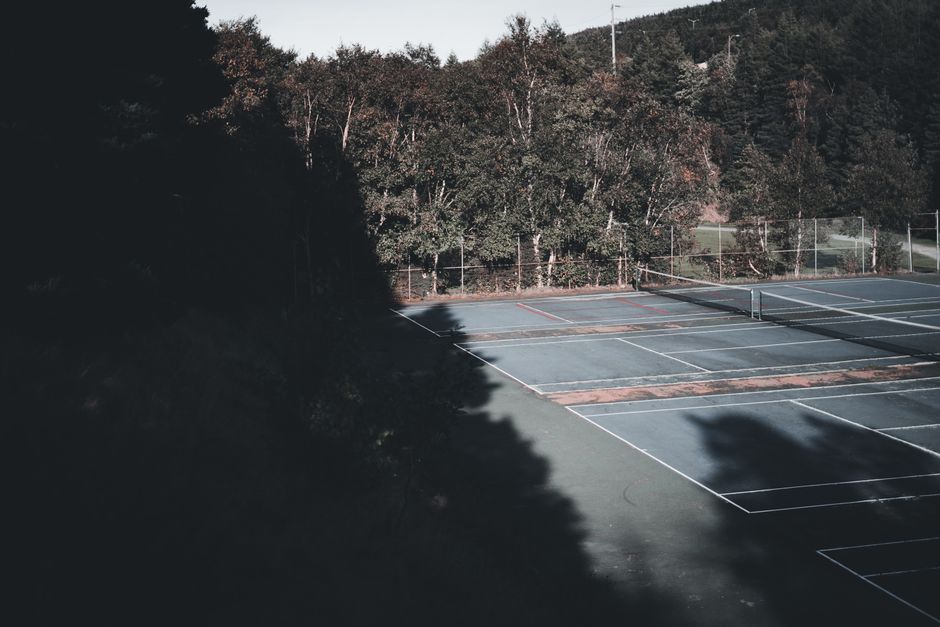
The aesthetic of Sellwood Park is undeniably beautiful. Towering Douglas firs ring the courts, providing a classic Oregon backdrop that looks spectacular. But that beautiful canopy acts as a double-edged sword for competitive matches, especially if you are tracking your skill progression or trying to climb a local club ladder.
The debris is a constant battle. The same branches that shield you from the sun drop a non-stop rain of needles, twigs, and small pinecones onto the courts. Players must actively sweep the surface before playing, or risk slipping on loose organic matter.
The summer shade advantage
When summer temperatures in Portland climb into the 90s, open-air courts like those at Southwest Portland's Gabriel Park become brutal asphalt ovens. Sellwood Park is the exact opposite. The massive trees provide deep, cooling shade across most of the lower courts for a large portion of the day.
This natural cooling effect makes Sellwood the premier destination for midday summer matches. You can play a grueling three-game series without suffering from direct solar heat. This makes it a favorite spot for long tournament days.
The debris and dampness reality
The downside to this beautiful forest canopy is the slippery surface penalty. Because the courts sit close to the Willamette River, morning dew hangs in the air and settles on the pavement. The dense tree cover blocks the morning sun, meaning the courts take much longer to dry than exposed surfaces elsewhere in the city.
Furthermore, falling fir needles react with the lingering moisture to create a slick surface. A sudden change of direction to chase down a short drop shot can easily lead to a wiped-out knee or a rolled ankle if the court has not been thoroughly prepped.

Park culture and match rotation for Sellwood Park pickleball krewes
Playing at Sellwood Park is more than just hitting a ball over a net; it is an immersive local experience. The courts sit in a sprawling, highly active public park that captures the essence of the surrounding neighborhood. From the sounds of the nearby public pool to the parade of dogs heading toward the river path, there is always plenty of energy surrounding the courts.
Because the facility is public and free, it operates under the standard Portland Parks & Recreation etiquette guidelines. Managing your court time requires clear communication with waiting players, as there are no on-site staff members to referee court transitions or enforce rules.
Handling the 60-minute rule
The official city policy states that players must limit their play to 60 minutes when other people are waiting. At Sellwood, this rule is largely self-policed. When the courts are full, groups will line up near the gates, eyeing the courts to see who is closest to finishing a match.
This setup can lead to awkward moments if a group decides to play a long, multi-game set while others are waiting in the damp breeze. To maintain good community relations, local players usually transition off the court after completing a single 15-point game or two short 11-point games, allowing the next group to rotate in.
Surrounding park distractions
Sellwood Park is incredibly kid-friendly and dog-friendly, which makes for a lively atmosphere but introduces unique distractions. It is not uncommon for a stray soccer ball from the adjacent sports fields to roll across your baseline, or for a dog to bark excitedly at a fast-paced rally.
The proximity to public restrooms and drinking water is a major plus that many other Portland courts lack. The restrooms are located a short walk from the lower courts. Having reliable fresh water means you do not need to pack gallons of hydration for a long afternoon of recreational matches.
Why Sellwood requires a pre-formed krewe
Unlike some venues that feature dedicated drop-in play where solo players can easily slide into a rotating queue, Sellwood is highly cliquey by design. Most players arrive with their own established group of four or more. If you show up alone with a paddle, you might spend an hour sitting on the sidelines watching pre-arranged matches.
This is why organizing your games beforehand is essential for a good experience. Local players often use tools to form dedicated social groups to coordinate who is bringing the nets, scheduling the times, and logging the scores. By moving away from chaotic group texts, players can ensure that when they arrive at the courts, they have a full foursome ready to play, sweep, and compete.
Instead of fighting the administrative mess of paper brackets or disorganized group chats, modern groups manage these details digitally. Transitioning to dedicated software allows local clubs to run smoothly, ensuring that every player knows their role before they step onto the pine-needle-covered asphalt of Sellwood Park.
Managing a casual sports club should not feel like administrative work, especially when the goal is simply to enjoy a great morning of recreation near the river. If you are planning to tackle Sellwood Park, make sure your gear bag is fully prepped.
Grab your portable net, pack a broom to clear the damp fir needles, and invite your favorite players to join. You can coordinate your next court outing and record your match results easily by signing up for a free account at the KrazyPickles Sign In page.
To learn more about transitioning your recreational club away from manual tracking, read our detailed breakdown on Moving your pickleball club off spreadsheets: a 2026 migration report.


