A wooden driveway gate scraping across the driveway asphalt is a sign of gravity exploiting a structural weakness that will eventually destroy your fence. At Reliable Fence CT, a family-owned fence contractor serving Fairfield and New Haven Counties since 1967, we frequently diagnose sagging residential gates that trace back to stripped hinge screws or a racked wooden frame. You can often restore a smooth swing in an afternoon by upgrading your factory hardware to heavy-duty lag bolts or installing an adjustable turnbuckle tension cable. If the wooden post itself is soft, leaning, or rotting in the Connecticut soil, the post must be replaced before any gate repair will hold.
Why driveway gates sag and drag in Connecticut
A heavy gate leaf acts as a lever, constantly pulling on the top hinge and pushing against the bottom hinge. When you add New England weather to this mechanical stress, standard gate hardware eventually yields. Freezing winters, spring rains, and humid coastal summers in West Haven and Bridgeport cause wood to expand and contract. This environmental cycle loosens wood fibers, allowing fasteners to back out and wood joints to slip.
Before purchasing replacement hardware, you must identify the exact point of structural failure. Most gate issues fall into three distinct categories:
- Loose, rusted, or pulling hinge plates
- An out-of-square wooden frame
- A shifting or rotting support post
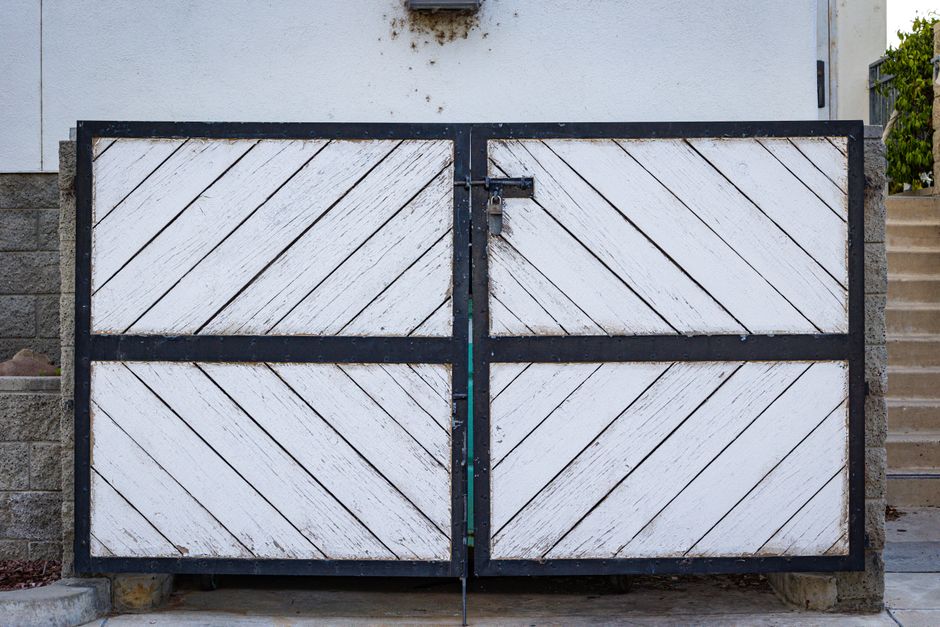
Checking the hinge attachment
Open your driveway gate halfway and support the latch end with wooden blocks to relieve tension on the fasteners. Examine the top hinge plate closely. If you see a gap between the metal plate and the wooden post, or if the screws are visibly backing out, the threads have stripped the wood inside the hole. According to data on gate hardware wear, How to Fix a Broken Driveway Gate Hinge in 30 Minutes ($10–$40 Replacement) indicates that the structural connection to the post fails long before the metal hinge actually breaks. If the hardware is loose but the wood remains solid, you can re-anchor the plates using heavier fasteners.
Checking the frame geometry
If the hinge plates are flush against the post but the far corner of the gate still scrapes the ground, the gate frame has lost its rectangular shape. This is called racking. Take a tape measure and record the distance diagonally from the top corner on the hinge side to the bottom corner on the latch side. Next, measure from the bottom corner on the hinge side to the top corner on the latch side.
According to diagnostic standards outlined by This Old House, any difference between these two measurements means the gate frame is no longer square. The diagonal running from the top hinge to the bottom latch will be noticeably longer, indicating that gravity has pulled the latch side downward.
Checking the post stability
Stand at the hinge post and try to shake it. A stable post will not budge. If the post wobbles or leans toward the driveway, the concrete footing or the underground wood has failed. In Connecticut soils, frost heave and poor drainage can shift footings that were not set deep enough. If the post is leaning, adjusting the hinges or squaring the frame will only provide a temporary patch. The underlying foundation must be repaired.
Replacing worn hardware with structural fasteners at Reliable Fence CT
Standard wood screws packaged with retail gate kits lack the shear strength to hold a wide driveway gate over multiple seasons. When these screws strip out of the post, replacing them with identical fasteners will not solve the problem because the wood fibers inside the hole are already shredded.
To fix stripped screw holes, you must clear the damaged wood and create a fresh anchor point. First, remove the hinge plate. Drill out the wallowed-out screw holes using a half-inch drill bit. Cut a piece of hardwood dowel to match the depth of the hole, coat it in exterior polyurethane wood glue, and tap it into the hole until it sits flush with the face of the post.
Once the glue cures, hold the hinge plate in position and drill new pilot holes through the center of the dowels. Instead of screws, drive three-inch or four-inch structural lag screws through the hinge plate and deep into the solid wood of the post. For the most secure mechanical connection, use galvanized carriage bolts that run completely through the post, secured with a backing plate and a locking nut on the reverse side.
Squaring a racked wooden frame with a tension cable in Connecticut
When wide wooden gates sag because of frame racking, adding heavier hinges will not lift the dragging corner. You must introduce a counter-tension system to pull the frame back into a perfect rectangle. The most reliable DIY method is installing an adjustable anti-sag cable kit, which uses a diagonal steel wire and a turnbuckle to lift the latch side of the gate.
| Repair Method | Approximate Cost | DIY Difficulty | Expected Longevity | Primary Use Case |
|---|---|---|---|---|
| Turnbuckle Cable Kit | $15 – $40 | Easy | 5 – 10 Years | Wide gates with sound joint timbers |
| Diagonal Wood Brace | $10 – $25 | Moderate | 10+ Years | Heavy timber gates with loose joints |
| Post Replacement | $150 – $300 | Hard | 20+ Years | Rotten wood or shifted concrete footings |
How tension cables work
A diagonal tension cable works by transferring the downward weight of the latch side back to the top hinge, which is anchored to the post. To install the system, mount a corner bracket at the top hinge corner of the gate leaf and another bracket at the bottom latch corner.
Thread a 3/16-inch coated aircraft cable through a loosened turnbuckle and connect it to the brackets using wire rope clamps, as recommended in 7 DIY Fixes for a Sagging Wooden Driveway Gate. The cable must run diagonally from the high hinge corner down to the low latch corner to pull the gate back into alignment.

Adjusting the turnbuckle
Place a wooden block under the latch end of the gate and lift the leaf slightly past its level position. Tighten the center turnbuckle with a wrench or screwdriver. As you turn the buckle, the thread shortens the cable, pulling the lower latch corner upward.
Remove the supporting block and test the swing. If the gate still drags, lift the leaf and tighten the turnbuckle further. Be careful not to overtighten the system if your wooden frame has rot or loose joints, as excessive tension can cause the vertical frame members to bow inward instead of lifting the gate.
When a fencing contractor recommends replacing the gate post
While hinge adjustments and tension cables can resolve hardware and frame issues, they cannot fix a failing gate post. A post that leans under the weight of a gate will eventually pull the entire latch side of the fence line out of alignment. This is particularly common in Connecticut, where coastal winds and heavy winter snow loads put extreme stress on gate assemblies.
If you poke the base of your wooden post at ground level with a flathead screwdriver and the metal sinks easily into the timber, the wood has rotted. In our decades of service across Fairfield County, we have found that attempting to sister a rotten post or pack dirt around a leaning footing only delays the inevitable. The post must be removed.
A professional installation requires digging a new hole that extends at least one-third of the post's total length below grade. In Connecticut, this means digging below the 36-inch frost line to prevent seasonal shifting. The post is then set plumb, supported with temporary braces, and anchored with high-strength concrete poured directly into the hole.
For heavy driveway gates, we often recommend upgrading to steel-reinforced posts or pressure-treated timbers rated for ground contact. This ensures the foundation can withstand both gravity and the freezing ground cycles of New England winters.
To understand how seasonal changes impact gate hardware and why professional alignment matters, read our guide on Automatic Gates vs. New England Winters: What CT Homeowners Must Know.
Choosing professional gate repair in New Haven and Fairfield Counties
Fixing a sagging gate early prevents minor hardware wear from turning into an expensive structural replacement. At Reliable Fence CT, we have built our reputation on doing things the right way since "Big Joe" Iannone founded the company in 1967.
Our current owner, Deven Iannone, holds a degree in Construction Management from Roger Williams University, bringing rigorous engineering standards to every residential and commercial project we build. This commitment to craftsmanship is why our wood and vinyl installations won the prestigious 1st Place Gold Award at the AFA Gold Award presentation in Salt Lake City, Utah.
We have applied these high standards to custom projects for commercial clients like Yale University, Yale New Haven Hospital, and Starbucks, as well as hundreds of homeowners across the region. When local homeowner Dr. Golia sought a custom horizontal cedar tongue-and-groove board fence for his property, our team spent two years collaborating with him to design a highly specialized layout that balanced heavy structural stability with meticulous aesthetic details.
If your gate post is rotting, your hinges have sheared, or you simply want an expert to restore a perfect, effortless swing to your driveway entrance, we are here to help. Most of our residential projects are completed in just one day, minimizing disruption to your property.
Visit Explore Reliable Fence CT's Premium Gates for Your Property to view our custom entry options, or go directly to Reliable Fence CT: Quality Fencing Installation & Repair to schedule your free, no-obligation estimate. Let Reliable Fence It!