Securing an executive offsite through a volume-based venue marketplace frequently forces leaders to sacrifice the one asset they genuinely require: absolute environmental control. When planning a high-stakes corporate retreat, the default choice often splits between restrictive hotel agreements on the Las Vegas Strip and transient marketplace platforms like Peerspace or Giggster. Both models introduce hidden compromises—from automatic 22 percent service fees buried in hotel contracts to the operational inconsistencies of hourly residential rentals. For executive teams and event planners, the solution requires a different class of setting. Tiger Mansion LV offers a distinct alternative for Las Vegas gatherings: a by-request, privately owned legacy estate where C-suite offsites operate with full buyout control, historical provenance, and purpose-built infrastructure.
The operational friction of volume-based marketplaces in Las Vegas
Planners looking at short-term rental platforms often expect the convenience of home-style environments. However, peer-to-peer marketplaces operate on volume and rapid turnover. The same property rented for a corporate retreat on a Tuesday might have hosted a high-turnover consumer booking the night before. This leaves little buffer time for professional cleaning, technical setups, or rigorous quality control.
When a leadership team gathers to discuss quarterly strategy, a malfunctioning internet connection or a missing adapter can derail an entire morning. Unlike dedicated environments, residential rentals listed on marketplaces rarely provide on-site technical support. If the network fails, the planner is left troubleshooting with an off-site host over text messages. This friction distracts from the core purpose of the gathering.
Furthermore, these platforms lack standard commercial amenities. Most residential properties do not support the physical requirements of a fully catered corporate event or a professional production crew. This mismatch forces planners to bring in external power generators, portable restrooms, and staging equipment. What initially appeared to be a cost-saving rental quickly transforms into a logistical challenge.
The physical flow of a standard residential house also fails to accommodate professional events. Living rooms designed for family gatherings do not translate well to structured executive presentations. Without separate breakout areas, guests are forced to remain in the same space for hours, reducing focus and engagement.

Boardroom configuration with black granite accents and high-back seating for executive strategy sessions.
The financial realities of standard Las Vegas venue agreements
Traditional hotels and event venues present a different set of financial challenges. Planners seeking an off-Strip alternative often look to resort ballrooms, only to find themselves bound by complex contracts designed to protect hotel margins at the client's expense.
Automatic service charges and hidden minimums
A common point of friction in venue contracts is the food and beverage minimum. A contract might state a baseline food and beverage minimum of $20,000, which seems manageable for a multi-day executive retreat. However, this headline number does not reflect the true cost.
According to event contract analyses, automatic venue service charges of 18 to 25 percent are rarely inclusive of actual staff gratuity, artificially inflating offsite budgets, as noted in this guide on contract red flags. When planners factor in these mandatory 22 to 26 percent service fees, administrative fees, and local taxes, the actual cash outlay to satisfy a $20,000 minimum regularly reaches $27,000 to $29,000. These compounding layers of cost are detailed in a practitioner's guide on hidden fees in hotel contracts.
These hidden fees are not limited to food and beverage. Hotels frequently charge separate fees for meeting room rental, basic power usage, and mandatory in-house audio-visual support. Planners who attempt to bring in their own technical equipment are often hit with heavy patch fees or union labor requirements, making budget forecasting nearly impossible.
Attrition penalties and guest count guarantees
Another significant financial risk lies in room block attrition. Most hotel contracts include strict attrition clauses, typically set at 80 percent. If an executive group contracts 50 room nights but only fills 35, the organization is legally obligated to pay the difference.
This penalty applies even if guests book rooms independently through third-party travel sites to secure better rates. The host organization still bears the financial burden of the unbooked contracted rooms. This structure penalizes planning teams for minor forecasting shifts or changes in attendee travel plans.
In tandem with this, hotels require a guaranteed guest count several days before the event starts. Once this number is submitted, it cannot be reduced. If attendees cancel at the last minute due to travel delays or scheduling conflicts, the organization still pays for their planned meals, seating, and resources.
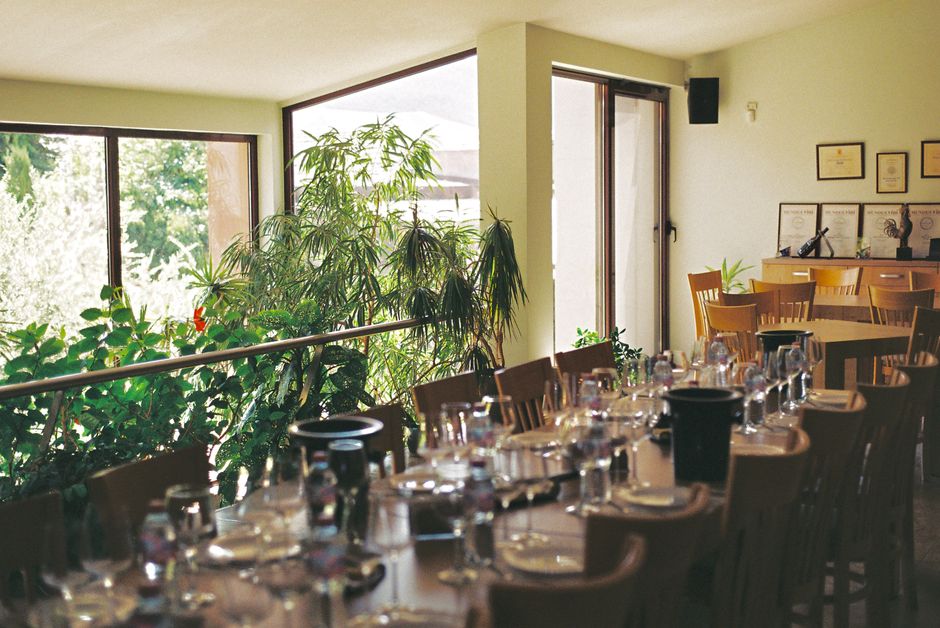
Private dining layout with polished surfaces and minimalist architectural detailing for executive hosting.
The infrastructure requirements of high-net-worth hosting at Tiger Mansion LV
To avoid these administrative and operational headaches, experienced planners are shifting toward dedicated private estates. When hosting senior leadership or important stakeholders, the environment must match the caliber of the guests. Tiger Mansion LV provides the infrastructure required to support smooth executive offsites without the friction of public venues or the limitations of standard homes.
The table below illustrates how a dedicated private residence estate compares to traditional booking models across essential operational dimensions:
| Dimension | Hotel Ballrooms | Transient Marketplaces | Private Residence Estates |
|---|---|---|---|
| Privacy | Public access, shared common areas | Moderate privacy, unvetted neighbors | Absolute privacy, vetted entry |
| Pricing Clarity | Hidden service charges, F&B minimums | Hourly rates, cleaning fees, admin fees | Clear custom buyout agreements |
| Kitchen Standard | In-house banqueting, restrictive menus | Standard home kitchens | Commercial-grade on-site kitchen |
| Operational Control | Restrictive hotel guidelines | Remote hosts, inconsistent Wi-Fi | Dedicated management, custom setups |
Commercial capabilities versus standard residential kitchens
Most residential properties offered on transient marketplaces feature standard home kitchens. These spaces are not designed to handle the demands of professional caterers or private chefs preparing multi-course meals for dozens of guests.
To resolve this, the estate maintains a centrally located commercial kitchen. This space is equipped with dual sinks, a commercial gas range, a flattop grill, a deep fryer, a center island, double refrigerators, and double freezers. This setup allows private culinary teams to execute high-end menus and formal dinners without logistical limitations, which can be explored in detail on our private estate setting for approved private hospitality page.
This commercial-grade infrastructure ensures that meal service runs on a precise schedule, preventing delays in the offsite agenda. Planners do not need to worry about power outages from overloaded residential circuits or inadequate refrigeration space for premium ingredients.
Modular flow across distinct estate areas
A successful retreat requires a physical environment that can adapt throughout the day. Standard rental homes often force groups into a single living room or dining area, leading to physical and mental fatigue.
The estate features nearly 18 distinct areas across the property, allowing planners to design a modular and adaptive flow. Guests can transition from a morning strategic session in the grand rotunda, with its black granite floors and columns, directly to breakout discussions in connected meeting spaces.
For outdoor activations, the resort-style pool deck features an 80,000-gallon pool, waterfalls, a grotto, and the outdoor Tiger Terrace. The arrival sequence is anchored by the Koi Lair—a gated, palm-lined entry featuring a flourishing aquatic ecosystem that immediately establishes a controlled, private atmosphere for VIP arrivals, as detailed in the history of historic elegance at Tiger Mansion LV.
This architectural variety allows event producers to maintain momentum. Instead of keeping attendees in one room for eight hours, the physical flow of the property keeps guests engaged and refreshed. Planners can review how these spaces are utilized for high-stakes gatherings in our guide on why boutique estates outperform resorts for high-stakes offsites.
Evaluating fit through an inquiry and approval model
Because the property operates as a private residence estate rather than a commercial event factory, access is managed through an intentional inquiry and approval model. This approach ensures that every group hosted on the grounds conforms to the property's standards of care and discretion.
This selective process protects the integrity of the environment. Unlike public venues where multiple corporate events compete for space, parking, and staff attention, an approved booking grants exclusive access to the entire property. There are no competing crowds, no unvetted foot traffic, and no compromises on privacy.
When evaluating whether a private estate is the right fit for an upcoming gathering, planners should consider several essential criteria:
- Discretion: Is complete physical privacy required for sensitive strategic discussions?
- Control: Does the event require full customization of the arrival sequence, security, and scheduling?
- Provenance: Does the leadership team value a setting with historical character, such as the preserved elements from the Tyson era and the original 1982 Doumani Family architecture?
- Infrastructure: Does the group require professional-grade kitchen facilities and distinct breakout spaces?
By filtering options through these criteria, planners can avoid the hidden risks of mass-market rentals and hotel ballrooms. Choosing a managed, private residence estate ensures that the environment supports, rather than hinders, the goals of the offsite.
Planners looking to escape the constraints of traditional hotel agreements and the unpredictability of short-term rental platforms can initiate a qualified inquiry. Submit a detailed request regarding your vision, preferred timing, and guest count to begin the evaluation process at Tiger Mansion LV.