





The verdict
Our Quick Picks
Across a series of topic-specific queries on ChatGPT, Claude, Gemini, and Google AI Overviews, a clear architectural standard emerges for protecting digital assets: purchase cryptocurrency on a strictly regulated, financially transparent exchange, and immediately transfer long-term holdings to an offline hardware wallet with a dedicated secure element chip. For hardware, open-source transparency wins the highest trust, with the Trezor Safe 5 and Trezor Safe 3 taking top honors for their blend of EAL6+ hardware security and auditable code. On the exchange side, Kraken leads the consensus for its unmatched cryptographic Proof-of-Reserves audits and impeccable security history, while Coinbase remains the undisputed entry point for beginners seeking publicly audited corporate compliance.
- 1Best Overall Hardware WalletTrezor Safe 5
Combines a Gorilla Glass color touchscreen and an EAL6+ secure element with fully open-source, independently auditable firmware.
- 2Most Secure Crypto ExchangeKraken
Sets the industry gold standard for exchange safety with regular, user-verifiable cryptographic Proof-of-Reserves audits and rigorous account security controls.
- 3Best Mobile Hardware WalletLedger
Delivers the smoothest iOS and Android management experience via Bluetooth and the comprehensive Ledger Live app ecosystem.
- 4Best Exchange for BeginnersCoinbase
A publicly traded, US-regulated powerhouse offering an intuitive onboarding interface and institutional-grade custody.
- 5Best Seedless Hardware WalletTangem Wallet
Eliminates paper recovery phrases in favor of durable, tap-to-sign NFC smartcards that make cold storage effortless for newcomers.
- 6Best Budget Hardware WalletTrezor Safe 3
Packs the exact same EAL6+ secure element chip and open-source architecture as the flagship Safe 5 into an affordable, two-button form factor.
- 7Best Bitcoin-Only Cold WalletColdcard
An uncompromising, air-gapped security fortress designed specifically for advanced Bitcoin holders who demand PSBT signing via MicroSD or NFC.
- 8Best Multi-Chain Air-Gapped WalletKeystone 3 Pro
Isolates private keys behind three independent secure element chips and uses dynamic QR codes instead of USB or Bluetooth connections.
- 9Best Seed Phrase BackupBillfodl
Protects 24-word recovery phrases against house fires, floods, and physical crushing using marine-grade 316 stainless steel.
Side by side
At a Glance
| Specialty | AI Visibility |  ChatGPT |  Claude |  Gemini |  Google AI Overviews |
|---|---|---|---|---|---|
| Best Overall Hardware Wallet | 36 | ● | ● | ● | ● |
| Most Secure Crypto Exchange | 39 | ● | ● | ● | ● |
| Best Mobile Hardware Wallet | 33 | ● | ● | ● | ● |
| Best Exchange for Beginners | 38 | ○ | ● | ● | ● |
| Best Seedless Hardware Wallet | 35 | ○ | ● | ● | ● |
| Best Budget Hardware Wallet | 37 | ● | ● | ● | ○ |
| Best Bitcoin-Only Cold Wallet | 25 | ● | ● | ○ | ● |
| Best Multi-Chain Air-Gapped Wallet | 30 | ● | ● | ● | ● |
| Best Seed Phrase Backup | 30 | ○ | ● | ● | ● |
Trezor Safe 5
trezor.ioBest forSecurity-conscious investors and desktop-primary users who want the peace of mind of open-source software paired with the convenience of a modern touchscreen.
AI Visibility · how often AI recommends it for this topic
36/ 100
Covered by 4 of 4 AI assistants
- ChatGPT
- Gemini
- Claude
- Google AI


Open-source transparency meets elite hardware protection. Trezor Safe 5 is a flagship cold storage hardware wallet that pairs a vibrant color touchscreen and haptic feedback with an NDA-free EAL6+ certified secure element chip. For years, security-conscious crypto holders had to choose between Trezor's fully open-source, community-auditable code and the physical chip security of closed-source competitors. By integrating the OPTIGA Trust M (V3) secure element alongside open-source firmware, the Trezor Safe 5 eliminates that compromise, protecting both against remote malware and physical laboratory extraction attacks. As highlighted in analysis by Coin Bureau, this combination makes it the default choice for investors seeking transparent, long-term self-custody.
Tactile precision reduces transaction signing errors. Entering complex passphrases or verifying 42-character hexadecimal wallet addresses on a tiny two-button screen is a recipe for user fatigue and costly mistakes. The Trezor Safe 5 solves this with a 1.54-inch color touchscreen topped with scratch-resistant Gorilla Glass 3 and driven by a dedicated haptic engine. Every tap provides crisp physical confirmation, making it significantly easier to utilize advanced security features like hidden passphrase wallets or the SLIP39 Shamir multi-share backup standard, which lets users split their recovery seed into multiple distinct shares.
Desktop-first architecture leaves iOS mobile users behind. While the accompanying Trezor Suite application offers an exceptional command center on Windows, macOS, and Linux—complete with built-in Tor routing and coin control—its mobile footprint is considerably more restricted. Android users can connect the device via USB-C OTG cable to sign transactions on the go, but the lack of Bluetooth hardware means iPhone users are largely limited to a view-only portfolio tracker, as noted in hardware comparisons on cryptoradar.com.
What AI consistently says
- +Fully open-source firmware allows independent security researchers worldwide to audit the code for vulnerabilities or backdoors.
- +The NDA-free EAL6+ secure element chip provides robust physical protection against voltage glitching and side-channel attacks.
- +Native support for Shamir Backup (SLIP39) eliminates single points of failure by splitting recovery phrases across multiple physical locations.
- +Haptic touchscreen interface makes verifying contract details and entering complex passphrases remarkably fast and accurate.
What AI doesn't mention
- −Lacks Bluetooth connectivity and an internal battery, requiring a wired USB-C connection to a host device for every transaction.
- −At $169, it carries a steep price premium over the functionally identical (from a cryptographic standpoint) Trezor Safe 3.
- −iOS compatibility is heavily restricted due to the absence of wireless connectivity and Apple's USB transfer limitations.
Kraken
kraken.comBest forSecurity-first investors and active traders who want a transparent fiat-to-crypto on-ramp with low maker/taker fees on Kraken Pro before moving assets to cold storage.

AI Visibility · how often AI recommends it for this topic
39/ 100
Covered by 4 of 4 AI assistants
- ChatGPT
- Gemini
- Claude
- Google AI
Cryptographic Proof-of-Reserves sets the transparency standard. Kraken is a US-regulated cryptocurrency exchange and digital asset platform renowned for conducting regular, third-party-audited cryptographic Proof-of-Reserves verifications. Following the catastrophic collapse of opaque offshore platforms in recent market cycles, verbal assurances of solvency are no longer sufficient. Kraken allows every single customer to independently verify via a Merkle tree cryptographic hash that their exact account balance was included in the exchange's on-chain reserve audit. According to Blockchain Reporter, this commitment to verifiable on-chain accounting places Kraken at the very top of global exchange trust rankings.
Defense-in-depth security controls protect individual accounts. Founded in 2011, Kraken is one of the oldest operating cryptocurrency exchanges in the world and has never suffered a core breach of its cold storage vaults. Beyond storing 95% of deposits in offline, air-gapped, geographically distributed cages under armed guard, the platform enforces superior client-side security. Users can lock down their accounts using hardware FIDO2/WebAuthn passkeys (such as a YubiKey), set a separate Master Key to prevent unauthorized password resets, and enable a Global Settings Lock (GSL) that freezes any changes to withdrawal addresses for a preset number of days.
Dual interfaces reward users who switch to Kraken Pro. While the standard Kraken web and mobile interface offers instant one-click buying, its convenience comes with wide spread markups and up to a 1.5% instant buy fee. Savvy traders immediately toggle over to the included Kraken Pro interface—a simple switch within the same account—which unlocks deep order-book liquidity and drops maker/taker trading fees down to a fraction of a percent (starting at 0.25% maker / 0.40% taker), a cost advantage frequently emphasized by NerdWallet.
What AI consistently says
- +Industry-leading cryptographic Proof-of-Reserves audits let users mathematically confirm their assets are backed 1:1 on-chain.
- +Granular account lockdown tools, including Global Settings Lock and hardware security key enforcement, neutralize SIM-swap attacks.
- +Instant access to Kraken Pro lowers trading fees dramatically without requiring a separate account subscription.
- +24/7 live human customer support via chat and phone remains a rarity among major cryptocurrency platforms.
What AI doesn't mention
- −ACH bank purchases via Plaid trigger mandatory 7-day withdrawal holds before you can transfer the purchased crypto to a hardware wallet.
- −Regulatory friction keeps the platform unavailable to residents of New York and Maine.
- −The standard non-Pro instant buy interface embeds hefty spread fees that catch casual buyers off guard.
Ledger
ledger.comBest foriPhone users, active DeFi participants, and multi-chain investors holding diverse altcoin portfolios who want effortless mobile management.
AI Visibility · how often AI recommends it for this topic
33/ 100
Covered by 4 of 4 AI assistants
- ChatGPT
- Gemini
- Claude
- Google AI
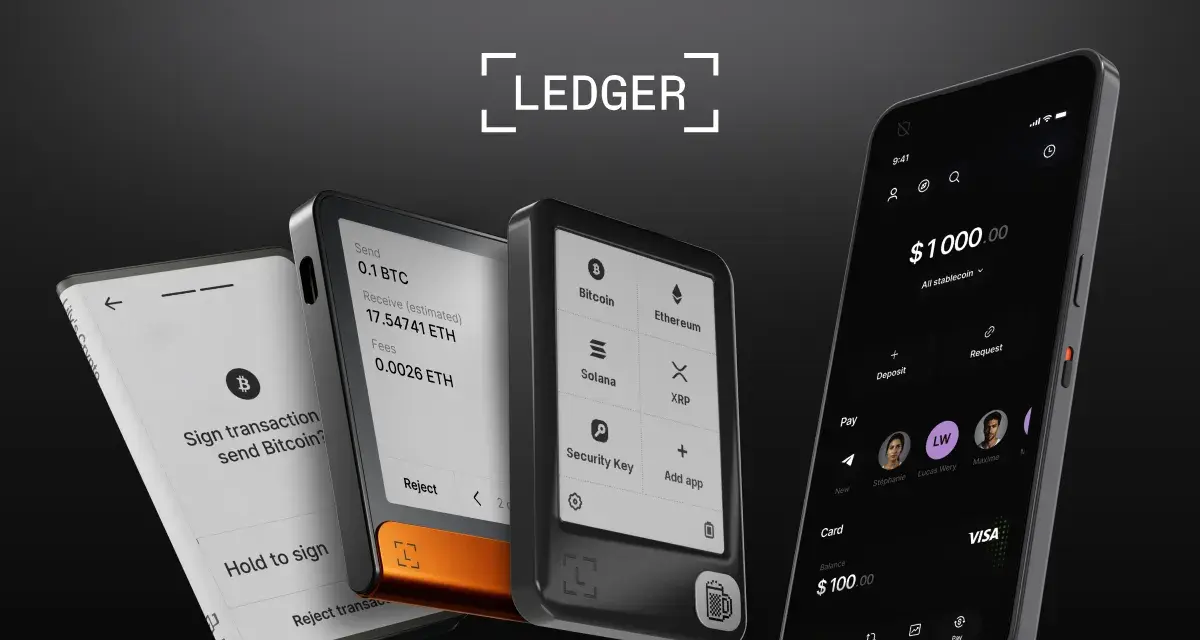
Unmatched mobile convenience and multi-chain asset coverage. Ledger is a pioneer in hardware cold storage whose flagship device lineup—spanning the portable Ledger Nano X, the E-Ink touchscreen Ledger Flex, and the curved-display Ledger Stax—delivers the most seamless smartphone integration on the market. Built around custom CC EAL5+ and EAL6+ certified secure element chips running Ledger's proprietary BOLOS operating system, these devices pair directly with iPhones and Android handsets over encrypted Bluetooth or NFC. As noted in comprehensive platform testing by Screk, no competitor matches Ledger's ability to manage, stake, and swap thousands of tokens across dozens of blockchains natively on mobile.
The Ledger Live ecosystem acts as an all-in-one Web3 portal. Hardware wallets are only as usable as their companion software, and Ledger Live is the most mature, feature-rich interface in the industry. Whether connecting a $149 Nano X or a $249 Ledger Flex, users get a unified dashboard that handles portfolio tracking, direct staking for Ethereum and Solana, NFT gallery visualization, and browser extension bridging to decentralized applications. Furthermore, the newer Ledger Flex and Stax models introduce Clear Signing on expansive, battery-efficient E-Ink touchscreens, translating unreadable smart contract data into plain human language before you authorize a transaction.
Closed-source architecture and recovery services divide security purists. Despite never suffering a remote cryptographic hack of its hardware devices, Ledger faces persistent scrutiny from the cypherpunk community. Because its secure element firmware is closed-source due to semiconductor non-disclosure agreements, users must trust Ledger's internal engineering and third-party audits rather than public code inspection. This tension peaked with the introduction of Ledger Recover, an optional paid subscription that shards and encrypts your recovery phrase across third-party custodians. While strictly opt-in, its mere capability within the firmware prompted many privacy purists on Reddit's r/Cold_Wallets to favor open-source rivals.
What AI consistently says
- +Encrypted Bluetooth connectivity works flawlessly with iOS and Android, making it the premier choice for mobile-first crypto users.
- +Ledger Live supports over 5,500 digital assets natively and integrates smoothly with third-party Web3 wallets like MetaMask and Phantom.
- +Newer models like the Ledger Flex and Stax utilize high-contrast E-Ink touchscreens that display transaction details even when powered off.
- +Clear Signing technology parses complex smart contract calls into readable text to prevent blind-signing phishing drains.
What AI doesn't mention
- −The proprietary BOLOS firmware running inside the secure element is closed-source and cannot be independently audited by the general public.
- −The legacy Ledger Nano S Plus and Nano X have tiny internal storage capacities, forcing users to constantly uninstall and reinstall coin apps (though funds remain safe).
- −Past third-party marketing database breaches (in 2020) and the controversy surrounding the optional Ledger Recover feature have left lasting reputational scars among privacy maximalists.
Coinbase
coinbase.comBest forFirst-time cryptocurrency buyers, New York residents, and traditional investors who prioritize SEC-filed financial transparency and a polished banking experience.
AI Visibility · how often AI recommends it for this topic
38/ 100
Covered by 3 of 4 AI assistants
- ChatGPT
- Gemini
- Claude
- Google AI
Publicly audited corporate compliance inspires mainstream trust. Coinbase is the largest United States-based cryptocurrency exchange and a publicly traded company (NASDAQ: COIN) that operates under rigorous SEC oversight and holds a sought-after New York BitLicense. For first-time buyers intimidated by the technical complexities of blockchain finance, Coinbase functions with the polish and regulatory accountability of a modern fintech brokerage. Its quarterly financials are audited by Deloitte, its USD cash balances are held in FDIC-insured custodial accounts and money market funds, and it acts as the primary custodian for the vast majority of Wall Street's spot Bitcoin and Ethereum ETFs. Reviews on money.com consistently point to this institutional pedigree as the strongest reassurance for cautious newcomers.
Frictionless onboarding paired with an integrated Web3 ecosystem. Opening an account, linking a US bank via ACH or wire transfer, and executing a first purchase takes minutes on Coinbase's clean, jargon-free interface. Beyond basic buying and selling, the platform offers Coinbase Earn educational rewards, seamless tax reporting integration, and direct bridging to the separate, self-custodial Coinbase Wallet mobile app. When beginners outgrow the standard retail app, they can switch freely to Coinbase Advanced inside the exact same interface, replacing simplified order tickets with TradingView charts and lowering transaction fees to a competitive maker/taker tier structure.
High retail fees and the absence of on-chain Proof-of-Reserves. Convenience on the basic Coinbase retail tier comes at a high financial cost; between spread markups and flat tiered fees, casual buyers can easily lose 1.5% to 3% on small transactions if they fail to toggle on Coinbase Advanced. More importantly for crypto-native purists, while Coinbase publishes audited corporate balance sheets for regulators and shareholders, it does not provide individual users with a cryptographic Merkle-tree Proof-of-Reserves tool to independently verify their specific on-chain balances—a sharp contrast to Kraken highlighted in Coinperps' US exchange rankings.
What AI consistently says
- +As a publicly traded US corporation on the NASDAQ, its financial disclosures and regulatory compliance are unmatched in the domestic market.
- +Available across almost all US jurisdictions, including strict regulatory regimes like New York where many rival platforms are barred.
- +The standard retail interface removes all technical friction for first-time buyers, while Coinbase Advanced satisfies experienced chart traders.
- +Institutional-grade cold storage architecture protects the majority of customer assets and powers major Wall Street spot crypto ETFs.
What AI doesn't mention
- −Lacks a user-verifiable, cryptographic Proof-of-Reserves audit system, relying instead on traditional corporate accounting disclosures.
- −Trading fees and spread markups on the default retail interface are exceedingly high unless you manually switch to the Coinbase Advanced view.
- −Automated compliance algorithms can occasionally trigger sudden account restrictions or withdrawal freezes that take weeks to resolve through customer support.
Tangem Wallet
tangem.comBest forComplete beginners, mobile-only users, and people gifting crypto to non-technical family members who would likely mismanage a traditional 24-word paper seed phrase.
AI Visibility · how often AI recommends it for this topic
35/ 100
Covered by 3 of 4 AI assistants
- ChatGPT
- Gemini
- Claude
- Google AI
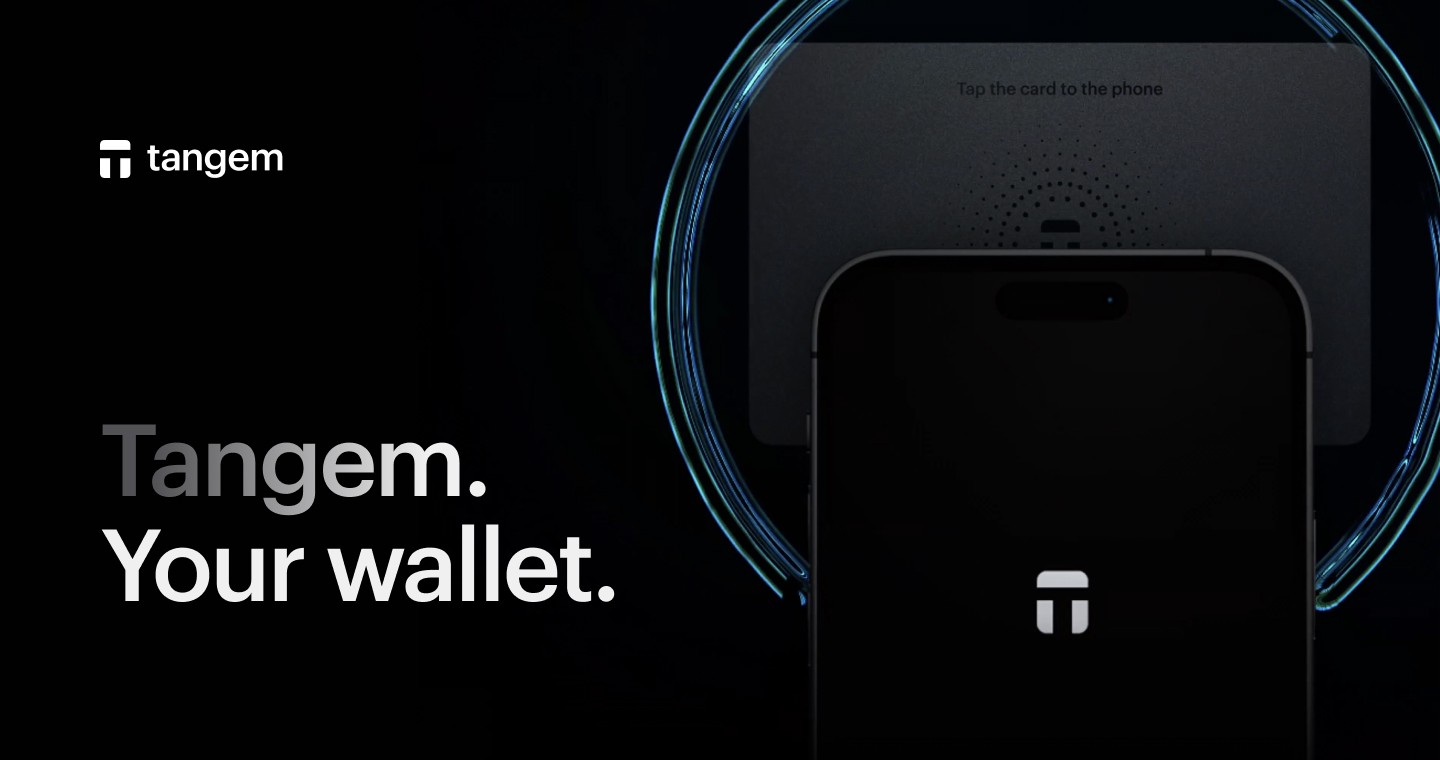
Eliminates paper seed phrase anxiety with tap-to-sign NFC cards. Tangem Wallet is a smartcard-shaped hardware cold wallet that replaces fragile paper recovery phrases and USB cables with an EAL6+ certified Samsung semiconductor chip embedded directly inside a durable plastic card. Sold in sets of two or three cards for roughly $55 to $70, Tangem radically reimagines self-custody onboarding. During initial setup, the chip inside the primary card generates a random private key internally and uses an encrypted NFC handshake with your smartphone to duplicate that key securely onto your backup cards. Instead of hiding a 24-word paper list that can be burned, lost, or photographed by a thief, you simply store your spare physical cards in separate safe locations. This approachable form factor frequently earns praise in altFINS' hardware wallet guide.
Built for extreme physical durability and instantaneous mobile use. Because Tangem cards contain no batteries, buttons, screens, or USB ports, there are virtually no mechanical components that can degrade over time. The monolithic card construction is rated IP68 waterproof and dustproof, resistant to X-rays and electromagnetic pulses, and engineered to last over 25 years. Signing a transaction on iOS or Android is as fast as making an Apple Pay purchase at a grocery store: you prepare the transfer in the open-source Tangem mobile app, tap the card to the back of your phone for one second, and the internal chip cryptographically signs the payload.
Blind signing on a smartphone screen creates a theoretical attack surface. While the newer Tangem 2.0 generation optionally allows users to generate or import a traditional 12- or 24-word BIP39 seed phrase if they refuse to rely solely on backup cards, the hardware's biggest architectural compromise remains its lack of an onboard display. Because a credit card has no screen, you cannot independently verify the destination wallet address on the hardware device itself. If your smartphone operating system were severely compromised by sophisticated malware that swapped the recipient address on your phone's screen just before you tapped the card, you would unknowingly sign a transaction to an attacker—a trade-off dissected in Blockchain Web3 Insights.
What AI consistently says
- +Seedless multi-card backup architecture removes the #1 cause of user funds loss: misplaced or compromised paper recovery phrases.
- +Effortless NFC tap-to-sign workflow works identically on both iPhone and Android without cables, batteries, or Bluetooth pairing headaches.
- +EAL6+ certified secure element chip and monolithic IP68 waterproof build offer exceptional physical longevity backed by a 25-year warranty.
- +Priced under $70 for a three-card set, making it one of the most affordable and accessible cold storage entry points on the market.
What AI doesn't mention
- −The total absence of an onboard screen forces you to trust that your smartphone's display is showing the true recipient address ('blind signing').
- −If you choose the default seedless setup and lose all two or three physical cards simultaneously, your funds are permanently unrecoverable.
- −Using the optional seed-phrase mode briefly exposes the recovery words on your smartphone screen during initial setup, slightly weakening pure cold-storage isolation.
Trezor Safe 3
trezor.ioBest forLong-term 'HODLers' and budget-conscious investors who want uncompromising open-source cold storage without paying extra for a color touchscreen.
AI Visibility · how often AI recommends it for this topic
37/ 100
Covered by 3 of 4 AI assistants
- ChatGPT
- Gemini
- Claude
- Google AI
Flagship EAL6+ cryptographic security at less than half the price. Trezor Safe 3 is an entry-level open-source hardware wallet that delivers the exact same OPTIGA Trust M (V3) EAL6+ secure element chip and auditable firmware found in the flagship Trezor Safe 5 for just $79. For years, budget hardware wallets forced buyers to accept either closed-source software or vulnerable general-purpose microcontrollers that could have their memory dumped if a thief gained physical possession of the device. The Trezor Safe 3 closes that historic vulnerability completely: your device PIN is validated by the dedicated secure element chip, throttling brute-force physical attacks while maintaining SatoshiLabs' core commitment to 100% open-source transparency. Independent comparisons on Memeburn consistently name it the highest-value security purchase in crypto.
Proven two-button navigation keeps the attack surface minimal. Rather than paying nearly a hundred dollars extra for a color touchscreen and haptic motor, the Trezor Safe 3 utilizes a crisp 0.96-inch monochromatic OLED screen paired with two physical tactile buttons. While entering a complex passphrase or confirming a long SLIP39 Shamir multi-share recovery seed takes a few extra minutes of button clicking compared to the Safe 5, the mechanical simplicity guarantees reliability. For investors whose primary workflow is moving Bitcoin, Ethereum, and major stablecoins off an exchange into deep cold storage a few times a year, the physical interface is more than sufficient.
Seamless Trezor Suite integration with the same wired limitations. Plugging the Trezor Safe 3 into a computer via its USB-C port launches the comprehensive Trezor Suite desktop app, unlocking native staking, decentralized exchange swaps, CoinJoin privacy tools (where supported), and granular UTXO management. Like its pricier sibling, however, the Safe 3 has no battery or wireless radios. It operates wonderfully on Windows, macOS, Linux, and Android via a wired USB-C cable, but remains incompatible with full transaction signing on iPhones.
What AI consistently says
- +At $79, it offers an unbeatable price-to-security ratio by packing an NDA-free EAL6+ secure element chip into an entry-level chassis.
- +Runs the exact same battle-tested, fully open-source firmware and Trezor Suite desktop software as the premium Trezor Safe 5.
- +Supports advanced cryptographic standards including Shamir Backup (SLIP39) and hidden passphrase-protected vaults.
- +Lightweight, durable, and devoid of lithium-ion batteries that can swell or lose charge capacity after years in a safe deposit box.
What AI doesn't mention
- −Typing long passphrases or recovering a 24-word seed using only two physical buttons is tedious and time-consuming.
- −The small monochromatic OLED screen displays fewer characters at once, requiring users to scroll carefully to verify full wallet addresses.
- −No Bluetooth connectivity means iOS users cannot use the device to sign outgoing transactions from an iPhone.
Coldcard
coldcard.comBest forBitcoin maximalists, high-net-worth treasury holders, and technical users setting up multi-signature vaults who demand zero USB contact with online computers.
AI Visibility · how often AI recommends it for this topic
25/ 100
Covered by 3 of 4 AI assistants
- ChatGPT
- Gemini
- Claude
- Google AI
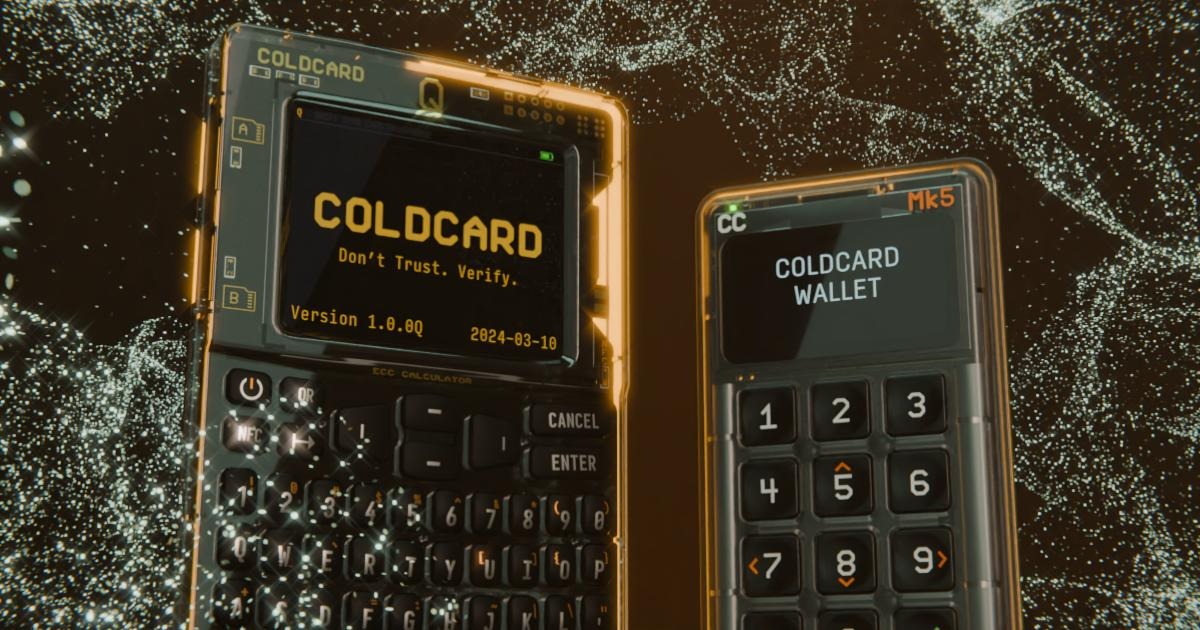
Uncompromising air-gapped architecture built strictly for Bitcoin. Coldcard, manufactured by Coinkite in Canada, is a specialized Bitcoin-only hardware wallet engineered to keep private keys completely isolated from internet-connected computers through physical air-gapped workflows. Unlike mass-market wallets that add support for thousands of altcoins and Web3 smart contracts—each expanding the potential firmware codebase and attack surface—both the Coldcard Mk4 and the newer QWERTY-equipped Coldcard Q strip away every line of non-Bitcoin code. As detailed by Bitcoin security specialists at Bitbo, this singular focus makes Coldcard the undisputed gold standard among serious Bitcoiners and multi-signature treasury operators.
Dual secure elements and flexible zero-cable transaction signing. Inside the industrial transparent plastic housing, Coldcard protects your keys across two separate secure element chips manufactured by different vendors, ensuring that even an undiscovered zero-day flaw in one chip vendor's silicon cannot compromise your seed. Even more impressively, you never have to plug a Coldcard into a computer. Powered by a simple wall outlet battery pack (or three AAA batteries on the Coldcard Q), you can shuttle Partially Signed Bitcoin Transactions (PSBTs) back and forth using a removable MicroSD card, tap-to-sign NFC, or optical QR codes, guaranteeing your hardware wallet never touches an untrusted USB host.
Extreme counter-coercion features Come with a steep learning curve. Coldcard treats physical coercion and wrench attacks as first-class threat models. Users can configure multiple 'Duress PINs' that open decoy wallets with small plausible balances, or trigger a 'Brick Me' PIN that permanently fries the internal secure element if you are forced to unlock the device under threat. However, there is no proprietary 'Coinkite Live' beginner app to hold your hand. Operating a Coldcard requires pairing it with advanced third-party Bitcoin coordinator software like Sparrow Wallet, Electrum, or Nunchuk, making it intimidating for casual users, a caveat routinely emphasized on Reddit's r/BitcoinBeginners.
What AI consistently says
- +Strict Bitcoin-only firmware eliminates the massive code bloat and vulnerability surface associated with multi-chain altcoin support.
- +True air-gapped operation via MicroSD card slots, NFC, and QR codes (on the Q model) means the wallet never needs to connect to a computer.
- +Dual-vendor secure element architecture protects private keys against hardware-level supply chain and silicon vulnerabilities.
- +Advanced physical defense tools include Duress PINs, decoy wallets, and instant self-destruct PINs for high-net-worth threat models.
What AI doesn't mention
- −Completely useless for anyone holding Ethereum, Solana, stablecoins, or any digital asset other than Bitcoin.
- −Lacks a native first-party portfolio app, requiring users to learn technical third-party software like Sparrow Wallet or Electrum.
- −The industrial calculator-style aesthetic and complex menu tree can easily overwhelm beginners unfamiliar with UTXOs and PSBTs.
Keystone 3 Pro
keyst.oneBest forActive DeFi users and multi-chain investors who want the expansive screen of a smartphone combined with the total physical isolation of an air-gapped QR workflow.
AI Visibility · how often AI recommends it for this topic
30/ 100
Covered by 4 of 4 AI assistants
- ChatGPT
- Gemini
- Claude
- Google AI
Air-gapped QR code isolation for the multi-chain Web3 world. Keystone 3 Pro is a smartphone-sized, air-gapped hardware wallet that replaces all USB data cables, Bluetooth radios, and NFC antennas with a high-definition camera and a 4-inch color touchscreen for optical QR code signing. While Coldcard pioneered air-gapped security for Bitcoin purists, multi-chain investors holding Ethereum, Solana, and Layer-2 tokens were historically forced to rely on wired USB or Bluetooth connections. The Keystone 3 Pro brings true air-gapped isolation to the broader crypto ecosystem: to authorize a transaction, your software wallet displays an animated QR code on your computer or phone screen, you scan it with the Keystone's rear camera, verify the human-readable details on the 4-inch display, and scan the signed QR code back. This zero-connectivity model is frequently praised in CoinGabbar's hardware analysis.
Triple secure element chips and Manageable multi-seed vaults. Inside its sleek chassis, the Keystone 3 Pro incorporates three distinct secure element chips (Microchip ATECC608B, Maxim DS28S60, and Maxim MAX32520) alongside fully open-source firmware. A standout capability for active DeFi traders is its native support for three separate seed phrases on a single physical device—each tied to its own distinct password or biometric fingerprint login. This allows you to keep a massive long-term cold storage vault on Seed #1 while using Seed #2 for higher-risk smart contract interactions and airdrop claiming, without having to carry multiple physical devices.
Deep third-party wallet integration offset by battery maintenance. Instead of forcing users into a walled-garden proprietary app, Keystone is built to act as the hardware signing backbone for the industry's most popular software interfaces, integrating smoothly with MetaMask, Rabby, OKX Wallet, Keplr, and Sparrow. The primary trade-off of running a 4-inch touchscreen and camera is power management; the internal rechargeable lithium-ion battery requires periodic charging via USB-C (which can be disabled for data transfers in settings), and scanning animated QR codes requires a well-lit room and a webcam on your desktop computer.
What AI consistently says
- +100% air-gapped transaction signing via dynamic QR codes eliminates USB, Bluetooth, and Wi-Fi attack vectors for multi-chain assets.
- +Incorporates three independent secure element chips from different manufacturers alongside fully open-source firmware.
- +Supports storing up to three completely independent seed phrases on one device, accessible via different passwords or the built-in fingerprint sensor.
- +Massive 4-inch color touchscreen makes reviewing complex DeFi smart contract parameters effortless compared to thumb-drive wallets.
What AI doesn't mention
- −Requires your desktop computer or laptop to have a working webcam to scan the signed QR code back from the Keystone's screen.
- −Relies on an internal rechargeable lithium-ion battery that will slowly degrade over many years if left completely discharged in a safe.
- −Does not have its own proprietary portfolio management app, requiring you to pair it with third-party wallets like MetaMask, Rabby, or OKX.
Billfodl
billfodl.comBest forEvery hardware wallet owner who currently has their 12- or 24-word recovery seed written down on vulnerable paper or cardboard.
AI Visibility · how often AI recommends it for this topic
30/ 100
Covered by 3 of 4 AI assistants
- ChatGPT
- Gemini
- Claude
- Google AI
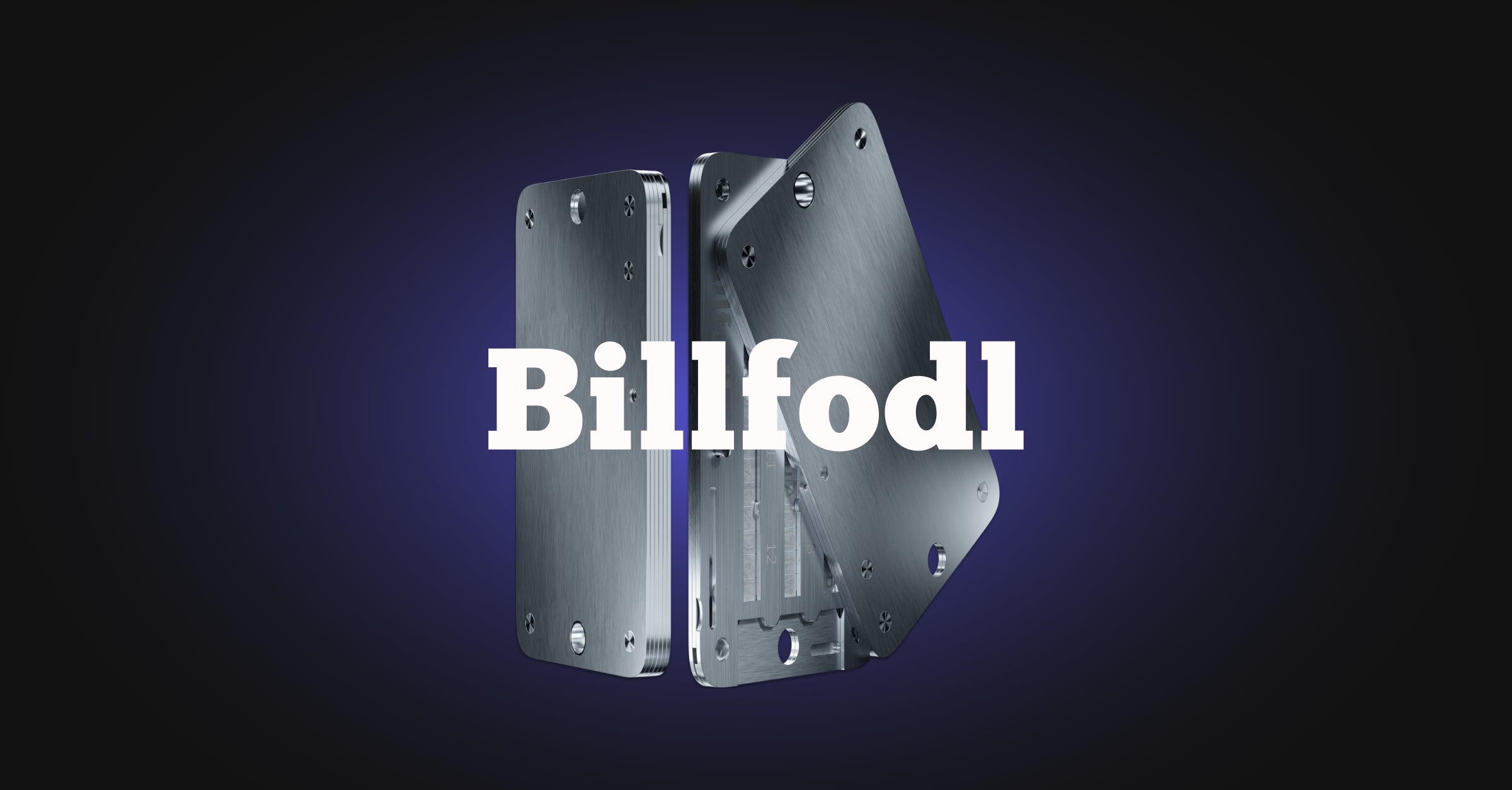
Marine-grade stainless steel eliminates the fragile paper bottleneck. Billfodl is a physical seed phrase backup cassette precision-machined from solid 316 marine-grade stainless steel designed to protect your 24-word recovery seed against catastrophic house fires, floods, and physical decay. Every single hardware wallet on the market—aside from seedless NFC cards—ultimately relies on a 12- or 24-word BIP39 recovery phrase. If your hardware wallet breaks or is lost, that recovery phrase is the only way to restore your funds; yet most investors write those words on a cardboard slip that comes in the box. With a melting point exceeding 2,500°F (1,375°C)—more than double the temperature of an average residential house fire—and complete immunity to water corrosion and electrical shock, Billfodl ensures your cold storage inheritance survives physical disasters, a critical step emphasized by The Crypto Merchant.
Slide-and-lock tile assembly avoids messy hand stamping. Many competing metal backups require you to buy a heavy hammer, an anvil, and a set of steel letter punches to painstakingly stamp each letter into a blank plate, where a single typo ruins the metal sheet. Billfodl uses a spring-loaded retention track and comes with a laser-engraved library of stainless steel letter tiles.Because the official BIP39 standard guarantees that the first four letters of every recovery word are completely unique (for example, 'aban' always equals 'abandon'), you simply slide the first four characters of each of your 24 words into the double-sided chassis and screw the retention gate shut.
Physical security still requires a hidden location or passphrase. While a stainless steel cassette makes your seed indestructible against the elements, it does not encrypt the words printed on the tiles. Anyone who physically discovers your Billfodl can immediately read the 24 words and sweep your funds into their own wallet. Consequently, security experts recommend either storing the steel plate in a bank safe deposit box or pairing your hardware wallet with a memorized 25th-word BIP39 passphrase stored separately from the metal backup.
What AI consistently says
- +Constructed from AISI 316 marine-grade stainless steel that resists corrosion, acid, crushing, and fire temperatures over 2,500°F.
- +Precision laser-engraved letter tiles slide smoothly into the chassis tracks, requiring no hammers, punches, or irreversible stamping errors.
- +Accommodates a full 24-word BIP39 recovery seed by storing the uniquely identifying first four letters of each word across both sides.
- +Reusable design allows you to disassemble and rearrange the tiles if you ever rotate your wallet to a brand-new seed phrase.
What AI doesn't mention
- −If the retention screw is not tightened firmly and the unit is dropped onto concrete before locking, tiles could potentially shift during assembly.
- −Stores your recovery phrase in plain text; if a burglar finds the physical steel plate and you didn't set a 25th passphrase word, your funds are compromised.
- −Slightly bulkier and heavier than simple stamped titanium washers or compact capsule formats like the Cryptosteel Capsule.
Also considered
Brands AI Didn't Consistently Recommend
Not every popular brand in the cryptocurrency space holds up under cross-platform scrutiny. Across our research, AI systems consistently filtered out or issued strong warnings against several well-known wallets and exchanges due to historical security breaches, regulatory shutdowns, or aging hardware architectures.
- Ledger Nano S (Original)AI report
Officially discontinued and replaced by the Nano S Plus and Trezor Safe 3; its tiny internal memory could barely hold two or three blockchain apps simultaneously, and its micro-USB port and dim screen are thoroughly outdated in 2026.
- KeepKey
Once a popular budget alternative, KeepKey is routinely skipped due to stagnant hardware development, lack of a modern high-assurance secure element comparable to EAL6+ rivals, and sparse firmware update velocity.
- Atomic Wallet
Heavily flagged across platforms following a massive June 2023 security exploit that drained over $100 million from user accounts, combined with its closed-source software architecture that leaves key generation unverified.
- Binance (Global & Binance.US)
While still the highest-volume offshore exchange globally, AI models consistently steer US and security-first investors away from Binance due to past DOJ settlements, severe US banking on-ramp restrictions, and complex regulatory friction compared to Kraken and Coinbase.
- Ellipal Titan
Despite offering an air-gapped QR code form factor, Ellipal is frequently bypassed in favor of the Keystone 3 Pro because Ellipal relies on closed-source firmware and forces users to route transactions through its proprietary mobile app.
How to choose
2026 Best Crypto Hardware Wallets and Secure Exchanges Buying Guide
Securing digital assets requires understanding how exchanges and hardware wallets work together as a two-part defense system. Below are the essential architectural principles you need to evaluate before purchasing a cold wallet or funding an exchange account.
01
Cold Wallets vs. Hot Wallets: Why Self-Custody Matters
A hardware cold wallet isolates your private keys completely offline, whereas a software hot wallet stores keys on an internet-connected device. Popular apps like MetaMask, Phantom, and Trust Wallet are exceptionally convenient for daily Web3 interactions, but because they run on your smartphone or desktop computer, their encrypted key files sit on a machine constantly exposed to browser exploits, clipboard hijackers, and remote infostealer malware. According to educational frameworks on Ledger Academy, a cold wallet bridges this gap by generating and locking your cryptographic keys inside a dedicated physical microprocessor that never touches the internet.
Transactions are signed inside the hardware device, never on your computer. When you initiate a transfer using a hardware wallet, your computer simply prepares an unsigned digital receipt and sends it to the cold wallet via USB, Bluetooth, or QR code. You physically verify the destination address on the hardware wallet's built-in screen and press a physical button; the internal chip signs the transaction mathematically and sends only the harmless public signature back to the computer. Even if your PC is completely riddled with malware, the attacker cannot extract your private keys from the hardware device.
02
What Is an EAL6+ Secure Element Chip and Open-Source Firmware?
An EAL6+ secure element is a tamper-resistant semiconductor chip designed to thwart physical laboratory attacks, while open-source firmware ensures the software running on the wallet is publicly auditable. Evaluation Assurance Level (EAL) ratings measure how thoroughly a chip has been tested against physical extraction methods like voltage glitching, laser fault injection, and electromagnetic side-channel analysis. Banking credit cards and biometric passports typically rely on EAL5+ or EAL6+ chips to prevent thieves who steal a physical device from dumping its internal memory.
You no longer have to choose between secure silicon and open-source code. Historically, semiconductor manufacturers forced wallet makers to sign strict non-disclosure agreements (NDAs) to use secure elements, which prevented companies like Ledger from publishing their firmware source code. Meanwhile, early open-source wallets like the original Trezor Model One skipped the secure element entirely to keep their code public. In 2026, devices like the Trezor Safe 5, Trezor Safe 3, and Keystone 3 Pro utilize NDA-free EAL6+ secure elements alongside 100% open-source firmware, giving users both world-class physical tamper resistance and transparent, community-verified software.
03
Air-Gapped vs. USB vs. Bluetooth Hardware Wallets
Air-gapped wallets communicate strictly through optical QR codes or MicroSD cards, eliminating all direct wired or wireless data connections to an online host. Security purists often prefer air-gapped devices like the Coldcard Q or Keystone 3 Pro because removing USB data controllers and Bluetooth radio stacks from the transaction workflow eliminates any theoretical possibility of a zero-day firmware vulnerability being exploited over a live cable or wireless handshake.
Wired USB and Bluetooth remain extraordinarily safe for everyday investors. While air-gapping represents the pinnacle of isolation, no mainstream hardware wallet has ever had its private keys extracted remotely over a USB cable or Bluetooth connection. Bluetooth connections on devices like the Ledger Flex and Nano X only transmit public addresses and already-signed transaction payloads—never private keys—and require physical confirmation on the device screen. If you primarily manage your portfolio from an iPhone, an NFC card like Tangem or a Bluetooth-enabled Ledger is vastly more practical than juggling MicroSD cards.
04
How to Evaluate Crypto Exchange Safety: Proof of Reserves vs. Public Audits
The safest crypto exchanges combine strict domestic regulatory licensing with user-verifiable cryptographic Proof-of-Reserves (PoR) and institutional cold storage custody. When you deposit funds onto an exchange, you hold an IOU from that company until you withdraw the assets to your own hardware wallet. To avoid the fate of failed platforms like FTX, an exchange must prove two distinct things: that it holds 100% of customer assets in reserve (assets), and that it hasn't secretly borrowed against those funds (liabilities).
Cryptographic audits and public corporate disclosures complement each other. As detailed in Kraken's security guide, cryptographic Proof-of-Reserves uses a Merkle tree data structure audited by an independent accounting firm to let every individual user verify mathematically that their exact account balance was included in the exchange's on-chain wallet snapshot. Conversely, publicly traded companies like Coinbase provide SEC-mandated quarterly financial disclosures audited by Big Four accounting firms. Whether you choose Kraken for its on-chain PoR transparency or Coinbase for its public balance sheet, the golden rule identified by Coin Bureau remains unchanged: use exchanges for buying and selling, not for long-term storage.
05
The Beginners' Workflow: Moving Crypto From an Exchange to Cold Storage
The safest way for beginners to secure crypto is to purchase assets on a low-fee exchange interface, allow any bank clearing holds to expire, and transfer the funds to a hardware wallet using a small test transaction first. Start by opening an account on a regulated fiat on-ramp like Coinbase or Kraken, securing your login immediately with a hardware passkey or authenticator app (never SMS text codes), and switching to the platform's advanced trading view (Kraken Pro or Coinbase Advanced) to save up to 80% on transaction fees.
Always verify receiving addresses on the hardware wallet's physical screen. While waiting for your bank's ACH deposit hold to clear, set up your new hardware wallet offline and record your recovery phrase on paper or stainless steel—never typing the seed words into a computer or photographing them with a smartphone. When ready to withdraw, generate a receiving address in your wallet companion app, confirm that the characters shown on your computer monitor match the characters displayed on the hardware wallet's physical screen, and send a tiny $10 test amount first before transferring your main balance.
06
Seed Phrase Backups: BIP39, Shamir Backup, and Stainless Steel Plates
Your hardware wallet is replaceable, but your 12- or 24-word recovery seed phrase is the actual master key to your entire cryptocurrency portfolio. If your Trezor, Ledger, or Keystone is destroyed or lost, you can simply buy any compatible BIP39 hardware wallet from any manufacturer, enter your recovery words into the physical device, and regain full access to your blockchain addresses. Conversely, if your house floods or burns down and destroys your paper seed backup alongside your hardware device, your funds are gone forever.
Upgrade from paper to stainless steel and multi-share backups. Every serious investor should transfer their paper recovery words onto a corrosion-proof, fire-resistant 316 stainless steel backup like the Billfodl or Cryptosteel Capsule, which can withstand temperatures above 2,500°F. For larger portfolios, consider buying a wallet that supports Shamir Backup (SLIP39)—such as the Trezor Safe 3 or Safe 5—which allows you to mathematically split your seed into multiple unique 20-word shares (for example, requiring any 2 of 3 shares to recover), eliminating any single physical point of failure.
Common questions
Frequently Asked Questions
Which hardware crypto wallet is the safest?
The Trezor Safe 5 and Trezor Safe 3 are widely considered the safest all-around hardware crypto wallets because they combine an NDA-free EAL6+ certified secure element chip with 100% open-source, independently auditable firmware. For Bitcoin-only investors seeking maximum physical isolation, the Coldcard Mk4 and Coldcard Q are the safest options due to their dual-vendor secure elements and strictly air-gapped MicroSD transaction workflow.
Which crypto wallet is the most secure?
Cold storage hardware wallets that isolate private keys offline inside dedicated secure element chips—such as the Trezor Safe 5, Keystone 3 Pro, and Coldcard—are the most secure crypto wallets available. Unlike mobile or desktop software wallets (hot wallets) that remain connected to the internet, a hardware wallet requires physical button or touchscreen confirmation on an isolated device, making remote malware key extraction virtually impossible.
Which are the safest crypto exchanges?
Kraken and Coinbase are the safest crypto exchanges for US and global investors in 2026. Kraken leads in technical transparency by providing third-party audited, user-verifiable cryptographic Proof-of-Reserves alongside never having suffered a core vault breach since 2011, while Coinbase offers the highest level of corporate regulatory transparency as a publicly traded, SEC-supervised company listed on the NASDAQ.
Can FBI track BTC wallet?
Yes, law enforcement agencies like the FBI can track Bitcoin (BTC) wallet transactions because the Bitcoin blockchain is a permanently public, transparent ledger rather than an anonymous network. While a self-custodial hardware wallet address does not hold your name or Social Security number directly on-chain, blockchain forensics firms like Chainalysis can link your public wallet address to your real-world identity whenever you transfer funds to or from a regulated Know-Your-Customer (KYC) exchange like Coinbase or Kraken.
What is the best crypto hardware wallet for beginners?
The Tangem Wallet and the Trezor Safe 3 are the best crypto hardware wallets for beginners depending on your preferred device workflow. Tangem is ideal for smartphone-first newcomers because its tap-to-sign NFC smartcards eliminate fragile paper seed phrases entirely, while the $79 Trezor Safe 3 provides an intuitive, step-by-step guided setup on desktop computers through the user-friendly Trezor Suite app.
What happens if my hardware wallet breaks or the manufacturer goes out of business?
Your cryptocurrency is completely unaffected if your physical hardware wallet breaks or if the manufacturer goes out of business, because your coins live on the public blockchain, not inside the plastic gadget. As long as you have safeguarded your 12- or 24-word BIP39 recovery seed phrase (or backup cards in the case of Tangem), you can enter those exact recovery words into any compatible hardware or software wallet from a different brand and immediately restore full control of your funds.
Is it safe to buy a hardware wallet on Amazon or eBay?
You should never buy a second-hand hardware wallet on eBay, and it is always safest to order directly from the manufacturer's official website (such as Trezor.io, Ledger.com, or Coinkite.com) rather than third-party marketplace resellers to avoid supply-chain tampering. If you do purchase from an official brand storefront on Amazon, ensure the device never comes with a pre-printed recovery seed card in the box, verify the holographic tamper seals, and let the companion software run an automatic cryptographic authenticity check before depositing funds.
How much money should I have in crypto before buying a hardware wallet?
A widely accepted rule of thumb is to purchase a hardware cold wallet as soon as your cryptocurrency holdings exceed 10 times the cost of the device—meaning roughly $600 to $1,500 in digital assets. Once your portfolio crosses that threshold, paying $55 for a Tangem Wallet or $79 for a Trezor Safe 3 is an inexpensive one-time insurance policy against exchange bankruptcies, SIM-swap account takeovers, and computer malware.
Why shouldn't I just leave my crypto on a regulated exchange like Coinbase or Kraken?
Leaving long-term holdings on any centralized exchange exposes you to counterparty risk, because you do not hold the cryptographic private keys to those assets. Even on well-regulated platforms like Coinbase or Kraken, automated compliance algorithms can unexpectedly freeze your account during routine verification checks, phishing or SIM-swap attacks can compromise your email login, and standard FDIC banking insurance does not cover cryptocurrency balances.
Behind the data
How We Researched This
AI Platform Responses
AI Platforms
Brands Ranked
Date
To determine which cryptocurrency hardware wallets and regulated exchanges earn the strongest consensus in 2026, Pendium Research conducted a systematic cross-platform analysis across the four dominant AI synthesis engines: OpenAI's ChatGPT, Anthropic's Claude, Google's Gemini, and Google AI Overviews.
Rather than relying on a single human reviewer's subjective preference for a specific touchscreen or user interface, we executed a series of topic-specific queries designed to evaluate how these systems weigh cryptographic architecture, open-source transparency, regulatory compliance, and real-world usability. Because each AI platform actively synthesizes conclusions from a vast underlying corpus of technical cybersecurity audits, long-term community discussions on forums like Reddit, independent comparison testing, and regulatory disclosures, cross-referencing their outputs surfaces a high-conviction signal of market trust.
Our analysis pipeline operates in three distinct stages. First, we capture the raw recommendations across all four platforms and normalize entity mentions—separating overarching parent brands (such as Trezor, Ledger, and Kraken) from specific hardware models and product tiers (such as the Trezor Safe 5, Trezor Safe 3, Keystone 3 Pro, and Kraken Pro). This prevents brand-level fragmentation from distorting how specific products rank when users ask targeted questions about budget cold storage or low-fee exchange trading.
Second, we score each entity based on cross-platform presence, average recommendation position, and net sentiment ratio. A hardware wallet or exchange that appears at the top of responses across all four platforms with zero negative security caveats scores significantly higher than a niche device praised by only one model or polarizing across security communities.
Finally, we layer in per-brand Visibility Scan Previews for every major recommendation that surfaces. This secondary deep-dive step extracts the specific product attributes, technical specifications (such as EAL6+ secure element certifications, air-gapped QR signing workflows, and Merkle-tree Proof-of-Reserves auditing), and recurring criticisms that the AI models cite when evaluating each brand individually. By combining broad category rankings with granular per-brand intelligence, this report reflects where the collective evidence of the modern web converges on digital asset security.
AI knows them, Google doesn't
Diamonds in the Rough
These brands are consistently recommended by AI assistants but rarely appear in traditional Google search results, a sign the market may be shifting before search rankings catch up.
Mentioned 2x across 2 AI platforms with near-unanimous positive sentiment — and when AI does bring them up, they rank in the top 1 on average. An under-the-radar pick worth investigating.
Mentioned 2x across 2 AI platforms with near-unanimous positive sentiment — and when AI does bring them up, they rank in the top 2 on average. An under-the-radar pick worth investigating.
Mentioned 2x on one AI platform with near-unanimous positive sentiment — and when AI does bring them up, they rank in the top 3 on average. An under-the-radar pick worth investigating.
Mentioned 4x across 4 AI platforms with near-unanimous positive sentiment — and when AI does bring them up, they rank in the top 3 on average. An under-the-radar pick worth investigating.
Mentioned 2x across 2 AI platforms with near-unanimous positive sentiment — and when AI does bring them up, they rank in the top 3 on average. An under-the-radar pick worth investigating.