




The verdict
Our Quick Picks
AI platforms consistently prioritize security, regulatory compliance, and transparent fee structures when recommending cryptocurrency exchanges. Kraken and Coinbase emerge as the dominant centralized exchanges for their respective strengths in security and beginner accessibility, while self-custody hardware wallets like Trezor and Ledger are universally recommended for long-term storage.
- 1Best OverallKraken
An unblemished security record, transparent proof-of-reserves, and low advanced trading fees make it the most trusted exchange.
- 2Best for BeginnersCoinbase
A highly regulated U.S. exchange with a flawless, intuitive interface, though users should utilize 'Advanced Trade' to avoid high fees.
- 3Best for High-Volume TradingBinance
Offers the deepest global liquidity and vast coin selection, though regulatory restrictions limit accessibility for U.S. users.
- 4Best for Crypto SpendingCrypto.com
Features widespread regulatory licensing and an integrated Visa debit card for easily spending crypto earnings as fiat.
- 5Best Hardware WalletTrezor
The industry standard for open-source cold storage, offering ultimate offline security for long-term cryptocurrency holdings.
Side by side
At a Glance
| Specialty | AI Visibility |  ChatGPT |  Claude |  Gemini |  Google AI Overviews |
|---|---|---|---|---|---|
| Best Overall | 71 | ● | ● | ● | ● |
| Best for Beginners | 68 | ● | ● | ● | ● |
| Best for High-Volume Trading | 39 | ○ | ● | ● | ● |
| Best for Crypto Spending | 35 | ○ | ● | ● | ● |
| Best Hardware Wallet (Open Source) | 24 | ● | ● | ● | ● |
| Best Hardware Wallet (App Ecosystem) | 25 | ● | ● | ● | ● |
| Best for DeFi and NFTs | 24 | ● | ● | ● | ○ |
| Best for High-Volume US Traders | 35 | ● | ● | ● | ● |
Kraken
kraken.comBest forSecurity-conscious investors and intermediate traders looking for transparent fees and verifiable reserves.
AI Visibility · how often AI recommends it for this topic
71/ 100
Covered by 4 of 4 AI assistants
- ChatGPT
- Gemini
- Claude
- Google AI


Unblemished security record. Established in 2011, Kraken is widely recognized as one of the most secure and reputable cryptocurrency exchanges in the world. It is consistently highlighted in evaluations like The 8 Best Crypto Exchanges, Platforms & Apps for 2026 for its balance of strong operational security and transparent proof-of-reserves audits. Unlike many of its competitors, it has never suffered a major platform hack, making it the default recommendation for security-conscious investors.
Competitive fees for active traders. While beginners might find the primary interface slightly more complex than its rivals, the 'Kraken Pro' dashboard offers a highly competitive fee structure for active traders. It avoids the hidden spreads commonly found on beginner-focused apps, ensuring users keep more of their capital when executing large trades.
Lightning Network integration. For Bitcoin-specific investors, the platform supports the Lightning Network for near-zero BTC withdrawals. According to resources tracking Crypto Exchange Withdrawal Fees, this feature allows users to move assets off the exchange and into self-custody hardware wallets without being hit by exorbitant network fees.
What AI consistently says
- +Strongest long-term security record since 2011
- +Transparent cryptographic proof-of-reserves
- +Competitive fee structure for active traders via Kraken Pro
- +Low-cost or free Lightning Network Bitcoin withdrawals
What AI doesn't mention
- −Interface can be less beginner-friendly than Coinbase
- −Does not offer FDIC insurance for crypto holdings
Coinbase
coinbase.comBest forFirst-time buyers and U.S. residents who prioritize ease of use and strict regulatory compliance.
AI Visibility · how often AI recommends it for this topic
68/ 100
Covered by 4 of 4 AI assistants
- ChatGPT
- Gemini
- Claude
- Google AI
The gold standard for accessibility. Coinbase is widely considered the absolute best starting point for beginners in the U.S. due to its highly regulated status and extremely user-friendly interface. Ranked highly in resources like Safest Crypto Exchanges for Beginners (2026), it effectively lowers the barrier to entry for users buying their first Bitcoin or Ethereum, guiding them through a seamless KYC (Know Your Customer) and onboarding process.
Regulatory compliance and insurance. As a Nasdaq-listed company (Ticker: COIN), it offers a level of corporate transparency that most offshore exchanges cannot match. Furthermore, it provides FDIC-insured cash balances for USD held on the platform, providing peace of mind for users waiting to deploy their fiat capital.
Watch out for one-click fees. While the primary interface is intuitive, users are universally cautioned that its 'simple buy' features often come with steep spreads and high transaction fees. To mitigate this, experts strongly advise using the integrated 'Advanced Trade' platform, which uses a much cheaper maker/taker fee model for the exact same assets.
What AI consistently says
- +Extremely easy to navigate for beginners
- +Strong regulatory compliance as a Nasdaq-listed company
- +Highly accessible fiat onboarding via bank transfer
- +Offers FDIC-insured cash balances
What AI doesn't mention
- −High fees and hidden spreads on the basic 'one-click' buy interface
- −Charges a hefty commission on staking rewards
- −Crypto assets held on the platform are not insured
Binance
binance.usBest forExperienced, high-volume traders outside the U.S. who need deep liquidity and advanced order types.
AI Visibility · how often AI recommends it for this topic
39/ 100
Covered by 3 of 4 AI assistants
- ChatGPT
- Gemini
- Claude
- Google AI
Deepest liquidity in the market. Binance is the world's largest exchange by trading volume, favored globally for its massive liquidity pool and highly competitive fee structure. When analyzing a Crypto Exchange Fee Comparison, Binance consistently ranks as one of the cheapest platforms for spot trading, allowing high-frequency traders and institutional players to execute massive orders with minimal slippage.
Vast coin selection. For users looking to trade beyond Bitcoin and Ethereum, Binance offers an unmatched selection of altcoins and emerging digital assets. It also provides advanced trading tools, margin options, and high network support for asset withdrawals across various blockchains.
Regulatory hurdles. Despite its technical superiority, its accessibility varies significantly by region. It faces immense scrutiny regarding regulatory compliance, completely restricting U.S. residents from the main global platform. Because of these geographical limitations and an interface often described as overly complex, it is less suitable for casual beginners.
What AI consistently says
- +Extremely low spot trading fees
- +Deep liquidity preventing slippage on large orders
- +Vast selection of cryptocurrencies and altcoins
- +Offers advanced trading tools and network choices
What AI doesn't mention
- −Regulatory availability is limited in some jurisdictions (e.g., U.S.)
- −Interface is incredibly dense and complex for newcomers
- −Requires active region checking to ensure legal compliance
Crypto.com
crypto.comBest forUsers who want to seamlessly convert and spend their cryptocurrency balances for real-world purchases.
AI Visibility · how often AI recommends it for this topic
35/ 100
Covered by 3 of 4 AI assistants
- ChatGPT
- Gemini
- Claude
- Google AI
Integrated Visa debit card. Crypto.com is frequently noted for its comprehensive digital ecosystem, particularly its popular crypto-linked Visa debit cards. It is highlighted in reviews of the 7 Best Crypto-To-Fiat Trading Platforms 2026 as a practical choice for users who want to seamlessly spend their crypto earnings as fiat currency in everyday life, earning cash-back rewards in the process.
Strong regulatory licensing. The platform has invested heavily in global compliance, holding widespread regulatory licenses and high-grade security certifications. Its mobile-first approach makes it highly accessible, functioning more like a neo-bank app than a traditional trading terminal.
Premium tiers aren't for everyone. While the spending infrastructure is excellent, the platform's premium tier features—which require locking up significant amounts of its native CRO token—are often considered poor value for casual, monthly buyers. High yield promises and tiered subscription models should be approached with caution by low-volume users.
What AI consistently says
- +Easy conversion of crypto to fiat for everyday spending
- +Strong global compliance and security certifications
- +Excellent mobile app experience
- +Tiered Visa debit card rewards program
What AI doesn't mention
- −Premium tier features require locking up volatile native tokens
- −Customer service response times can lag during bull markets
- −Spread fees on the main app can be higher than expected
Trezor
trezor.ioBest forLong-term investors who want open-source, offline cold storage for their Bitcoin and digital assets.
AI Visibility · how often AI recommends it for this topic
24/ 100
Covered by 4 of 4 AI assistants
- ChatGPT
- Gemini
- Claude
- Google AI
Ultimate self-custody. Trezor is a leading brand of hardware wallets designed for the safe self-custody of long-term crypto holdings. Rather than trusting a centralized exchange to hold your assets, Trezor keeps your private keys completely offline, shielding your wealth from exchange bankruptcies and remote online hackers.
Open-source security design. It is heavily praised for its long history as an open-source solution. The transparency of its firmware allows independent security researchers to constantly audit the code for vulnerabilities, cementing its trusted, long-standing security reputation in the crypto community.
Technical responsibility. The trade-off for true financial sovereignty is user responsibility. Because you hold the keys, you are 100% responsible for the recovery seed phrase. If you lose the physical device and your backup phrase, your funds are permanently inaccessible—there is no customer support desk that can recover your password.
What AI consistently says
- +Full control over private keys (self-custody)
- +Completely resistant to remote online hacks
- +Trusted, long-standing security reputation
- +Open-source firmware design allows for community auditing
What AI doesn't mention
- −User is 100% responsible for the 12-24 word recovery seed phrase
- −Requires more technical responsibility than simple exchange storage
- −Physical devices can be lost or damaged
Ledger
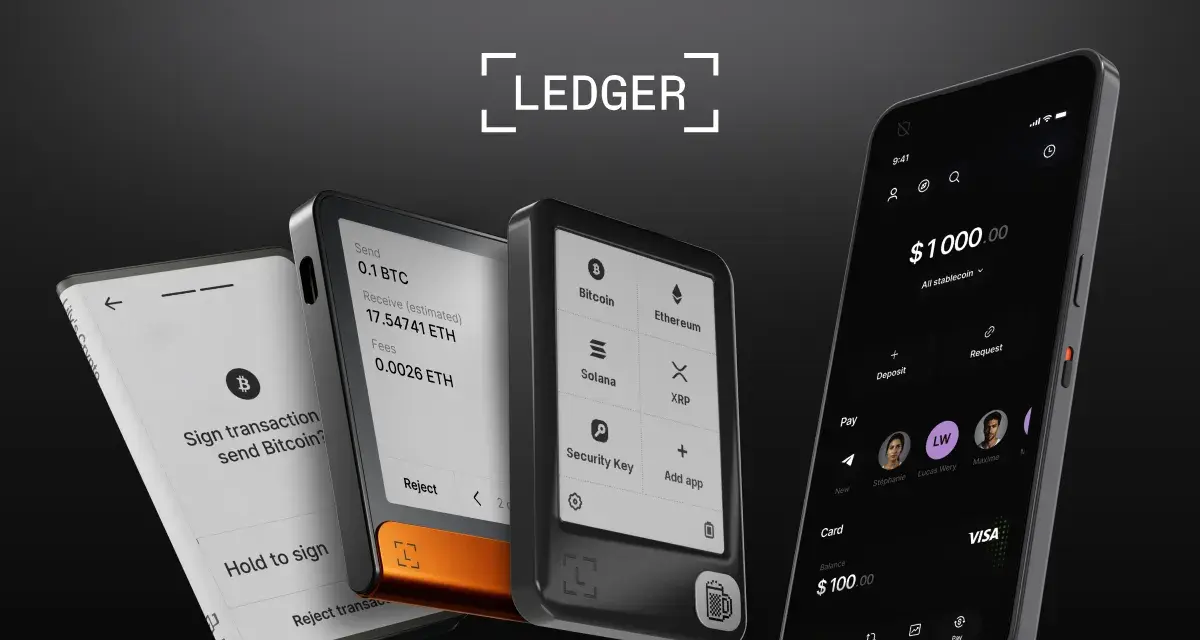
ledger.comBest forInvestors who want maximum offline security paired with a highly polished, multi-chain software interface.
AI Visibility · how often AI recommends it for this topic
25/ 100
Covered by 4 of 4 AI assistants
- ChatGPT
- Gemini
- Claude
- Google AI
Top-tier cold storage. Ledger is a dominant hardware wallet provider that enables users to manage their crypto assets through strict cold storage, ensuring cryptographic keys remain completely offline. It is frequently recommended as the primary defense against the risks of platform insolvency, embodying the industry mantra of 'not your keys, not your coins.'
Robust software companion. What sets Ledger apart is 'Ledger Live,' a highly polished desktop and mobile companion app. This interface allows users to easily manage a massive variety of different blockchains, stake assets, and track portfolio balances without ever exposing their private keys to an internet-connected device.
Vigilance is required. Like all hardware wallets, using a Ledger device requires the user to be extremely vigilant with their physical seed phrase security. While the Ledger Nano X and Ledger Stax devices offer excellent hardware protection, they are completely irrecoverable if the owner misplaces their backup phrase.
What AI consistently says
- +High level of security through offline private keys
- +Wide asset compatibility across multiple blockchains
- +Robust software companion app via Ledger Live
- +Premium hardware build quality
What AI doesn't mention
- −Requires user to be highly vigilant with physical seed phrase security
- −Irrecoverable if seed phrase is lost
- −Past controversies regarding optional seed recovery services
MetaMask
metamask.ioBest forWeb3 power users actively interacting with DeFi protocols, decentralized exchanges, and NFTs.

AI Visibility · how often AI recommends it for this topic
24/ 100
Covered by 3 of 4 AI assistants
- ChatGPT
- Gemini
- Claude
- Google AI
Gateway to the decentralized web. MetaMask is a non-custodial software wallet primarily used for interacting directly with Ethereum and other EVM-compatible blockchains. Instead of trading on a centralized exchange, it acts as a browser-based gateway to decentralized exchanges (DEXs), decentralized finance (DeFi) protocols, and NFT marketplaces.
Direct interaction with dApps. Because it is non-custodial, the user maintains full control over their funds at all times. There is no middleman required to execute a trade, lend assets, or provide liquidity; smart contracts handle the execution directly from the wallet.
Hot wallet exposure. While essential for Web3 power users, MetaMask is a 'hot wallet'—meaning it is connected to the internet. Because of this exposure, there is a high risk of loss due to phishing attacks or approving malicious smart contracts. It should be used for active trading and interaction, not as a primary vault for large, long-term capital.
What AI consistently says
- +Seamless direct interaction with DeFi protocols and dApps
- +User maintains full, non-custodial control over funds
- +No centralized middleman required for trading on DEXs
- +Universally compatible with all EVM chains
What AI doesn't mention
- −Hot wallet exposure is highly vulnerable to phishing attacks
- −High risk of loss due to signing malicious smart contracts
- −Requires significant technical awareness to use safely
Coinbase One
coinbase.comBest forHigh-net-worth individuals and high-frequency traders who value priority customer support and account protection.
AI Visibility · how often AI recommends it for this topic
35/ 100
Covered by 4 of 4 AI assistants
- ChatGPT
- Gemini
- Claude
- Google AI
Zero-fee simple trades. Coinbase One is a premium subscription service offered by the mainstream exchange, providing benefits like zero-fee simple trades, boosted staking rewards, and 24/7 dedicated phone support. It is designed to offer a VIP experience for users who trade frequently or hold large balances on the platform.
Not cost-effective for casuals. Despite the marketing appeal of 'zero fees,' the consensus is clear: it is generally not cost-effective for casual or monthly buyers. The subscription cost (ranging from $19.99 to $29.99/month) outweighs the transaction fees a typical dollar-cost-averaging investor would pay, especially since standard 'Advanced Trade' interfaces provide very low fees for free.
Spread fees still apply. Importantly, while Coinbase One eliminates the direct transaction commission on simple trades, it does not eliminate the 'spread' (the difference between the buy and sell price). Therefore, users are still paying a hidden premium on every trade, making it a redundant cost for those already comfortable using advanced trading tools.
What AI consistently says
- +Convenience for high-volume traders who prefer simple interfaces
- +Added account protection and insurance benefits
- +Dedicated VIP phone support
- +Fee rebates applicable to Advanced Trade
What AI doesn't mention
- −Usually not worth the recurring monthly cost for low-frequency investors
- −Does not eliminate the hidden 'spread' on simple trades
- −Often completely redundant if using free advanced trading tools
Also considered
Brands AI Didn't Consistently Recommend
When analyzing the market, AI systems explicitly warned against or omitted several well-known platforms. Here is why certain major names didn't make the cut for a primary exchange recommendation.
- FTX
Universally flagged with extreme negative sentiment due to its historic collapse, bankruptcy, and the criminal fraud convictions of its executive team. It serves as a cautionary tale for centralization risks.
- Trust Wallet
While respected as a mobile software wallet, it is a non-custodial storage application rather than a primary fiat-to-crypto exchange, making it a secondary tool rather than an onboarding platform.
- OKXAI report
Highly rated internationally for derivatives and low fees, but largely skipped in consensus recommendations due to its strict unavailability for U.S. residents and regulatory friction in Western markets.
- BybitAI report
Similar to OKX, Bybit offers excellent liquidity for advanced perpetual contracts, but strict geoblocking and a lack of beginner-friendly fiat on-ramps in regulated regions prevent it from being a top-tier consensus pick.
How to choose
2026 Best Cryptocurrency Exchanges Buying Guide
Choosing the right cryptocurrency exchange requires balancing security, fees, and regulatory compliance. Our analysis of top evaluations, including detailed platform fee schedules and security audits, highlights the key factors you must consider before depositing funds.
01
Best cryptocurrency exchanges in USA
Strict regulatory compliance is mandatory. For U.S. residents, the landscape of available exchanges is heavily restricted by federal and state regulations. Platforms like Coinbase and Kraken are specifically licensed to operate within the United States, offering FDIC-insured cash balances and adhering strictly to SEC and CFTC guidelines. Choosing an offshore exchange risks having your account frozen or losing access to your funds if the platform is geoblocked.
Beware of regional limitations. Even within the U.S., state-level regulations can vary. New York residents, for example, are subject to the strict BitLicense framework, which limits their options primarily to Coinbase and Gemini. Always verify that a platform is fully licensed to operate in your specific state before initiating a bank transfer.
02
Best cryptocurrency exchanges for beginners
User experience matters most for onboarding. When buying digital assets for the first time, an intuitive interface prevents costly mistakes. Beginner-focused platforms prioritize simple fiat on-ramps—allowing users to connect a bank account or debit card directly. According to Safest Crypto Exchanges for Beginners (2026), platforms that obfuscate complex order books in favor of a clean 'Buy/Sell' button are crucial for early adoption.
Educational resources build confidence. The best platforms for newcomers don't just sell assets; they educate the user. Look for exchanges that offer interactive learning modules, clear explanations of blockchain terminology, and warnings about network fees, helping new investors understand what they are buying before they risk their capital.
03
How much are crypto exchange fees
Understanding the maker/taker model. Exchange fees are not a flat rate. Most platforms use a maker/taker fee schedule, where 'makers' (who provide liquidity by placing limit orders) pay lower fees than 'takers' (who execute immediately at market price). A comprehensive Crypto Exchange Fee Comparison shows that utilizing an exchange's 'advanced' or 'pro' interface can drop trading fees from a flat 1.5% down to 0.1% or lower.
The hidden cost of the spread. Beginner interfaces often advertise 'zero fee' trades, but this is a marketing illusion. Instead of a direct fee, they widen the 'spread'—the difference between the actual market price and the price they quote you. Always check the true market price of Bitcoin on an independent tracker before executing a 'simple buy' to ensure you aren't paying a massive hidden markup.
04
Crypto exchange withdrawal fees compared
Network fees vs. exchange markups. Getting your crypto off an exchange can be unexpectedly expensive. While you always have to pay the underlying blockchain network fee (gas), many exchanges add a substantial static markup on top of this. Reviewing Crypto Exchange Withdrawal Fees reveals that platforms like Kraken offer heavily subsidized or free Bitcoin withdrawals via the Lightning Network, while others charge a flat rate that hurts smaller investors.
Plan your exit strategy. If your goal is to move assets to cold storage, withdrawal fees are just as important as trading fees. If an exchange charges $15 to withdraw a small amount of Bitcoin, it completely negates the savings you made by using a low-fee trading interface. Prioritize platforms with dynamic withdrawal fees that accurately reflect real-time network congestion.
05
Proof of reserves and exchange security
Verifiable asset backing. The collapse of several major platforms in 2022 highlighted the catastrophic risk of exchanges lending out customer deposits. Today, top-tier platforms provide cryptographic Proof of Reserves (PoR), allowing users to mathematically verify that the exchange holds 1:1 backing for all customer assets. As noted in 7 Crypto Exchanges in 2026 Ranked by Security, PoR is now a non-negotiable requirement for any centralized platform.
Account-level security features. Platform security is only half the battle; user account security is just as vital. The best exchanges enforce mandatory Two-Factor Authentication (2FA) via authenticator apps or hardware security keys (like YubiKey), actively restricting SMS-based 2FA which is highly vulnerable to SIM-swap attacks. They also offer address whitelisting, which restricts withdrawals only to pre-approved wallets.
06
Hardware wallets vs. Exchange storage
Not your keys, not your coins. Keeping funds on an exchange means you hold an IOU, not actual cryptocurrency. If the exchange is hacked, goes bankrupt, or faces a regulatory freeze, your assets are trapped. Hardware wallets like Trezor and Ledger generate and store your private keys offline, granting you absolute cryptographic ownership and control over your digital wealth.
Balancing convenience with security. While exchange storage is acceptable for small amounts of active trading capital, significant long-term investments should always be moved to cold storage. Managing your own hardware wallet requires securely backing up a 12-24 word recovery phrase, meaning you become your own bank and take full responsibility for the safety of your funds.
Common questions
Frequently Asked Questions
Is $100 enough to start crypto?
Yes, $100 is more than enough to start investing in crypto. Most major cryptocurrency exchanges allow users to purchase fractional shares of assets like Bitcoin and Ethereum, often with minimum purchase requirements as low as $5 to $10. It is a highly accessible market for beginners wanting to start small.
Who is the richest BTC owner?
The richest BTC owner is Satoshi Nakamoto, the pseudonymous creator of Bitcoin. Blockchain data indicates that Nakamoto's associated wallets hold approximately 1.1 million Bitcoin, making them the largest single holder in the world. Among known entities, companies like MicroStrategy and spot Bitcoin ETF providers hold massive institutional reserves.
What is a decentralized exchange?
A decentralized exchange (DEX) is a peer-to-peer marketplace where transactions occur directly between crypto traders without a centralized middleman. Powered by smart contracts on blockchains like Ethereum, DEXs allow users to retain total custody of their funds while trading, though they require non-custodial software like MetaMask to operate.
What are the steps to trading cryptocurrency?
The steps to trading cryptocurrency start with choosing a regulated exchange, creating an account, and completing KYC identity verification. Next, you link a funding source like a bank account to deposit fiat currency, select the cryptocurrency you wish to buy on the trading interface, and execute the order. Finally, you secure your investment by either leaving it on the exchange or transferring it to a hardware wallet.
Are crypto exchanges safe?
Top-tier crypto exchanges are generally safe for trading and temporary storage, utilizing institutional-grade encryption, cold storage for the majority of platform assets, and regular proof-of-reserves audits. However, they are still susceptible to regulatory actions or remote hacks, which is why experts advise moving long-term investments to self-custody hardware wallets.
What happens if a crypto exchange goes bankrupt?
If a crypto exchange goes bankrupt, user assets held on the platform are typically treated as unsecured liabilities, meaning investors may lose their funds entirely or face years of litigation to recover a fraction of their value. Unlike traditional bank deposits, cryptocurrency balances are rarely protected by FDIC or SIPC insurance, emphasizing the critical need for personal cold storage.
Can I buy crypto without an exchange?
Yes, you can buy crypto without an exchange by using peer-to-peer (P2P) platforms, Bitcoin ATMs, or directly through non-custodial wallet providers that partner with third-party payment processors. While these methods offer more privacy, they generally come with significantly higher transaction fees and worse exchange rates compared to standard centralized platforms.
How do I avoid high crypto trading fees?
To avoid high crypto trading fees, always use an exchange's 'advanced' or 'pro' trading interface rather than the default 'simple buy' button, which often hides massive markup spreads. Advanced interfaces use a maker/taker model that drastically reduces costs to fractions of a percent per trade.
Behind the data
How We Researched This
AI Platform Responses
AI Platforms
Brands Ranked
Date
To determine the true consensus for this cryptocurrency exchanges report, Pendium Research utilized a rigorous, data-driven methodology that transcends the inherent biases of a single author's hands-on review. Instead of relying on one editor's perspective, we executed a series of topic-specific queries across all four major AI platforms: ChatGPT, Claude, Gemini, and Google AI Overviews. These advanced systems are trained on massive datasets and actively search the internet, processing thousands of expert reviews, financial blogs, user sentiment on Reddit, and detailed product databases to form their outputs.
Our cross-platform analysis focused on extracting entities that the AI engines consistently recommended when prompted about security, fee structures, beginner accessibility, and cold storage solutions. We meticulously logged brand mentions, tracked the average ranking position of each platform within the AI outputs, and analyzed the explicit sentiment (positive, neutral, or negative) attached to each recommendation. We also normalized variations in brand naming to ensure accurate aggregate data.
To add further depth, we ran per-brand Visibility Scan Previews on the most frequently recommended exchanges and wallets. This allowed us to understand exactly why a platform like Kraken dominated security queries, or why Coinbase was universally praised for accessibility but critiqued for basic trading fees. We also tracked brands that AI skipped or explicitly warned against—such as FTX—to ensure we accurately reflected the caution baked into modern AI financial guidance.
By synthesizing this data, the resulting consensus provides a much stronger signal of market truth than isolated testing. The AI platforms act as an aggregation layer for the entire internet's collective knowledge, surfacing the platforms that consistently deliver the best liquidity, highest security, and strongest regulatory compliance across the globe.
AI knows them, Google doesn't
Diamonds in the Rough
These brands are consistently recommended by AI assistants but rarely appear in traditional Google search results, a sign the market may be shifting before search rankings catch up.
Mentioned 2x across 2 AI platforms with near-unanimous positive sentiment — and when AI does bring them up, they rank in the top 1 on average. An under-the-radar pick worth investigating.
Mentioned 3x across 3 AI platforms with near-unanimous positive sentiment — and when AI does bring them up, they rank in the top 2 on average. An under-the-radar pick worth investigating.
Mentioned 2x across 2 AI platforms with near-unanimous positive sentiment — and when AI does bring them up, they rank in the top 5 on average. An under-the-radar pick worth investigating.
Mentioned 8x across 3 AI platforms with strong positive sentiment — and when AI does bring them up, they rank in the top 3 on average. An under-the-radar pick worth investigating.
Mentioned 3x across 3 AI platforms with positive sentiment — and when AI does bring them up, they rank in the top 3 on average. An under-the-radar pick worth investigating.