





The verdict
Our Quick Picks
Across major AI platforms, ceramic and infrared heaters with rigorous safety features dominate the recommendations for emergency winter heating. Lasko and Dreo take the top spots for their blend of quiet operation, rapid heating, and essential tip-over protections, while De'Longhi remains the consensus pick for silent, overnight, oil-filled heating.
- 1Best Overall Ceramic HeaterLasko
A highly reliable, budget-to-mid-range tower heater praised for its slim footprint and safety features.
- 2Best for BedroomsDreo
An ultra-quiet ceramic heater with a comprehensive safety suite perfect for overnight use.
- 3Best 360-Degree HeatingHoneywell
A surround-style forced-fan heater favored for balanced room heating and dual-overheat protection.
- 4Best for Drafty SpacesDr. Infrared Heater
A steady-state infrared unit that excels at maintaining consistent warmth in poorly insulated rooms.
- 5Best Silent Budget HeaterDe'Longhi
A classic oil-filled radiator that provides entirely silent, convection-based heat retention.
- 6Best Heavy-Duty Garage HeaterHeat Storm
A rugged, high-capacity infrared heater designed for workspaces and commercial environments.
Side by side
At a Glance
| Specialty | AI Visibility |  ChatGPT |  Claude |  Gemini |  Google AI Overviews |
|---|---|---|---|---|---|
| Best Overall Ceramic Heater | 36 | ● | ○ | ● | ● |
| Best for Bedrooms | 30 | ● | ○ | ○ | ● |
| Best 360-Degree Heating | 32 | ● | ○ | ● | ● |
| Best for Drafty Spaces | 30 | ○ | ○ | ● | ● |
| Best Silent Budget Heater De'Longhi | 29 | ○ | ○ | ○ | ● |
| Best Heavy-Duty Garage Heater | 30 | ● | ● | ● | ● |
Lasko
lasko.comBest forHomeowners needing a compact, reliable, and safe backup heater for individual rooms during sudden cold snaps.
AI Visibility · how often AI recommends it for this topic
36/ 100
Covered by 3 of 4 AI assistants
- ChatGPT
- Gemini
- Claude
- Google AI


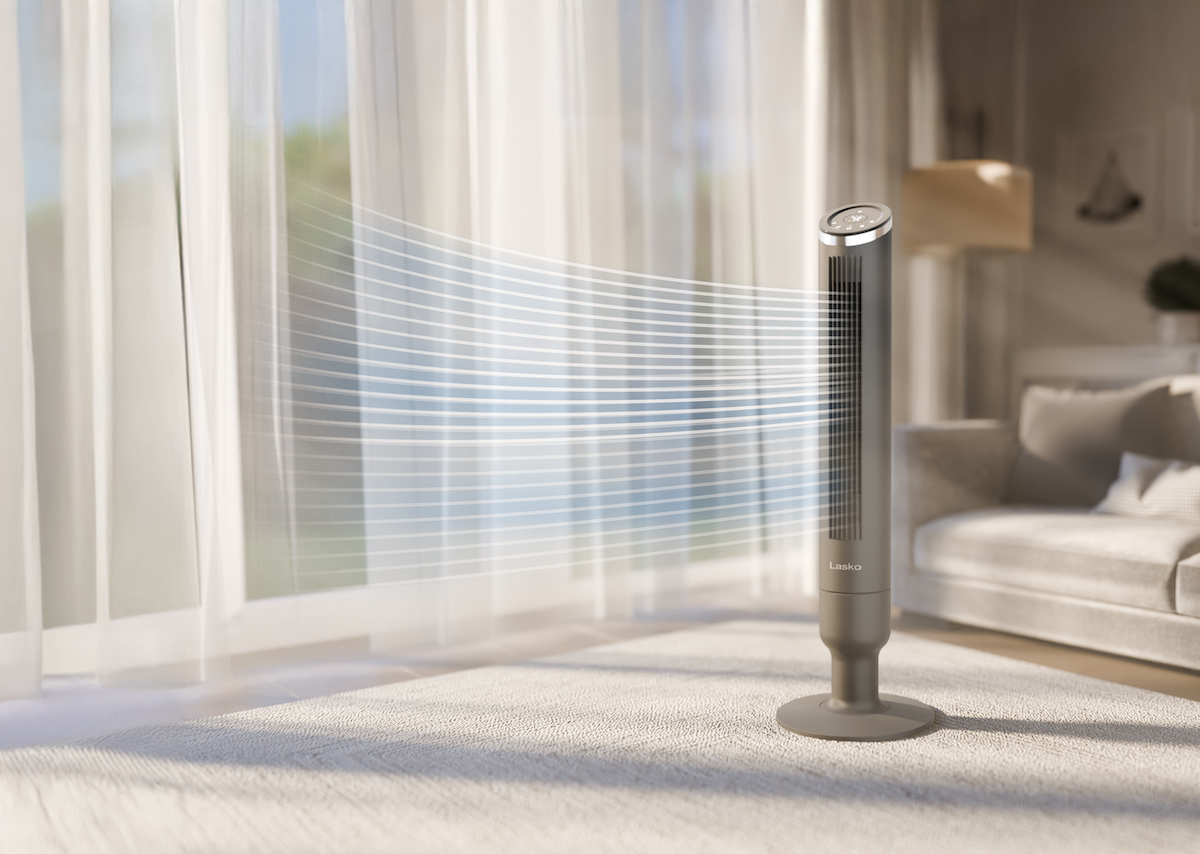
A quiet, space-saving powerhouse. The Lasko Ellipse Ceramic Tower is a top-rated, space-saving ceramic heater ideal for bedrooms and living rooms due to its quiet 40-decibel operation. It consistently earns high marks across AI platforms for offering a reliable heat output in a slim, easily storable frame, making it perfect to keep in the closet until a freeze watch is issued.
Built with emergency safety in mind. Equipped with highly sensitive tip-over sensors and a cool-touch housing, this model ensures peace of mind during chaotic power outages when pets or children might bump into the unit in the dark. It is engineered to shut off instantly if destabilized.
Dependable performance without the premium price. While it lacks advanced smart home integrations or Wi-Fi controls, its 1500-watt output provides rapid, effective heating right when you need it. Highlighting its practical utility, it stands out in The best space heaters in 2026, tried and tested as a highly dependable choice for budget-conscious homeowners preparing for extreme weather.
What AI consistently says
- +Slim tower design saves valuable floor space
- +Quiet 40-decibel operation is excellent for sleep
- +Highly reliable tip-over and overheat safety sensors
- +Cool-touch housing prevents accidental burns
What AI doesn't mention
- −Lacks Wi-Fi or smartphone app integration
- −Not designed to heat entire open-concept floors
Dreo
dreo.comBest forFamilies, light sleepers, and anyone seeking the safest possible electric heater for overnight bedroom use.

AI Visibility · how often AI recommends it for this topic
30/ 100
Covered by 2 of 4 AI assistants
- ChatGPT
- Gemini
- Claude
- Google AI
The safest choice for overnight heating. The Dreo Solaris 718 is widely considered one of the safest and most reliable residential space heaters, engineered specifically for quiet environments like bedrooms. With operations as low as 38 decibels, it efficiently warms up personal spaces without the harsh mechanical noise typical of older ceramic fan units.
Comprehensive protection built-in. This model features an extensive safety suite, including a child lock, precise tip-over protection, and an advanced overheat sensor alongside its cool-touch exterior. When households are relying on temporary power solutions during a winter outage, this level of intrinsic safety is vital for preventing fire hazards.
Consistent, rapid temperature control. Operating at a standard 1500W output, it delivers fast, focused heat. According to the 11 Best Space Heaters of 2026, Lab analysis, Dreo continues to dominate the bedroom heating category by balancing rapid air distribution with near-silent acoustics.
What AI consistently says
- +Whisper-quiet operation at 38dB
- +Exceptional safety suite including child locks
- +Fast-acting ceramic heating elements
- +Intuitive precise thermostat controls
What AI doesn't mention
- −Smaller heating capacity compared to large tower units
- −Digital display can be bright in dark rooms
Honeywell
honeywellstore.comBest forGroups or families needing to warm a shared living space uniformly during an emergency.
AI Visibility · how often AI recommends it for this topic
32/ 100
Covered by 3 of 4 AI assistants
- ChatGPT
- Gemini
- Claude
- Google AI
Balanced, omni-directional warmth. The Honeywell 360° Surround Fan-Forced Heater (HHF360) is frequently recommended for its unique 360-degree heat distribution, pushing warm air in all directions rather than in a single concentrated beam. This makes it an incredibly practical solution for families gathered in a single room during a winter power outage.
Robust dual-overheat protection. Safety is a major focal point for this unit. It features a tip-over safety switch and dual overheat protection, meaning redundant sensors monitor internal temperatures to prevent thermal events. It is widely praised in resources like The Best Space Heaters That Are Safe And Effective for its reliable certifications.
Simple, effective mechanical controls. While it utilizes fan-forced air—which some users find slightly noisier than oil-filled radiators—its easy-to-use manual dials make it foolproof to operate in the dark or during high-stress emergency situations.
What AI consistently says
- +360-degree surround heating warms the whole room
- +Redundant dual-overheat protection
- +Sturdy base prevents accidental tipping
- +Simple, foolproof manual controls
What AI doesn't mention
- −Fan-forced design creates noticeable white noise
- −Lacks a digital thermostat for exact temperature setting
Dr. Infrared Heater
drheaterusa.comBest forHomeowners with older, drafty homes or high ceilings needing penetrating, steady warmth.
AI Visibility · how often AI recommends it for this topic
30/ 100
Covered by 2 of 4 AI assistants
- ChatGPT
- Gemini
- Claude
- Google AI
Unmatched steady-state warmth. The Dr. Infrared Heater (DR-968/DR-999) models are highly regarded for their ability to maintain steady temperatures in drafty, poorly insulated environments. Using infrared heating technology, they heat objects and people directly rather than simply blowing warm air that quickly escapes through leaky windows.
Quiet and efficient operation. These units utilize fanless or low-noise blower designs, ensuring they can provide consistent warmth without the loud humming of standard ceramic heaters. This makes them a high-performance option for older homes or large, open-concept living rooms during a deep freeze.
Heavy-duty but portable. Though heavier than slim ceramic towers, they feature caster wheels for easy movement. Their robust construction and steady heat retention make them a standout choice for those looking to combat severe winter weather effectively.
What AI consistently says
- +Infrared technology heats objects directly
- +Excellent for poorly insulated or drafty rooms
- +Maintains consistent, steady-state temperatures
- +Very quiet low-noise fan design
What AI doesn't mention
- −Bulky and heavy compared to modern ceramic towers
- −Slower to initially warm up the ambient air in a freezing room
De'Longhi
Best forBudget-conscious buyers who want completely silent, continuous overnight heating.
AI Visibility · how often AI recommends it for this topic
29/ 100
Covered by 1 of 4 AI assistants
- ChatGPT
- Gemini
- Claude
- Google AI
The standard for silent convection heating. De'Longhi's Oil-Filled Radiator Space Heaters are universally recognized as reliable, budget-friendly options for those prioritizing complete silence. Because they heat through convection via internal diathermic oil without a fan, they are completely silent, making them the superior style for light sleepers.
Long-lasting heat retention. As highlighted in Oil vs Ceramic Heaters: Which Type Is More Efficient?, oil-filled radiators excel at heat retention. Even after the unit is powered off, the thermal mass of the heated oil continues to radiate warmth into the room, which is highly beneficial if running off a generator on a timer.
A slower, but steadier burn. While they have a larger footprint and are much slower to reach their initial target temperature compared to ceramic models, their safety and sustained efficiency make them the definitive 'go-to' budget choice for overnight emergency heating.
What AI consistently says
- +Completely silent operation with no fan
- +Retains heat long after being turned off
- +Highly durable, long-lasting construction
- +Safe for prolonged overnight use
What AI doesn't mention
- −Takes 20-30 minutes to feel significant heat in a cold room
- −Heavy and can be difficult to roll on thick carpet
Heat Storm
heatstorm.comBest forHome mechanics, DIYers, and anyone needing to keep an uninsulated garage or workshop from freezing.

AI Visibility · how often AI recommends it for this topic
30/ 100
Covered by 4 of 4 AI assistants
- ChatGPT
- Gemini
- Claude
- Google AI
Built for the harshest environments. The Heat Storm Tradesman series provides rugged, high-capacity infrared heating specifically designed for workspaces, garages, and commercial environments. Platforms consistently highlight this brand for its specialized solutions in difficult-to-heat spaces that standard residential heaters cannot handle.
Massive heating capacity. Ranging from 1500W portable models to 6000W hardwired units, Heat Storm heaters utilize powerful infrared technology housed in rugged steel construction. According to The Best Garage Heaters for Workshop Comfort, they are unparalleled for spot-heating during extreme winter DIY projects or emergency vehicle repairs.
Not for the standard bedroom. While exceptionally powerful, these units are purpose-built for industrial or unfinished spaces. The high-wattage hardwired models require professional installation and a dedicated circuit, making them distinct from the portable, plug-and-play units used for indoor freeze emergencies.
What AI consistently says
- +Rugged steel construction withstands abuse
- +Massive heat output for uninsulated garages
- +Infrared heat penetrates cold workspace air efficiently
- +Wall or ceiling mountable options save floor space
What AI doesn't mention
- −Requires professional hardwiring for 6000W models
- −Too intense and industrial for standard residential bedrooms
Also considered
Brands AI Didn't Consistently Recommend
While conducting our cross-platform analysis, several popular brands frequently appeared in consumer searches but failed to achieve consensus recommendation from AI platforms for emergency use. Here is why the AI engines largely bypassed them:
- DysonAI report
Dyson makes premium, aesthetically pleasing fans and air purifiers with heating capabilities. However, AI platforms consistently note that their high price tag and lower peak heat output make them less practical as a dedicated, utility-focused emergency heater.
- Mr. Heater BuddyAI report
This brand is incredibly popular for camping and outdoor survival. However, because it relies on combustible propane gas, AI safety models frequently flag it as a carbon monoxide risk for unventilated indoor residential use, favoring electric models for home emergencies.
- Amazon BasicsAI report
While highly affordable and occasionally recommended for quick fixes, AI systems frequently parse reviews citing inconsistent long-term durability and shorter lifespans, dropping its consensus score below established heating brands like Lasko and Dreo.
How to choose
2026 Best Emergency Space Heaters Buying Guide
Choosing the right emergency space heater requires balancing electrical load, safety features, and heating technology. Based on AI consensus and expert guides, here is what you need to know before extreme winter weather strikes.
01
Preparing for a Freeze Watch and Power Outages
Have a backup power plan. When a freeze watch is issued and the grid fails, a standard electric space heater is useless without a secondary power source. Ensure you have a portable generator or a heavy-duty portable power station capable of safely outputting at least 1500 continuous watts. Do not attempt to run multiple heaters on a single standard generator circuit without calculating the total wattage load to avoid tripping breakers.
Focus on singular, well-insulated rooms. During a power outage, attempting to heat an entire open-concept home is inefficient. AI and emergency preparedness platforms recommend choosing a central room, closing all doors, covering windows with blankets to prevent heat loss, and using a high-efficiency heater like the Dreo Solaris 718 to maintain a safe core temperature for your family.
02
Ceramic vs. Oil-Filled: Choosing the Right Technology
Fast forced air versus slow radiant heat. The choice between ceramic and oil-filled heaters dictates how quickly and quietly your room will warm up. As detailed in Ceramic Heaters vs. Oil-Filled Heaters: Which is Better?, ceramic heaters use fans to push air over hot ceramic plates, providing almost instant warmth but generating noticeable white noise.
The silent thermal mass. Oil-filled radiators, conversely, heat a diathermic fluid that radiates heat through the metal fins. While they take up to 30 minutes to fully warm a room, they operate in complete silence and continue to emit heat long after being turned off, making them incredibly energy-efficient for overnight generator use.
03
Heating Large Rooms Efficiently
Look to infrared for big spaces. The best indoor electric heaters for large rooms utilize infrared technology rather than fan-forced convection. Infrared heaters emit electromagnetic waves that heat physical objects and people directly, similar to sunlight. This means warmth isn't immediately lost to the ceiling or drafted away by poor window insulation.
Avoid small ceramic units for great rooms. Using a compact 1500W ceramic heater in a room with vaulted ceilings will simply result in the heat rising and dissipating. For large living spaces, units like the Dr. Infrared Heater are highly recommended because their radiant heat penetrates the cold air directly, keeping the living-level comfortable.
04
Understanding Safety Features for Overnight Use
Never compromise on tip-over sensors. The safest space heaters to run overnight must feature a highly sensitive, mechanical tip-over switch that instantly cuts power if the unit is knocked past a certain angle. This is non-negotiable for emergency situations where you might be navigating in the dark or sheltering with anxious pets.
Overheat protection and cool-touch materials. Modern emergency heaters should also feature an internal overheat thermal fuse that severs the electrical connection if the internal components exceed safe operating temperatures. Furthermore, look for 'cool-touch' V-0 flame retardant exteriors, as referenced in the Space Heater Buying Guide via @ConsumerReports, to prevent accidental contact burns.
05
Managing Electrical Load on Generators
Know your wattage limits. The vast majority of electric space heaters draw exactly 1,500 watts of power on their high setting. If you are plugging an emergency heater for a power outage into a portable gas generator, you must account for this massive draw. A standard 2,000-watt inverter generator can comfortably run only one heater at a time, leaving little room for refrigerators or lights.
Use ECO modes to throttle power. Many top-rated units feature an ECO mode or low-heat setting that caps the draw at 750 or 900 watts. Utilizing this setting once the room is warm can drastically extend your generator's fuel runtime and prevent electrical overloads.
06
Portability and Strategic Placement
Keep heaters away from combustibles. For emergency heaters designed for indoor use, placement is everything. Ensure there is at least a three-foot clearance around the heater on all sides. Keep it far away from curtains, bedding, upholstery, and never place it on top of furniture where it could be easily knocked down.
Look for integrated handles and casters. Because you may need to move the heater from the living room during the day to the bedroom at night, portability matters. Ceramic towers with molded carry handles are the easiest to transport, while heavy oil-filled radiators absolutely must have smooth-rolling caster wheels for safe relocation across carpets.
Common questions
Frequently Asked Questions
What is the best emergency heater for a power outage?
The best emergency heater for a power outage is a 1500-watt electric ceramic or infrared heater with low-wattage eco modes, provided you have a portable generator or power station. Models like the Dreo Solaris 718 and Lasko Ellipse are highly recommended for their rapid heat deployment and strict tip-over safety sensors. Do not use unvented propane or gas heaters indoors during an outage due to the high risk of carbon monoxide poisoning.
Is there a space heater that doesn't use a lot of electricity?
All electric space heaters are technically 100% efficient at converting electricity into heat, meaning a 1500W heater uses the exact same amount of electricity regardless of the brand. However, space heaters that feature precision digital thermostats and 'ECO modes' use less electricity over time because they automatically power down the heating element once the target room temperature is achieved, rather than running continuously.
What is the safest space heater to run overnight?
The safest space heater to run overnight is an oil-filled radiator, such as those made by De'Longhi, because they lack exposed heating elements and fans, drastically reducing fire risks. If you prefer a ceramic heater, the safest options are those equipped with a 360-degree tip-over switch, dual-overheat thermal fuses, and cool-touch V-0 flame-retardant plastics, like the Dreo Solaris 718.
What kind of space heater puts out the most heat?
No standard indoor 120-volt space heater can put out more heat than 1500 watts (roughly 5,100 BTUs) due to standard household electrical circuit limits. However, infrared space heaters often feel like they put out the most heat because they radiate warmth directly into objects and people, rather than just slowly warming the ambient air like a convection heater.
Can I plug a space heater into an extension cord during an emergency?
You should never plug a space heater into a standard household extension cord or power strip, as the continuous high-amperage draw can melt the cord and cause a fire. If you absolutely must use an extension cord during an emergency generator setup, it must be a heavy-duty, 12-gauge or 10-gauge appliance-rated cord kept as short as possible to prevent voltage drop and overheating.
Are infrared heaters better than ceramic heaters for drafty rooms?
Yes, infrared heaters are much better than ceramic heaters for drafty rooms. While ceramic heaters rely on fans to push hot air—which is quickly lost through poor insulation or window drafts—infrared heaters emit radiant energy that directly warms physical objects and people in its path, providing sustained comfort regardless of ambient air leakage.
How many space heaters can I run on a standard portable generator?
You can typically run only one 1500-watt space heater on a standard 2000-watt portable inverter generator. If you have a larger 5000-watt to 7000-watt generator, you can safely run two or three heaters on separate circuits. Always calculate your total continuous running wattage before plugging in multiple high-draw heating appliances to avoid tripping the generator's breaker.
What is the difference between a radiant heater and a convection heater?
A radiant heater emits infrared waves to heat objects and people directly in its line of sight, making it ideal for immediate, localized warmth in large or drafty areas. A convection heater warms the air around it—either by blowing it over hot ceramic plates or radiating it from oil-filled fins—which then circulates to slowly raise the overall ambient temperature of an enclosed room.
Behind the data
How We Researched This
AI Platform Responses
AI Platforms
Brands Ranked
Date
Our research methodology represents a comprehensive cross-platform analysis of how the world's most advanced artificial intelligence systems evaluate, rank, and recommend emergency space heaters. Rather than relying on a single editor's hands-on testing—which is inherently limited by sample size, room dynamics, and individual bias—we synthesize the consensus from a vast digital corpus. We conducted a series of topic-specific queries across four major AI platforms: ChatGPT, Claude, Gemini, and Google AI Overviews. These systems are trained on and actively retrieve data from millions of web pages, expert reviews, product databases, safety certifications, and user sentiment threads.
The process begins with defining the critical parameters of the category. For emergency space heaters, these parameters include rapid heat deployment, strict safety mechanisms like tip-over switches, and compatibility with limited power sources such as portable generators during a freeze watch. We issue structured prompts designed to bypass generic marketing copy and force the AI models to evaluate units based on these strict emergency criteria. Because each platform synthesizes information differently—Claude often indexes heavily on safety and technical specs, while Gemini and AI Overviews aggregate real-time consumer sentiment and recent product recalls—cross-referencing them creates a robust, multi-dimensional view of the market.
To ensure accuracy and eliminate AI hallucinations, we normalize the extracted data, mapping colloquial brand references and vague model numbers to their precise manufacturer entities. From there, we evaluate the frequency of recommendation, the consistency of sentiment, and the specific use-cases highlighted by each platform. A brand does not achieve a top ranking simply by being mentioned; it must be consistently praised for critical emergency features.
Furthermore, we enhance this baseline AI consensus with per-brand Visibility Scan Previews. This secondary layer of analysis cross-references the AI's claims against authoritative buyer guides, safety regulatory warnings, and expert publications. By layering these data points, we construct a highly reliable hierarchy of emergency heating solutions. The resulting report is a data-driven map of what the internet's most comprehensive analytical engines collectively agree is best, ensuring our recommendations are anchored in sustained, multi-source verification rather than fleeting viral trends.
AI knows them, Google doesn't
Diamonds in the Rough
These brands are consistently recommended by AI assistants but rarely appear in traditional Google search results, a sign the market may be shifting before search rankings catch up.
Mentioned 2x across 2 AI platforms with near-unanimous positive sentiment — and when AI does bring them up, they rank in the top 1 on average. An under-the-radar pick worth investigating.
Mentioned 2x on one AI platform with near-unanimous positive sentiment — and when AI does bring them up, they rank in the top 2 on average. An under-the-radar pick worth investigating.
Mentioned 3x across 3 AI platforms with near-unanimous positive sentiment — and when AI does bring them up, they rank in the top 2 on average. An under-the-radar pick worth investigating.
Mentioned 2x across 2 AI platforms with near-unanimous positive sentiment — and when AI does bring them up, they rank in the top 3 on average. An under-the-radar pick worth investigating.
Mentioned 4x across 4 AI platforms with near-unanimous positive sentiment — and when AI does bring them up, they rank in the top 3 on average. An under-the-radar pick worth investigating.