




The verdict
Our Quick Picks
AI platforms consistently prioritize e-readers that offer native EPUB support, robust library integration, and superior eye comfort for reading long, public-domain classics. The Kobo Clara BW emerges as the top purist choice due to its open format flexibility, while the Amazon Kindle Paperwhite remains the undisputed leader for users heavily invested in the Amazon ecosystem. For digital library access and free classic texts, platforms unanimously recommend combining these devices with OverDrive/Libby and Project Gutenberg.
- 1Best for Pure Reading & Open FormatsKobo Clara BW
A distraction-free E Ink display with unmatched native EPUB support for sideloading classic texts.
- 2Best Overall EcosystemAmazon Kindle Paperwhite
The most reliable, waterproof reader with massive store access and a highly responsive screen.
- 3Best for Mixed Media & ErgonomicsKobo Libra Colour
Combines physical page-turn buttons with color E Ink for illustrated classics and textbook diagrams.
- 4Best Pocket-Sized E-ReaderBOOX Palma
A smartphone-sized Android e-reader that brings extreme portability to your digital library.
- 5Best Library Companion AppLibby by OverDrive
The essential digital tool for borrowing free classic literature directly from local library networks.
Side by side
At a Glance
| Specialty | AI Visibility |  ChatGPT |  Claude |  Gemini |  Google AI Overviews |
|---|---|---|---|---|---|
| Best for Pure Reading & Open Formats | 38 | ○ | ● | ● | ● |
| Best Overall Ecosystem | 31 | ○ | ● | ○ | ○ |
| Best for Mixed Media & Ergonomics Kobo Libra Colour | 35 | ● | ● | ● | ● |
| Best Pocket-Sized E-Reader | 25 | ○ | ● | ● | ● |
| Best for Academic Study & Note-Taking | 26 | ○ | ○ | ○ | ● |
| Best Library Companion App | 37 | ● | ● | ● | ● |
| Best Source for Public Domain Classics | 23 | ● | ● | ● | ● |
Kobo Clara BW
kobo.comBest forDedicated readers who source free EPUB files online and prefer an open, non-Amazon ecosystem.

AI Visibility · how often AI recommends it for this topic
38/ 100
Covered by 3 of 4 AI assistants
- ChatGPT
- Gemini
- Claude
- Google AI


Unmatched format flexibility. The Kobo Clara BW is a 6-inch E Ink device that excels at rendering classic literature through native EPUB support and a distraction-free interface. This native compatibility means readers can drag and drop public domain titles from free archives without relying on complex file conversions. As noted in Forbes, its open ecosystem is a major draw for power users who refuse to be locked into a single retailer.<br><br>Superior eye comfort. Featuring the acclaimed ComfortLight PRO system, the Clara BW allows users to precisely adjust both brightness and color temperature. This granular control reduces blue light exposure during late-night reading sessions, which is essential for tackling dense 19th-century novels. According to A Luxury Lifestyle, this specific lighting architecture makes it a top-tier choice for mitigating digital eye strain.<br><br>Seamless library integration. With OverDrive built directly into the operating system, users can browse and borrow from their local library right from the device screen. This built-in integration completely bypasses the need for a secondary smartphone app, streamlining access to thousands of free classics. It represents a massive advantage for budget-conscious readers wanting to expand their literary horizons.
What AI consistently says
- +Native EPUB support eliminates file conversion headaches for downloaded classics
- +ComfortLight PRO provides exceptional late-night reading comfort
- +Built-in OverDrive allows direct library borrowing from the device
- +Text-forward, clean interface with no distracting ads
- +Excellent battery life spanning up to 53 days
What AI doesn't mention
- −The 6-inch screen may feel slightly cramped for users accustomed to larger tablets
- −Lacks physical page-turn buttons found on premium models
- −The Kobo store has a smaller selection of self-published indie titles compared to Amazon
Amazon Kindle Paperwhite
mynavyexchange.comBest forUsers deeply entrenched in the Amazon ecosystem who want a flawless, waterproof device with massive store access.
AI Visibility · how often AI recommends it for this topic
31/ 100
Covered by 1 of 4 AI assistants
- ChatGPT
- Gemini
- Claude
- Google AI
The gold standard for reliability. The Amazon Kindle Paperwhite is a 300-PPI e-reader widely regarded as the most dependable device for casual and dedicated readers alike. Its high-resolution, glare-free display mimics the look of real paper, making it perfect for hours of uninterrupted reading. AI platforms universally highlight its snappy performance and long-lasting battery, which is essential for travel or extended commutes.<br><br>Massive content ecosystem. Navigating the Amazon store is incredibly intuitive, offering the largest direct-purchase catalog in the world. While sideloading open formats requires utilizing the 'Send to Kindle' feature rather than native drag-and-drop, the seamless cloud synchronization across devices makes up for it. About Amazon emphasizes how deeply integrated the reading experience is with Audible and Goodreads.<br><br>Durable and waterproof. Boasting an IPX8 waterproof rating, the Paperwhite can survive accidental drops in the bathtub or splashes by the pool. This ruggedness, combined with up to 12 weeks of battery life, ensures that your library of classics is protected anywhere you go. NBC News points to its build quality as a major reason it outlasts competitors year after year.
What AI consistently says
- +Industry-leading 300 PPI glare-free display
- +Unbeatable access to the massive Amazon Kindle store ecosystem
- +IPX8 waterproofing ensures durability for poolside or bath reading
- +Incredible battery life lasting up to 12 weeks per charge
- +Flawless synchronization with Goodreads and Audible
What AI doesn't mention
- −The 'Send to Kindle' conversion process can occasionally strip EPUB formatting
- −The user interface heavily pushes Amazon store recommendations
- −Public domain classics on the Amazon store are sometimes poorly formatted bot-scrapes
Kobo Libra Colour
Best forReaders who love physical page-turn buttons and want color highlighting for academic notes or illustrated texts.
AI Visibility · how often AI recommends it for this topic
35/ 100
Covered by 4 of 4 AI assistants
- ChatGPT
- Gemini
- Claude
- Google AI
Ergonomic physical controls. The Kobo Libra Colour is a 7-inch e-reader designed with an asymmetrical grip and physical page-turn buttons, providing superior comfort for marathon reading sessions. This one-handed usability is frequently praised by platforms for reducing thumb fatigue when tackling massive, thousand-page classic epics. The design allows readers to maintain a steady grip without accidentally triggering touch-screen page turns.<br><br>Vibrant multi-media support. By integrating Kaleido 3 color E Ink technology, this device bridges the gap between traditional monochrome reading and tablet-like color. It is uniquely positioned to handle classic literature that features original color plates, illustrations, or annotated textbook diagrams. Reviews from TechRadar highlight how the color layer breathes new life into graphic novels and highlighted annotations.<br><br>Trade-offs in battery and brightness. While the color screen is a major asset, it requires a darker base layer that demands heavier use of the frontlight to achieve optimal contrast. This results in shorter overall battery life compared to purely monochrome counterparts. However, for readers who frequently highlight text in different colors for academic study, Soldered confirms the trade-off is well worth it.
What AI consistently says
- +Physical page-turn buttons significantly enhance ergonomic comfort
- +Color E Ink display brings book covers and illustrations to life
- +Asymmetrical design is perfect for one-handed reading
- +IPX8 waterproofing protects against spills and submersion
- +Excellent native integration with OverDrive for library books
What AI doesn't mention
- −The color filter makes the screen background appear slightly darker than monochrome screens
- −Battery drains noticeably faster than the Clara BW due to higher frontlight usage
- −Colors are pastel-toned, not as vibrant as modern OLED iPads
BOOX Palma
geekerbytes.wordpress.comBest forCommuters and minimalists who want a pocket-sized, open-Android reading device to replace smartphone doom-scrolling.

AI Visibility · how often AI recommends it for this topic
25/ 100
Covered by 3 of 4 AI assistants
- ChatGPT
- Gemini
- Claude
- Google AI
Smartphone form factor. The BOOX Palma is an Android-powered e-reader shaped exactly like a traditional smartphone, making it the ultimate everyday carry device for literature enthusiasts. Its ultra-compact 6.13-inch 300 PPI display slides easily into any pocket, encouraging users to read a few pages of a classic novel rather than doom-scrolling social media during idle moments. Good e-Reader highlights its unique footprint as a major disruptor in the e-reader market.<br><br>App ecosystem flexibility. Because it runs full Android OS with Google Play Store access, the Palma is not locked into any single retailer. Users can install the Kindle app, Kobo app, Libby, and even specialized academic PDF viewers all on the same device. This complete freedom means readers can hunt down the best digital editions of classic literature across multiple platforms without hardware restrictions.<br><br>Smooth performance technology. Unlike older E Ink devices that suffer from slow refresh rates, the Palma utilizes BOOX Super Refresh (BSR) technology. This provides exceptionally smooth scrolling and faster app navigation, bridging the gap between an e-reader and a standard phone. However, driving this advanced refresh technology and the Android operating system does result in shorter battery life than a standard Kindle.
What AI consistently says
- +Pocketable smartphone shape encourages reading on the go
- +Full Android OS allows installation of Kindle, Kobo, and Libby apps
- +BOOX Super Refresh technology ensures smooth scrolling and typing
- +Physical volume buttons can be mapped to turn pages
- +128GB of internal storage easily holds an entire lifetime of books
What AI doesn't mention
- −Significantly more expensive than standard 6-inch e-readers
- −Battery life is closer to a smartphone than a traditional Kindle
- −Lacks cellular connectivity; requires Wi-Fi for downloading new content
Onyx Boox Note Air
boox.comBest forStudents, researchers, and active readers who want to hand-write notes directly onto the digital pages of classic texts.
AI Visibility · how often AI recommends it for this topic
26/ 100
Covered by 1 of 4 AI assistants
- ChatGPT
- Gemini
- Claude
- Google AI
Large screen canvas. The Onyx Boox Note Air offers an expansive E Ink display tailored for annotating dense classic texts, academic papers, and PDFs. Its generous screen real estate eliminates the need to constantly zoom and pan across fixed-format documents, a common frustration on 6-inch devices. Comfort a Life points out that this size is optimal for older readers or academics requiring larger text and wider margins.<br><br>Advanced stylus integration. For students or researchers marking up literature, the Note Air functions as a fully capable digital notebook. The included stylus allows for precise marginalia, highlighting, and handwritten notes directly on EPUB or PDF files. The handwriting recognition software is highly accurate, seamlessly converting scrawled thoughts on classic themes into searchable typed text.<br><br>Unrestricted Android OS. Similar to the Palma, the Note Air leverages the Google Play Store to provide total software freedom. You can access academic databases, cloud storage drives, and various library apps directly. While the interface has a steeper learning curve compared to a streamlined Kobo, the resulting power and flexibility make it an unbeatable tool for serious literary analysis.
What AI consistently says
- +Large display is ideal for PDFs and academic formatting
- +Excellent stylus responsiveness for handwritten marginalia and notes
- +Full Android access permits workflow customization via Google Play apps
- +Split-screen functionality allows reading alongside a blank notepad
- +Premium aluminum build feels highly durable and professional
What AI doesn't mention
- −The interface is complex and requires significant initial setup
- −Heavier than standard e-readers, making one-handed reading difficult
- −The screen lacks waterproofing, requiring careful handling around liquids
Libby (by OverDrive)
overdrive.comBest forEvery e-reader owner with a local library card who wants to read for free without resorting to piracy.
AI Visibility · how often AI recommends it for this topic
37/ 100
Covered by 4 of 4 AI assistants
- ChatGPT
- Gemini
- Claude
- Google AI
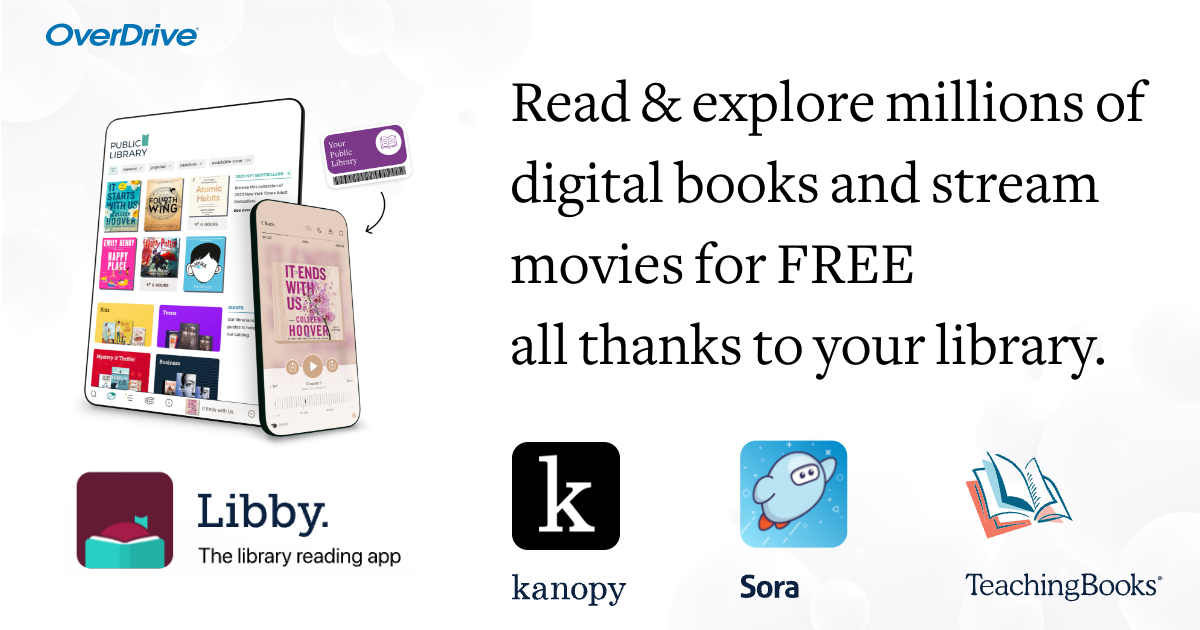
Free public library access. Libby by OverDrive is a digital reading application that connects directly to local library systems, acting as the ultimate bridge between readers and free classic literature. By simply entering a valid library card number, users gain immediate, cost-free access to millions of digital titles. AI platforms universally cite Libby as the single most important software tool for modern digital readers.<br><br>Cross-device syncing. Whether you are reading on a smartphone, browsing on a tablet, or pushing titles to a dedicated E Ink device, Libby maintains seamless synchronization. The app allows users in the US to send borrowed books directly to their Kindle devices with a single tap, merging the cost savings of library borrowing with the premium hardware of Amazon. For Kobo users, the OverDrive backend is built right in.<br><br>Curated literary discovery. Beyond just a search engine, Libby offers highly curated lists, making it easy to discover fresh translations of classic literature or dive into historical fiction. The interface is clean, ad-free, and heavily praised for its intuitive hold and waitlist mechanics, ensuring you always have a steady stream of reading material queued up.
What AI consistently says
- +Completely free access to library e-books and audiobooks
- +Sends borrowed books directly to Kindle devices (in the US)
- +Beautiful, user-friendly interface with excellent search tools
- +Syncs reading progress flawlessly across multiple devices
- +Allows users to manage multiple library cards simultaneously
What AI doesn't mention
- −Wait times for highly popular adaptations can be several weeks long
- −Not all global libraries support the direct-to-Kindle feature
- −Requires a persistent internet connection to initially download or return books
Project Gutenberg
gutenberg.orgBest forLiterature purists and students looking to legally build a massive digital library of copyright-free classic texts.
AI Visibility · how often AI recommends it for this topic
23/ 100
Covered by 4 of 4 AI assistants
- ChatGPT
- Gemini
- Claude
- Google AI
Massive free archive. Project Gutenberg is a volunteer-driven digital library offering over 70,000 free eBooks, specializing in classic literature whose US copyright has expired. It is the premier destination for downloading original texts from authors like Charles Dickens, Jane Austen, and Mark Twain. AI platforms rank it as the ultimate companion resource for anyone utilizing open-format e-readers like Kobo or BOOX.<br><br>Open format downloads. Unlike walled-garden retail stores, Gutenberg provides pure, unencrypted EPUB and Kindle-compatible files. This allows readers to sideload texts via USB or cloud storage without worrying about DRM (Digital Rights Management) restrictions. The files are clean, lightweight, and perpetually free, guaranteeing that your personal digital library remains truly yours.<br><br>Community-proofed formatting. Because the texts are painstakingly digitized and proofread by thousands of global volunteers, the formatting for classic literature is generally excellent. While it lacks modern cover art or fancy publisher introductions, the raw text is preserved with high fidelity, offering an authentic and distraction-free dive into literary history.
What AI consistently says
- +Offers over 70,000 completely free, DRM-free public domain books
- +Provides native EPUB and Kindle formats for easy sideloading
- +No registration, subscription, or app installation required
- +Texts are meticulously proofread by dedicated human volunteers
- +Lightweight files take up virtually no storage space
What AI doesn't mention
- −Does not feature modern, copyrighted translations of older works
- −Lacks professional cover art, relying on plain text title pages
- −Navigation and search on the website can feel quite dated
Also considered
Brands AI Didn't Consistently Recommend
While researching the best e-readers for classic literature, we found that AI platforms consistently omitted or downranked several highly recognizable brands. These exclusions are usually due to closed ecosystems, hardware limitations, or issues with eye strain.
- Apple iPad / Traditional TabletsAI report
Universally skipped as dedicated reading devices due to their backlit LCD/OLED screens, which cause significant digital eye strain and glare during long reading sessions compared to E Ink.
- Barnes & Noble Nook
Rarely recommended due to a shrinking market share, slower software updates, and a digital storefront that lacks the massive scale of Amazon or the open flexibility of Kobo.
- Amazon Kindle Basic (2022)AI report
While highly affordable, platforms heavily favor the Paperwhite over the basic Kindle for classic literature due to the Paperwhite's superior waterproofing, adjustable warm light, and slightly larger screen.
How to choose
Best E-Readers for Classic Literature of 2026 Buying Guide
Choosing the right e-reader for classic literature requires looking past marketing jargon and understanding how screen technology, file formats, and library integration actually impact your reading experience. Here is what AI platforms and technical experts highlight as the most important factors.
01
Understanding E-Ink vs. LCD Screens
Reduces eye strain significantly. An E Ink display uses microscopic microcapsules filled with black and white pigments that physically arrange themselves to form text. Because it relies on ambient light rather than a harsh backlight beaming directly into your eyes, it closely mimics the experience of reading physical paper. Reyes Vision confirms that this technology dramatically reduces digital eye fatigue.<br><br>Exceptional outdoor visibility. Unlike an iPad or smartphone that washes out under the sun, E Ink actually becomes clearer in bright, direct sunlight. This makes dedicated e-readers the absolute best choice for reading classic literature on a park bench or at the beach. Plus, the static nature of E Ink means the battery only drains when the page turns, allowing for weeks of use on a single charge.
02
Navigating Open Formats and Sideloading
Native EPUB is a game-changer. Classic literature is widely available for free in the public domain, primarily distributed in the EPUB format. Devices like the Kobo Clara BW support EPUB natively, meaning you can simply plug the device into your computer and drag the files over without a second thought. AI platforms emphasize this as the biggest differentiator between Kobo and Kindle.<br><br>Overcoming Amazon's walled garden. While the Kindle ecosystem historically rejected EPUB files, Amazon now allows users to upload them via the 'Send to Kindle' cloud service, which automatically converts them to Amazon's proprietary format. While slightly less convenient than direct drag-and-drop sideloading, it is an effective workaround for bringing Project Gutenberg titles into the Kindle ecosystem.
03
Preparing for Literary Adaptations
Read the book first. If you want to dive into John Steinbeck's epic East of Eden before the highly anticipated Netflix adaptation starring Florence Pugh releases, an e-reader is the most efficient way to access these hefty classics. Thick, physical tomes can be cumbersome to carry on commutes, whereas a device like the BOOX Palma lets you comfortably hold a 700-page novel in one hand.<br><br>Built-in dictionaries streamline old text. Classic literature often features archaic vocabulary that can interrupt the flow of reading. Modern e-readers include built-in, offline dictionaries that let you instantly define a word simply by long-pressing it on the screen, a massive advantage over physical paperbacks.
04
Storage Needs for Text vs. Audiobooks
Text files are incredibly small. A standard EPUB file for a novel is typically under 2 megabytes. This means that even a base-model 8GB or 16GB e-reader can comfortably hold thousands of classic novels, essentially carrying an entire physical library in your bag. You do not need to pay a premium for 32GB of storage if you only read text.<br><br>Audiobooks demand more space. If you plan to heavily utilize Audible or sideload massive audiobook files, storage requirements jump significantly. An average audiobook can exceed 300 megabytes. If hybrid reading and listening is your primary use case, AI recommendations heavily suggest upgrading to a 32GB model like the Kindle Paperwhite Signature Edition.
05
Choosing Between Color and Monochrome
Contrast is king for text. If your sole goal is reading text-based classic literature, you should stick to a black-and-white e-reader. E Ink Tab CA explains that color E Ink requires an additional RGB filter layer over the screen, which inherently blocks some light and makes the background look slightly grey. Monochrome models provide the sharpest, highest-contrast text possible.<br><br>Color benefits academic study. If you are studying classics for school and rely heavily on color-coded highlighting, or if your reading diet mixes dense texts with graphic novels and textbooks, color E Ink devices like the Kobo Libra Colour are excellent hybrid tools. Just be prepared to keep the frontlight turned on slightly higher to compensate for the darker screen.
06
Library Integration Matters
Borrowing saves significant money. The ability to borrow digital books directly through your local public library is one of the most powerful features an e-reader can offer. Kobo devices have OverDrive built directly into the operating system, allowing you to browse and borrow straight from the E Ink screen without needing a phone.<br><br>Kindle's US-only advantage. If you live in the United States, you can use the Libby app on your smartphone to send library books directly to your Amazon Kindle. However, AI platforms caution international users that this Kindle-OverDrive bridge is exclusive to the US market, making Kobo the mandatory choice for library borrowers in the UK, Canada, and Australia.
Common questions
Frequently Asked Questions
Are e-readers actually better for your eyes than tablets?
Yes, e-readers are significantly better for your eyes than traditional tablets because they use E Ink technology instead of backlit LCD screens. E Ink relies on ambient light rather than firing a bright light directly into your retinas, dramatically reducing digital eye strain. Additionally, many modern e-readers feature adjustable warm lighting to limit blue light exposure before bed.
How do I get free classic books on my e-reader?
You can get free classic books by downloading them from public domain archives like Project Gutenberg or Standard Ebooks, which provide completely free, legal EPUB files. If you have a Kobo, you can drag and drop these files directly via USB. If you use a Kindle, you can send these downloaded files to your device using Amazon's free 'Send to Kindle' web tool.
What is the best e-reader for eye comfort in 2026?
The Kobo Clara BW is widely considered the best e-reader for eye comfort in 2026 due to its crisp, high-contrast monochrome display and its proprietary ComfortLight PRO system. This lighting system allows for highly granular control over both screen brightness and color temperature, minimizing blue light to ensure reading classic literature doesn't disrupt your sleep cycle.
Can I read library books on a Kindle?
Yes, you can read library books on a Kindle if you live in the United States by utilizing the Libby app. Simply link your local library card to Libby on your phone or computer, check out a digital book, and select 'Read with Kindle' to wirelessly send it to your device. International users, however, will need a Kobo to access library books natively.
Does color E-Ink look as good as black and white for pure text?
No, color E Ink does not look as good as black and white when reading pure text. The color technology requires an additional filter layer over the screen, which absorbs some light and makes the screen's background appear slightly darker or greyish. For pure text classics, monochrome E Ink devices offer superior contrast and sharpness.
Why do some e-readers look darker?
Some e-readers look darker primarily because they utilize color E Ink panels or sit perfectly flush with a glass screen layer. The Kaleido 3 color filter applied to devices like the Kobo Libra Colour inherently blocks ambient light, reducing the baseline brightness of the screen. Users typically offset this by keeping the device's built-in frontlight turned on, even during the day.
Is 8GB enough storage for an e-reader?
Yes, 8GB is more than enough storage if you only plan to read text-based books and classic literature. A standard e-book file is typically around 1 to 2 megabytes, meaning an 8GB device can comfortably hold roughly 4,000 to 6,000 novels. You only need to upgrade to 32GB if you plan to download massive audiobooks or hundreds of graphic novels.
What is the best app for borrowing digital books?
Libby, created by OverDrive, is the best app for borrowing digital books from your local public library. It is completely free, universally praised for its user-friendly interface, and allows you to seamlessly read on your phone or send checked-out materials directly to your e-reader.
Behind the data
How We Researched This
AI Platform Responses
AI Platforms
Brands Ranked
Date
To determine the best e-readers for classic literature, we conducted a systematic cross-platform analysis utilizing the world's most advanced AI systems. Rather than relying on the subjective preferences of a single reviewer, we issued a series of topic-specific queries across all four major AI platforms: ChatGPT, Claude, Gemini, and Google's AI Overviews. Our prompts were designed to isolate e-readers that excel specifically for long-form reading, sideloading open-format files, utilizing public libraries, and mitigating digital eye strain.
Once the platforms generated their recommendations, we aggregated the responses to identify consensus. We extracted every brand and specific hardware model mentioned, mapped their sentiment, and consolidated variations in naming conventions (for example, ensuring 'Amazon Kindle Paperwhite' and 'Kindle Paperwhite' were correctly attributed to the same product entity). This allowed us to build a precise, data-driven hierarchy of which e-readers the AI systems consistently agree are the market leaders. The consensus across our analysis clearly separated versatile, open-format devices from walled-garden hardware, giving a distinct edge to models prioritizing native EPUB support.
To ensure this aggregate view remained deeply informative, we then layered in per-brand Visibility Scan Previews. While AI platforms synthesize their insights from vast corpuses of web pages, expert technology reviews, Reddit threads, and digital library forums, they often summarize the conclusions without exposing the underlying technical nuances. Our methodology bridges that gap. By cross-referencing the AI consensus with cited expert analyses from publications like PCMag, TechRadar, and Good e-Reader, we grounded the AI's high-level recommendations in concrete product specifications. The resulting report reflects not just how frequently a device is recommended, but specifically why it earns that recommendation—focusing on critical hardware differences like E Ink contrast ratios, waterproof ratings, and processor refresh speeds. This robust, multi-layered approach ensures our editorial guidance is both quantitatively backed by AI intelligence and qualitatively verified by specialized technical consensus.
AI knows them, Google doesn't
Diamonds in the Rough
These brands are consistently recommended by AI assistants but rarely appear in traditional Google search results, a sign the market may be shifting before search rankings catch up.
Mentioned 2x on one AI platform with near-unanimous positive sentiment — and when AI does bring them up, they rank in the top 1 on average. An under-the-radar pick worth investigating.
Mentioned 2x across 2 AI platforms with near-unanimous positive sentiment — and when AI does bring them up, they rank in the top 3 on average. An under-the-radar pick worth investigating.
Mentioned 2x across 2 AI platforms with near-unanimous positive sentiment — and when AI does bring them up, they rank in the top 3 on average. An under-the-radar pick worth investigating.
Mentioned 3x across 3 AI platforms with near-unanimous positive sentiment — and when AI does bring them up, they rank in the top 4 on average. An under-the-radar pick worth investigating.
Mentioned 2x across 2 AI platforms with near-unanimous positive sentiment — and when AI does bring them up, they rank in the top 5 on average. An under-the-radar pick worth investigating.