





The verdict
Our Quick Picks
Across four major AI platforms, Bushnell remains the undisputed leader in golf rangefinder technology, highly praised for its unmatched speed and durability on the course. However, brands like Garmin and Precision Pro are rapidly gaining ground by offering hybrid GPS innovations and premium features at more accessible price points.
- 1Best Premium RangefinderBushnell Pro X3+
The industry standard for laser speed, optical clarity, and advanced slope compensation.
- 2Best GPS HybridGarmin Approach Z82
Combines a traditional laser with a full-color 2D GPS course map overlay.
- 3Best Value RangefinderPrecision Pro NX10 Slope
Offers professional-grade speed and interchangeable magnetic plates at a mid-tier price.
- 4Best Design & AestheticsBlue Tees Golf Captain Pro
A sleek, modern option with an OLED display and USB-C charging.
- 5Best for Shaky HandsNikon Coolshot Pro III Stabilized
Features class-leading image stabilization for effortless flag lock.
- 6Best for Extreme DurabilityLeupold
Rugged, military-grade optics trusted by hunters and golfers alike.
Side by side
At a Glance
| Specialty | AI Visibility |  ChatGPT |  Claude |  Gemini |  Google AI Overviews |
|---|---|---|---|---|---|
| Best Premium Rangefinder | 33 | ○ | ● | ● | ● |
| Best GPS Hybrid | 28 | ● | ○ | ● | ● |
| Best Value Rangefinder | 25 | ○ | ○ | ○ | ● |
| Best Design & Aesthetics | 28 | ○ | ○ | ● | ● |
| Best for Shaky Hands | 27 | ○ | ● | ● | ○ |
| Best for Extreme Durability Leupold | 22 | ● | ● | ○ | ● |
Bushnell Pro X3+
bushnell.comBest forLow-handicap players and competitive golfers who demand the absolute highest level of precision and durability.

AI Visibility · how often AI recommends it for this topic
33/ 100
Covered by 3 of 4 AI assistants
- ChatGPT
- Gemini
- Claude
- Google AI


The undeniable gold standard. The Bushnell Pro X3+ is widely regarded as the premium industry standard for golf rangefinders, lauded for its extreme speed and durability. Consistently topping lists like 13 Best Golf Rangefinders in 2026, this device delivers a flag lock speed of under 0.3 seconds, ensuring you spend less time hovering over the device and more time executing your shot.
Built for extreme conditions. It features an IPX7 waterproof, rubber-armored metal housing that can withstand the harshest weather. This rugged build quality means the Pro X3+ will easily survive drops from the cart or sudden downpours on the back nine, a key reason it is trusted by touring professionals worldwide.
Advanced slope with elements. Beyond basic yardage, the Pro X3+ utilizes advanced 'Slope with Elements' technology. This algorithm calculates distance based on incline, decline, temperature, and barometric pressure, giving players an incredibly precise "play as" yardage. Combined with a 7x magnification dual-display that toggles between crisp red or black reticles, it offers unparalleled visibility in any lighting condition.
What AI consistently says
- +Extremely fast flag acquisition (<0.3 seconds)
- +Durable, rubber-armored metal housing
- +Accurate slope adjustment with temperature and altitude
- +Dual-display technology for high visibility
- +Waterproof IPX7 rating
What AI doesn't mention
- −Significantly heavier than plastic competitors
- −Requires a higher initial investment that may not suit casual players
- −Can be overly complex for those who just want basic yardage
Garmin Approach Z82
garmin.comBest forStrategic players and tech-savvy golfers who frequently play unfamiliar courses and want maximum data before every shot.

AI Visibility · how often AI recommends it for this topic
28/ 100
Covered by 3 of 4 AI assistants
- ChatGPT
- Gemini
- Claude
- Google AI
The ultimate hybrid device. The Garmin Approach Z82 is a unique hybrid device that combines high-precision laser ranging with full-color 2D GPS course maps projected directly into the viewfinder. As highlighted in discussions about Rangefinder vs GPS, this dual functionality offers a comprehensive course management experience that traditional lasers simply cannot match.
Full-color course mapping. When you look through the lens, you don't just see the flag; you see an entire overlay of the hole. This provides instant yardages to the front, middle, and back of the green, as well as layup distances to doglegs and hazards. It effectively eliminates the blind spots that plague standard rangefinders on unfamiliar courses.
Wind and hazard data. By syncing with the Garmin Golf app, the Z82 also pulls in real-time wind speed and direction data, displaying it right on the screen. While its dedicated laser-locking performance lags slightly behind specialized competitors like Bushnell, the wealth of situational data it provides makes it a powerhouse for strategic course management.
What AI consistently says
- +Provides both laser accuracy and GPS course layout
- +Includes comprehensive hazard information
- +Displays real-time wind data via smartphone sync
- +Excellent for complex course management
- +IPX7 waterproof construction
What AI doesn't mention
- −Flag lock speed is often reported as slower than dedicated laser-only units
- −Has a higher learning curve due to the dense data overlay
- −Battery life drains faster when using both GPS and laser functions
Precision Pro NX10 Slope
precisionprogolf.comBest forMid-to-high handicap golfers who want fast, reliable yardages and modern features without spending over $300.

AI Visibility · how often AI recommends it for this topic
25/ 100
Covered by 1 of 4 AI assistants
- ChatGPT
- Gemini
- Claude
- Google AI
Premium features, approachable price. The Precision Pro NX10 Slope is frequently highlighted as a top-tier value option that bridges the gap between budget and professional-grade rangefinders. Frequently cited in roundups like The Best 8 Budget Rangefinders, it delivers high responsiveness and a 999-yard range without the flagship price tag.
Highly responsive targeting. The NX10 boasts a flag lock speed of roughly 0.4 to 0.5 seconds and a clear 6x magnification. It features target acquisition technology that sends a pulse vibration to your hand the moment it locks onto the pin, ensuring you don't accidentally shoot the trees behind the green.
Customizable aesthetic. One of the standout features of the NX10 is its interchangeable magnetic plates. Golfers can swap out the side panels for various colors and designs, adding a layer of personalization rarely seen in this category. Paired with a built-in magnetic cart mount and a robust lifetime battery replacement program, it offers an unbeatable value-to-performance ratio.
What AI consistently says
- +Very fast performance for its price point
- +Highly responsive targeting with pulse vibration
- +Good value-to-performance ratio
- +Unique interchangeable magnetic plates
- +Free lifetime battery replacement program
What AI doesn't mention
- −Can occasionally struggle with target lock in dense background clutter
- −Build quality is less rugged than heavy-duty metal alternatives
- −Optics are clear but not quite edge-to-edge perfect like premium glass
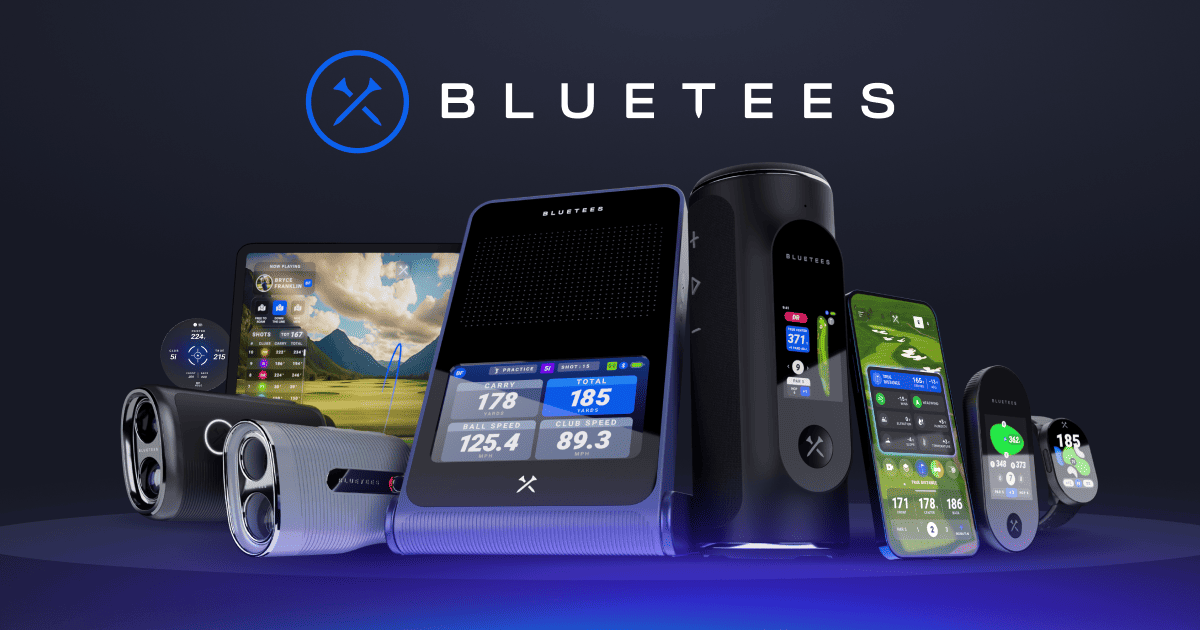
Blue Tees Golf Captain Pro
blueteesgolf.comBest forNewer or intermediate players looking for a sleek, modern, and reliable device that matches their aesthetic.
AI Visibility · how often AI recommends it for this topic
28/ 100
Covered by 2 of 4 AI assistants
- ChatGPT
- Gemini
- Claude
- Google AI
Modern aesthetics meet core functionality. Blue Tees is consistently positioned as the stylish mid-tier brand, focusing on aesthetics, user-friendliness, and essential features like pulse vibration and slope. The Captain Pro model elevates their lineup, often praised in guides comparing GPS Watch vs Rangefinder Golf for packing premium tech into a sleek shell.
Next-generation display and charging. Unlike older models relying on CR2 batteries, the Captain Pro features modern USB-C charging, keeping you powered up without emergency trips to the pro shop. Its OLED display provides incredibly bright readouts that are easy to see against dark tree lines or in glaring sunlight.
Built-in magnetic mounting. For cart riders, the built-in magnetic strip is incredibly strong, easily holding the device to the cart frame over bumpy terrain. While it lacks the extensive multi-decade track record of market leaders like Bushnell, its IP67 weather protection and modern feature set make it a top choice for the contemporary golfer.
What AI consistently says
- +Modern USB-C charging
- +Bright, high-contrast OLED display
- +User-friendly for intermediate players
- +Strong built-in magnetic cart mount
- +Good IP67 weather protection
What AI doesn't mention
- −Lacks the extensive durability track record of legacy brands
- −Optics may not be as clear at the absolute edges as top-tier premium glass
- −Slope algorithm isn't quite as advanced as the 'Elements' tech on high-end models
Nikon Coolshot Pro III Stabilized
nikonusa.comBest forSenior golfers, players with essential tremors, or anyone who struggles to hold a standard rangefinder steady at long distances.
AI Visibility · how often AI recommends it for this topic
27/ 100
Covered by 2 of 4 AI assistants
- ChatGPT
- Gemini
- Claude
- Google AI
The solution for shaky hands. The Nikon Coolshot Pro III Stabilized is engineered specifically to solve one of the most common frustrations in golf: keeping the crosshairs steady on the pin. Highly recommended as the Best golf rangefinder for shaky hands, this device employs the same optical stabilization technology found in Nikon's premium camera lenses.
Hyper-read technology. The stabilization reduces viewfinder vibrations by roughly 80%, allowing the laser to hit the flag stick instantly. Combined with Nikon's 'Hyper Read' technology, the Coolshot Pro III delivers incredibly fast measurements in about 0.3 seconds, regardless of the distance to the target.
Compact and ergonomic. Beyond its stabilization, the unit is incredibly lightweight and ergonomically designed to fit comfortably in one hand. It features a bright OLED display and an external LED indicator that flashes green when slope is disabled, making it strictly compliant for tournament play while remaining user-friendly.
What AI consistently says
- +Class-leading optical image stabilization
- +Hyper Read technology for ~0.3 second measurements
- +Reduces viewfinder vibration by up to 80%
- +External LED indicator for tournament compliance
- +Lightweight and compact ergonomic design
What AI doesn't mention
- −Premium price tag associated with the stabilization tech
- −Lacks a built-in magnetic cart mount
- −White casing can show dirt faster than darker models
Leupold
leupoldgolf.comBest forEquipment purists and rough-on-gear players who prioritize optical clarity and military-grade durability above all else.
AI Visibility · how often AI recommends it for this topic
22/ 100
Covered by 3 of 4 AI assistants
- ChatGPT
- Gemini
- Claude
- Google AI
Military-grade optics. Leupold brings its legendary reputation from the hunting and tactical optics world straight to the golf course. Known for building virtually indestructible hardware, Leupold rangefinders are frequently highlighted by AI platforms as the absolute best choice for players who are notoriously tough on their gear.
Rugged aluminum housing. Unlike the plastic shells found on budget models, premium Leupold golf rangefinders often utilize aircraft-grade aluminum housings wrapped in a grippy rubber armor. This ensures the internal lenses stay perfectly aligned even after taking a beating in a golf bag or being dropped on the cart path.
True golf range algorithm. Beyond toughness, Leupold utilizes highly proprietary True Golf Range (TGR) algorithms that calculate slope with incredible precision. While they don't market as aggressively to the weekend golfer as brands like Blue Tees, purists and equipment junkies recognize Leupold as a top-tier optical investment.
What AI consistently says
- +Unmatched ruggedness and durability
- +High-end, scratch-resistant optical lenses
- +Aircraft-grade aluminum housing on premium models
- +Highly accurate True Golf Range (TGR) slope algorithms
What AI doesn't mention
- −Fewer modern 'lifestyle' features like USB-C charging
- −Can be harder to find in big-box retail stores compared to Bushnell
- −Designs are more utilitarian and less flashy
Also considered
Brands AI Didn't Consistently Recommend
While hundreds of golf rangefinders flood Amazon and big-box sports stores, AI platforms were remarkably consistent in excluding certain well-known brands from their top-tier recommendations. Here is why some popular names didn't make the final cut.
- CallawayAI report
Despite being a titan in golf clubs, Callaway's rangefinders are largely white-labeled products manufactured by third parties. AI platforms prefer dedicated optics and tech brands like Bushnell and Garmin for superior laser engines.
- GolfBuddy
While GolfBuddy makes reliable budget models, AI consensus points to Precision Pro and Blue Tees for offering better value, modern aesthetics, and superior customer service in the mid-tier space.
- TecTecTec
A historic Amazon best-seller, TecTecTec helped pioneer the budget rangefinder category. However, AI platforms now favor newer brands that offer faster flag lock speeds and better build quality at similar price points.
- WosportsAI report
Often the cheapest option available, Wosports rangefinders are frequently skipped by AI due to inconsistent accuracy, fragile plastic housings, and poor performance in foggy or damp conditions.
How to choose
2026 Best Golf Rangefinders Buying Guide
Selecting the right distance measuring device involves balancing your budget against your actual needs on the course. Whether you're tracking standings for the Presidents Cup or just trying to break 90 at your local muni, having accurate yardage is crucial. Here is how AI platforms break down the key features to look for in a 2026 golf rangefinder.
01
GPS Watch vs Laser Rangefinder
Know exactly what you're targeting. The debate between a GPS vs laser rangefinder golf setup comes down to specificity. Laser rangefinders shoot the exact pin location, ensuring you don't over-club on a front pin or leave it short on a back pin. According to Shot Scope's Blog, this precise data is critical for approach shots inside 150 yards.
See the whole picture. Conversely, GPS devices provide front, middle, and back yardages, which is often enough for mid-to-high handicappers just aiming for the center of the green. If you can't decide, hybrid units like the Garmin Approach Z82 offer the best of both worlds, though they come with a steeper learning curve and price tag.
02
Understanding Slope Technology
Adjust for the elevation. A golf rangefinder slope technology calculates the incline or decline to the hole and adjusts the yardage accordingly. For example, a 150-yard shot up a steep hill might "play as" 165 yards. As noted in 7 Things to Know Before Buying a Slope Rangefinder, this feature is invaluable for club selection and building confidence on hilly courses.
Keep it legal for tournaments. While slope is fantastic for practice and casual rounds, it is strictly prohibited in official tournament play under USGA rules. If you play competitively, you must buy a rangefinder that allows you to visibly disable the slope feature—usually via an external switch or a flashing LED indicator.
03
Image Stabilization for Shaky Hands
Lock on without the wobble. Using a golf rangefinder for shaky hands can be an incredibly frustrating experience, especially when trying to tag a thin flagstick from 200+ yards away. If you suffer from essential tremors, play in high winds, or just struggle to hold devices steady, optical stabilization is a game-changer.
The Nikon advantage. Nikon currently dominates this niche with their Coolshot Pro line. The technology physically shifts the lenses inside the device to counteract hand movement, smoothing out the viewfinder image. While it adds cost to the device, it drastically reduces the time it takes to get an accurate reading.
04
Magnification and Optics Quality
See the target clearly. Most modern rangefinders offer either 6x or 7x magnification. A golf rangefinder magnification 6x vs 7x debate usually comes down to field of view versus detail. 7x magnification brings the target closer, which is great for precision, but it also magnifies hand tremors. 6x offers a wider field of view, making it slightly easier to find the flag initially.
Glass quality matters more. While magnification is important, the actual quality of the optical glass dictates clarity. Premium brands like Leupold and Bushnell use high-end, scratch-resistant lenses with anti-glare coatings. This ensures a crisp, bright image even when shooting into the sun or playing in low-light twilight conditions.
05
Durability and Weather Resistance
Survive the elements. Golf is an outdoor sport, and your tech needs to survive unexpected downpours. Looking for a waterproof golf rangefinder is critical. Devices with an IPX7 rating can be completely submerged in water, while IP67 or IPX4 ratings imply water resistance against heavy splashes and rain.
Armor against drops. Beyond water, consider the housing. Rangefinders frequently fall out of carts or get tossed into bags. Models featuring aircraft-grade aluminum or heavy-duty rubber armor will maintain their internal lens alignment much better than budget plastic models over a 5-year lifespan.
06
Battery Life: CR2 vs Rechargeable
The traditional power source. Historically, rangefinders used replaceable CR2 lithium batteries. These are excellent because they hold their charge for a long time—often lasting 40 to 50 rounds—and can be swapped out in seconds if they die on the course. However, they are expensive to replace.
The modern USB-C shift. Recently, there has been a massive shift toward the rechargeable golf rangefinder. Brands like Blue Tees and Precision Pro are incorporating USB-C charging ports. While you have to remember to plug them in, it eliminates the recurring cost of CR2 batteries. Just ensure you check the battery level before heading to the first tee.
Common questions
Frequently Asked Questions
What is the most commonly used rangefinder on the PGA Tour?
Bushnell is the most commonly used rangefinder on the PGA Tour, with the vast majority of players and caddies relying on their Pro X3 and Tour V6 models. Bushnell's dominance on tour is largely due to their unmatched laser speed, optical clarity, and rugged durability under pressure.
What is the best value-for-money golf rangefinder?
The Precision Pro NX10 Slope is widely considered the best value-for-money golf rangefinder on the market. It offers premium features like slope adjustment, rapid target acquisition, and magnetic cart mounting, all at a significantly lower price point than flagship models from legacy brands.
What rangefinder does Rory McIlroy use?
Rory McIlroy uses a Bushnell rangefinder, typically opting for the brand's flagship premium models like the Pro X3+. McIlroy, like many tour pros, relies on Bushnell for its pinpoint accuracy when mapping out course yardages during practice rounds.
What rangefinder does Tiger Woods use?
Tiger Woods uses a Bushnell rangefinder during his practice rounds and tournament preparation. Woods is known for his meticulous course management, and he has trusted Bushnell's precise yardages and robust build quality for the majority of his professional career.
Are slope rangefinders legal for tournament play?
Slope rangefinders are legal for tournament play only if the slope feature is turned off during the round. Under USGA rules, devices must have a visible mechanism—such as a switch, faceplate, or LED indicator—that proves to playing partners the elevation tracking is disabled.
How long does a golf rangefinder last?
A high-quality golf rangefinder typically lasts between 5 and 7 years before the internal laser engine or optics begin to degrade. Premium models with durable metal housings and advanced waterproofing tend to last longer, while budget plastic models may need replacing after 2 or 3 seasons of heavy use.
Does magnification matter in a golf rangefinder?
Yes, magnification matters greatly in a golf rangefinder, with 6x and 7x being the industry standards. Higher magnification (7x) makes the flag appear closer for easier targeting, while slightly lower magnification (6x) offers a wider field of view, making it easier to locate the pin quickly.
Why do some rangefinders have magnets?
Many modern rangefinders have built-in magnets so they can be easily mounted to the metal frame of a golf cart. This keeps the device within arm's reach for quick yardage checks, rather than forcing the player to dig through their golf bag before every shot.
Behind the data
How We Researched This
AI Platform Responses
AI Platforms
Brands Ranked
Date
To determine the best golf rangefinders for 2026, we conducted a systematic, cross-platform AI research analysis rather than relying on the subjective bias of a single editor. We executed a series of topic-specific queries across four major artificial intelligence engines: ChatGPT, Claude, Gemini, and Google’s AI Overviews. By asking these platforms to identify the most accurate, reliable, and highly-rated distance measuring devices for golfers of varying skill levels, we generated a broad dataset of industry recommendations.
Once the initial data was collected, we extracted every brand and specific model mentioned across the outputs. We normalized the product names—ensuring that "Bushnell Pro X3", "Pro X3+", and "Bushnell Golf X3" were correctly aggregated into a single entity—to accurately measure consensus. We then analyzed the sentiment of each mention, calculating positive praise against any noted drawbacks (such as weight, price, or battery style) to understand not just what AI recommends, but exactly why it recommends it.
This cross-platform approach is critical because each AI system is trained on slightly different datasets, crawling thousands of expert reviews, product databases, golf forums, and retail sites. When ChatGPT, Claude, Gemini, and Google all independently agree that the Bushnell Pro X3+ is the gold standard for premium optics, or that the Garmin Z82 leads the hybrid category, it represents a synthesized consensus of the entire internet’s conventional wisdom.
Finally, we layered in specific Visibility Scan Previews for the top-performing brands. This allowed us to structure our editorial reviews around concrete, AI-verified product characteristics—like target acquisition speed, optical stabilization, slope algorithms, and casing materials—rather than just listing numeric scores. The resulting guide reflects a comprehensive, data-backed view of the best golf rangefinders available today.
AI knows them, Google doesn't
Diamonds in the Rough
These brands are consistently recommended by AI assistants but rarely appear in traditional Google search results, a sign the market may be shifting before search rankings catch up.
Mentioned 2x across 2 AI platforms with near-unanimous positive sentiment — and when AI does bring them up, they rank in the top 2 on average. An under-the-radar pick worth investigating.
Mentioned 2x across 2 AI platforms with near-unanimous positive sentiment — and when AI does bring them up, they rank in the top 3 on average. An under-the-radar pick worth investigating.
Mentioned 3x across 2 AI platforms with near-unanimous positive sentiment — and when AI does bring them up, they rank in the top 3 on average. An under-the-radar pick worth investigating.
Mentioned 3x across 2 AI platforms with near-unanimous positive sentiment — and when AI does bring them up, they rank in the top 3 on average. An under-the-radar pick worth investigating.
Mentioned 2x across 2 AI platforms with near-unanimous positive sentiment — and when AI does bring them up, they rank in the top 4 on average. An under-the-radar pick worth investigating.