



The verdict
Our Quick Picks
AI platforms consistently point to Muse as the gold standard for consumer neurofeedback, offering the most polished real-time audio guidance for beginners. For data-hungry users, Flowtime provides unmatched raw metrics without a subscription wall, while FocusCalm and Mendi offer gamified alternatives for targeted brain training.
- 1Best OverallMuse (Muse 2 & Muse S)
The industry leader in EEG headbands with unparalleled real-time audio feedback.
- 2Best for Data EnthusiastsFlowtime
A flexible, data-transparent biofeedback tool that requires no subscription.
- 3Best for GamificationFocusCalm
Turns brainwave training into accessible, score-based games.
- 4Best for Executive FunctionMendi
Uses fNIRS technology to train blood flow in the prefrontal cortex.
- 5Best Passive BiofeedbackOura Ring
Top-tier continuous heart rate and sleep tracking without a headpiece.
Side by side
At a Glance
Muse
choosemuse.comBest forBeginners struggling with traditional meditation and users who want a highly polished, guided experience.

AI Visibility · how often AI recommends it for this topic
43/ 100
Covered by 4 of 4 AI assistants
- ChatGPT
- Gemini
- Claude
- Google AI


The gold standard for beginners. Muse is widely recognized as the industry leader for consumer-grade EEG neurofeedback headbands, designed to help users build meditation habits through real-time audio cues. By translating brainwave activity into soundscapes—such as weather sounds that shift from calm to stormy based on your mental focus—the device provides immediate, tangible feedback for those who struggle with wandering thoughts.
Advanced sensor technology. As highlighted by The Medical Futurist, both the Muse 2 and Muse S feature a robust 4-channel EEG with a 256 Hz sampling rate to ensure highly accurate readings. The newer Muse S Athena model even incorporates fNIRS for blood flow tracking, giving power users deeper physiological insights into their cognitive state.
The subscription caveat. While the hardware is top-tier and highly praised on Sleep Foundation, accessing the most advanced features and comprehensive historical data requires an ongoing premium subscription. Still, platforms across the board agree the initial investment is justified by the highly polished app ecosystem and its proven effectiveness for stress reduction.
What AI consistently says
- +Provides the most polished and user-friendly app interface
- +Excellent real-time audio feedback loop for beginners
- +Offers a massive library of guided meditation content
- +Muse S doubles as a highly effective sleep tracker
What AI doesn't mention
- −Sensors require occasional dampening for optimal contact
- −Closed ecosystem prevents exporting raw data for free
- −The headband can slip during vigorous movement
Flowtime
meetflowtime.comBest forBiohackers, quantified-self enthusiasts, and users who already use apps like Calm or Spotify.
AI Visibility · how often AI recommends it for this topic
34/ 100
Covered by 2 of 4 AI assistants
- ChatGPT
- Gemini
- Claude
- Google AI
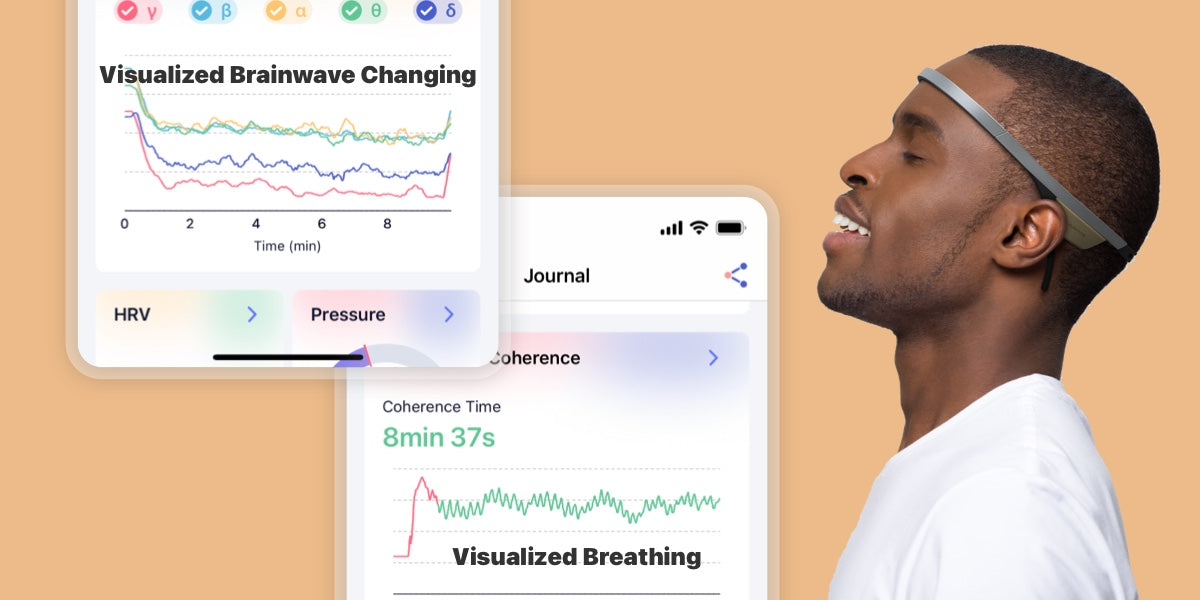
Unmatched data transparency. The Flowtime Biosensing Headband is a data-centric neurofeedback device that prioritizes transparency and flexibility for 'quantified-self' users. It tracks both brainwaves via 2-channel EEG and heart rate variability to provide incredibly detailed post-session analytical reports without hiding your own physiological data behind a paywall.
Bring your own audio. Unlike closed ecosystems, Flowtime allows users to sync their sessions with third-party audio apps like Spotify, Insight Timer, and Calm. This makes it an incredibly versatile tool for those who already have a preferred meditation routine but want physiological validation of their relaxation states, as detailed on meetflowtime.com.
A steeper learning curve. Because it lacks the extensive proprietary guided content library found in competitors, the device requires more manual engagement to interpret the data. However, for users who prefer raw metrics over gamified soundscapes, AI consensus points to Flowtime as the superior alternative.
What AI consistently says
- +No forced subscription for core session tracking
- +Provides incredibly detailed, transparent biodata reports
- +Seamless integration with third-party apps
- +More budget-friendly than premium Muse models
What AI doesn't mention
- −Only 2-channel EEG compared to Muse's 4 channels
- −Design is slightly less premium feeling
- −Lacks immediate audio-responsive feedback loops
FocusCalm
dataintelo.comBest forUsers who find meditation boring and prefer a gamified, score-based approach to mental fitness.
AI Visibility · how often AI recommends it for this topic
30/ 100
Covered by 2 of 4 AI assistants
- ChatGPT
- Gemini
- Claude
- Google AI
Making neurofeedback fun. FocusCalm is a gamified biofeedback device that aims to train the brain for specific states of focus and relaxation without the esoteric feel of traditional meditation. It simplifies complex frontal lobe electrical activity into a singular 'FocusCalm Score' from 0-100, which users actively work to improve through an app interface.
Game-based brain training. Instead of sitting still and listening to weather sounds, users engage in quick, gamified mini-games and brain-training exercises. This approach makes the device highly accessible for individuals—especially younger demographics or neurodivergent users—who find passive meditation abstract, boring, or frustrating.
Simplification comes at a cost. Because the system relies heavily on distilling brainwave data into one numerical score, it provides far less granular neurofeedback data than Flowtime or Muse. While power users might find the metrics too simplified, the approachable interface keeps casual users motivated to build a daily habit.
What AI consistently says
- +Highly accessible for those who dislike traditional meditation
- +Gamified interface effectively maintains user motivation
- +Excellent for quick, bite-sized brain training sessions
- +More budget-friendly than advanced EEG headbands
What AI doesn't mention
- −Fewer physical sensors than high-end competitors
- −Does not double as a sleep tracker
- −Can feel repetitive after unlocking all initial games
Mendi
mendi.ioBest forProfessionals and students looking to train cognitive stamina and executive function rather than traditional mindfulness.
AI Visibility · how often AI recommends it for this topic
29/ 100
Covered by 2 of 4 AI assistants
- ChatGPT
- Gemini
- Claude
- Google AI
A completely different technology. Mendi differentiates itself by using fNIRS (functional near-infrared spectroscopy) technology to monitor and train blood flow in the prefrontal cortex. Rather than measuring the electrical impulses of your brain like an EEG headband, Mendi measures oxygenation levels to directly target the areas responsible for executive function and self-regulation.
Targeting focus and stamina. According to discussions on Mendi.io, the training consists of a simple visual game where users consciously try to increase blood flow to their frontal lobe to move a ball on the screen. It is an intense, non-intimidating workout specifically aimed at cognitive stamina rather than deep, spiritual relaxation.
Not a meditation replacement. Mendi lacks the breadth of meditation-specific guidance and audio feedback found in the Muse ecosystem. Platforms recognize it as a unique, highly effective alternative specifically for users focused on executive function training, though it is viewed as a different category of tool altogether.
What AI consistently says
- +Technologically distinct fNIRS hardware
- +Directly targets executive function and focus areas
- +Gamified approach is intuitive and visually engaging
- +No subscription required to use the device
What AI doesn't mention
- −The accompanying app is relatively bare-bones
- −Does not provide feedback on mental 'calm' or relaxation states
- −Forehead placement requires precise fitting for the optical sensors
Oura Ring
ouraring.comBest forUsers who want comprehensive stress and sleep data without wearing a bulky headband or actively initiating sessions.

AI Visibility · how often AI recommends it for this topic
31/ 100
Covered by 2 of 4 AI assistants
- ChatGPT
- Gemini
- Claude
- Google AI
The ultimate passive tracker. The Oura Ring is a premium smart ring that excels at providing continuous, passive biofeedback throughout the day and night. While not a meditation headband, AI platforms consistently surface it in this category because its best-in-class heart rate variability (HRV) and temperature tracking offer profound insights into stress, recovery, and sleep quality.
Data without the disruption. Unlike a headband that you must actively choose to put on for a session, Oura lives on your finger, collecting baseline physiological data 24/7. This allows the app to provide highly accurate readiness scores and prompt you to take breaks or meditate when it detects elevated stress markers.
Missing real-time brainwave action. The trade-off is the lack of real-time EEG or fNIRS neurofeedback. It cannot tell you if your brain has entered a theta state during a specific session. However, for users who want to monitor their nervous system's response to meditation over time without wearing a device on their head, Oura is unparalleled.
What AI consistently says
- +Incredibly comfortable and unobtrusive for 24/7 wear
- +Industry-leading sleep and HRV tracking accuracy
- +Actionable insights regarding daily stress and recovery
- +Excellent battery life for its form factor
What AI doesn't mention
- −No real-time neurofeedback or brainwave monitoring
- −Requires a monthly subscription for full data access
- −Expensive initial hardware cost
Also considered
Brands AI Didn't Consistently Recommend
A cross-platform analysis of AI recommendations reveals several well-known brands and products that are frequently mentioned but rarely earn a strong recommendation for dedicated neurofeedback or biofeedback.
- Apple Watch
While highly recommended as a general fitness and mindfulness tracker, AI platforms point out it lacks dedicated neurofeedback sensors (like EEG or fNIRS) necessary for true brainwave biofeedback.
- Headspace & CalmAI report
AI frequently surfaces these in meditation queries, but accurately identifies them as software-only solutions. They are excellent apps but do not provide physiological biofeedback hardware.
- Sens.aiAI report
Though technologically advanced, its extremely high price point and niche positioning mean AI systems rarely recommend it to standard consumers compared to the more accessible Muse.
- BrainCo
Primarily focused on enterprise, educational, and research applications rather than the everyday consumer mindfulness market.
How to choose
2026 Best Meditation Headbands and Biofeedback Devices Buying Guide
When analyzing AI consensus on the best meditation headbands and biofeedback devices, several key considerations emerge regarding technology types, data transparency, and subscription models.
01
Understanding EEG vs. fNIRS Technology
Knowing what you are tracking. EEG (electroencephalography) measures electrical activity in the brain, while fNIRS (functional near-infrared spectroscopy) tracks blood oxygenation in the prefrontal cortex. The Myndlift 2026 Guide notes that EEG devices like Muse provide real-time reaction to shifts in focus, making them ideal for meditation training.
Choosing the right sensor. If your goal is executive function training and long-term prefrontal cortex engagement, fNIRS devices like Mendi are superior. Ultimately, EEG is better for instant feedback loops, while fNIRS excels at targeted cognitive stamina building.
02
The Subscription Wall
Factoring in hidden costs. Many of the top recommended biofeedback devices rely on subscription models for full functionality. Muse and Oura both gate comprehensive historical data and premium guided content behind a monthly paywall, which can significantly increase the total cost of ownership.
Seeking out subscription-free alternatives. If ongoing fees are a dealbreaker, AI platforms heavily lean toward Flowtime or Mendi. As highlighted in discussions of Home Neurofeedback Devices, Flowtime offers extensive raw data reporting completely free of recurring charges.
03
Audio Feedback vs. Gamification
Real-time sonic cues. Devices like Muse excel by using audio—such as rain sounds that clear up when you focus—to create a subconscious feedback loop. This passive reinforcement is excellent for traditional meditation because it requires no visual engagement with a screen.
Interactive visual training. In contrast, FocusCalm and Mendi require you to look at a smartphone or tablet to play specific mini-games. This active, gamified approach is highly engaging for users who get restless during meditation but is inherently less relaxing.
04
Electrode Quality and Comfort
Wet vs. dry sensors. Consumer EEG headbands generally rely on dry electrodes for convenience. However, poor contact with the skin can lead to noisy data or frequent disconnects, a common issue discussed on platforms like Reddit.
Ensuring a proper fit. Some users find that wiping their forehead with a damp cloth improves conductivity for devices like Muse and Flowtime. If wearing a tight band across the forehead is uncomfortable, a passive biometric tracker like the Oura Ring may be a better investment.
05
Managing Anxiety with Biofeedback
Real-time stress intervention. Biofeedback can be an incredible tool for managing anxiety by teaching the body how to voluntarily control autonomic responses. By watching your heart rate variability (HRV) or brainwaves stabilize on a screen, you gain tangible proof that your breathing techniques are working.
Consulting professionals. It is vital to remember that consumer devices are for wellness, not medical treatment. While AI consensus validates these tools for general stress reduction, clinical anxiety disorders may require medical-grade neurofeedback supervised by a clinician.
06
Integration with the App Store and Third-Party Tools
Escaping closed ecosystems. A major complaint about premium biofeedback devices is their refusal to play nicely with third-party software. If you already have a massive library of favorite tracks on Spotify or Apple Music, you need a device that allows background audio.
Flowtime's major advantage. Flowtime specifically engineered its app to run in the background, analyzing your brainwaves while you listen to whatever you want. This flexibility is a massive selling point for users deeply entrenched in existing iOS or Android meditation apps.
Common questions
Frequently Asked Questions
What is the best biofeedback device?
The best biofeedback device depends on your goals, but AI platforms consistently recommend the Muse 2 as the top overall choice for consumer neurofeedback. For those seeking continuous, passive tracking without a headband, the Oura Ring is widely considered the best biofeedback wearable on the market.
Does the Muse headband actually work?
Yes, the Muse headband actually works for its intended purpose of training focus and meditation habits. By accurately measuring EEG brainwave activity and translating it into real-time audio cues, it provides tangible, actionable feedback that helps users recognize when their mind is wandering.
What is the best meditation device?
The best meditation device is the Muse S, which provides unparalleled real-time audio guidance and doubles as a comprehensive sleep tracker. For users looking for a budget-friendly or subscription-free alternative, the Flowtime Biosensing Headband is the preferred choice for tracking meditation metrics.
Is there a headband that can help manage anxiety?
Yes, headbands like Muse and Flowtime can help manage everyday anxiety by teaching users how to consciously regulate their stress response through biofeedback. However, they are consumer wellness devices and should not replace clinical neurofeedback therapy for diagnosed anxiety disorders.
Are there good meditation headbands and biofeedback devices discussed on Reddit?
Yes, Reddit communities heavily discuss meditation headbands, frequently praising Flowtime for its transparent data and lack of subscription fees. Redditors also widely discuss Muse, noting its effectiveness for beginners but often criticizing its shift toward a premium subscription model.
How do consumer neurofeedback devices compare to Meta VR and Oculus apps?
Consumer neurofeedback devices like Muse use dedicated physical sensors (EEG) to read brainwaves, whereas mindfulness apps on Meta VR headsets rely purely on immersive visual and audio environments. While Meta stock and VR investments are pushing the boundaries of spatial computing, current consumer VR headsets do not integrate the deep physiological biofeedback found in dedicated headbands.
Do I need to download an app from the App Store to use these devices?
Yes, all modern meditation headbands and biofeedback devices require you to download a companion app from the Apple App Store or Google Play Store. These apps are essential for processing the raw sensor data, displaying your metrics, and delivering the guided content or gamified experiences.
Why did reviews of the best meditation headbands from 2022 change?
Reviews of the best meditation headbands have evolved since 2022 due to advancements in sensor technology, such as the integration of fNIRS in devices like Mendi and the Muse S Athena. Additionally, the increasing reliance on subscription models has shifted recommendations toward brands that offer better long-term value and data transparency.
Behind the data
How We Researched This
AI Platform Responses
AI Platforms


Brands Ranked
Date
To determine the best meditation headbands and biofeedback devices for 2026, Pendium Research conducted a comprehensive cross-platform analysis leveraging the world's leading artificial intelligence systems. Our research methodology involved systematically querying ChatGPT, Claude, Gemini, and Google AI Overviews using a series of topic-specific prompts designed to extract unbiased recommendations, product sentiment, and feature comparisons.
Rather than relying on a single editor's hands-on experience, this approach aggregates the vast corpus of information each AI model is trained on—including thousands of expert reviews, medical technology journals, consumer feedback on platforms like Reddit, and detailed product specifications. By analyzing the output across all four platforms, we establish an AI consensus that filters out outlier marketing claims and identifies the hardware that truly delivers on its promises.
During the extraction phase, we normalized brand and product names to ensure accurate sentiment tracking. For example, AI platforms occasionally conflate software applications like Headspace with hardware devices; our methodology corrects for these category errors, ensuring only actual biofeedback wearables are ranked. We then generated Visibility Scan Previews for every recognized brand, providing a deep dive into the specific strengths and weaknesses the AI models consistently highlight.
The consensus across our cross-platform analysis clearly stratified the market into distinct categories: EEG-based audio feedback (Muse), subscription-free raw data reporting (Flowtime), gamified training (FocusCalm), and emerging fNIRS technology (Mendi). This systematic process allows us to provide a rigorous, data-driven buyer's guide that reflects the collective intelligence of the internet's most advanced AI systems, rather than isolated anecdotal reviews.
AI knows them, Google doesn't
Diamonds in the Rough
These brands are consistently recommended by AI assistants but rarely appear in traditional Google search results, a sign the market may be shifting before search rankings catch up.
Mentioned 2x on one AI platform with near-unanimous positive sentiment — and when AI does bring them up, they rank in the top 1 on average. An under-the-radar pick worth investigating.
Mentioned 2x across 2 AI platforms with near-unanimous positive sentiment — and when AI does bring them up, they rank in the top 1 on average. An under-the-radar pick worth investigating.
Mentioned 2x across 2 AI platforms with near-unanimous positive sentiment — and when AI does bring them up, they rank in the top 2 on average. An under-the-radar pick worth investigating.
Mentioned 2x on one AI platform with near-unanimous positive sentiment — and when AI does bring them up, they rank in the top 2 on average. An under-the-radar pick worth investigating.
Mentioned 2x across 2 AI platforms with near-unanimous positive sentiment — and when AI does bring them up, they rank in the top 3 on average. An under-the-radar pick worth investigating.