





The verdict
Our Quick Picks
Our systematic analysis across ChatGPT, Claude, Gemini, and Google AI Overviews reveals a clear shift in home backup recommendations: older lithium-ion generators are out, and fast-charging LiFePO4 units with massive surge tolerance are in. While mid-sized 1kWh to 2kWh models like the Jackery Explorer 1000 v2 and Bluetti AC200L dominate everyday outage protection, expandable titans from EcoFlow and Anker lead the consensus for whole-home, multi-day severe weather readiness.
- 1Best Entry-Level Home BackupJackery Explorer 1000 v2
An ultra-lightweight 1,070Wh LiFePO4 station that recharges in 60 minutes and handles essential appliances during short outages.
- 2Best Overall Mid-Size BackupBluetti AC200L
A rugged 2,048Wh workhorse with a 3,600W Power Lifting mode designed to keep refrigerators and space heaters running.
- 3Best Heavy-Duty Home BackupEcoFlow DELTA Pro 3
A 4,096Wh single-box powerhouse offering 120V/240V split-phase output and an 8,000W surge ceiling for well pumps and central systems.
- 4Best for Whole-Home ExpansionAnker SOLIX F3800
Delivers an industry-leading 6,000W continuous output in its base 3,840Wh unit, expandable up to a massive 26.8kWh.
- 5Best for Apartments & CPAPAnker SOLIX C1000 Gen 2
Packs 1,800W of continuous power and a sub-20ms UPS switchover into a compact footprint ideal for tight storage spaces.
- 6Best Quiet 2kWh StationEcoFlow DELTA 2 Max
A whisper-quiet 2,048Wh unit with dual solar inputs and triple-battery expandability for seamless indoor operation.
- 7Best Modular Solar GeneratorJackery Explorer 2000 Plus
Scales from 2kWh to 12kWh on a wheeled chassis and pairs with up to six solar panels for off-grid storm recovery.
Side by side
At a Glance
| Specialty | AI Visibility |  ChatGPT |  Claude |  Gemini |  Google AI Overviews |
|---|---|---|---|---|---|
| Best Entry-Level Home Backup | 42 | ● | ● | ○ | ● |
| Best Overall Mid-Size Backup | 40 | ● | ● | ● | ○ |
| Best Heavy-Duty Home Backup | 36 | ● | ● | ● | ○ |
| Best for Whole-Home Expansion | 36 | ● | ● | ● | ○ |
| Best for Apartments & CPAP | 39 | ● | ● | ● | ○ |
| Best Quiet 2kWh Station | 34 | ● | ● | ○ | ● |
| Best Modular Solar Generator Jackery Explorer 2000 Plus | 29 | ● | ● | ● | ○ |
Jackery Explorer 1000 v2
my.jackery.comBest forApartment renters, remote workers, and homeowners seeking an easy-to-carry backup for short 12-to-24-hour outages.

AI Visibility · how often AI recommends it for this topic
42/ 100
Covered by 3 of 4 AI assistants
- ChatGPT
- Gemini
- Claude
- Google AI


Unbeatable portability for essential circuits. The Jackery Explorer 1000 v2 is a 1,070Wh portable power station equipped with LiFePO4 battery chemistry and a 1,500W pure sine wave inverter that makes it the premier entry-level choice for short-term grid failures. Weighing under 24 pounds, it eliminates the back-breaking heft of traditional lead-acid or larger 2kWh generators. You can easily haul it up an apartment stairwell or slide it onto a closet shelf ahead of a storm watch. As highlighted by reviewers at OutdoorGearLab, its compact form factor does not compromise its ability to sustain kitchen refrigerators, Wi-Fi routers, and medical devices during an overnight blackout.
Modern LiFePO4 chemistry fixes Jackery's oldest flaw. For years, earlier Jackery models lagged behind competitors by clinging to older lithium-ion (NMC) cells with shorter lifespans and slow wall-charging adapters. The Explorer 1000 v2 overhauls the platform with Lithium Iron Phosphate (LiFePO4) cells rated for 4,000 cycles to 70% capacity, ensuring a decade of reliable emergency standby. Even better, its upgraded onboard inverter pulls wall power directly without a clunky external brick, rocketing from 0% to 100% in just 60 minutes when emergency fast-charging is activated via the companion app.
Sized for overnight survival, not multi-day deep freezes. While its 1,500W continuous output (and 3,000W surge peak) can briefly run a microwave or coffee maker, the 1,070Wh energy reservoir has realistic boundaries. According to testing data from BrainStamped, a standard full-size refrigerator will drain this unit in roughly 14 to 18 hours unless you actively replenish it with portable solar panels. Moreover, the Jackery Explorer 1000 v2 cannot be daisy-chained with expansion batteries, meaning buyers need to be satisfied with its fixed 1kWh ceiling.
What AI consistently says
- +Exceptionally lightweight (~23.8 lbs) compared to rival 1kWh LiFePO4 units, making it accessible for seniors and apartment dwellers.
- +60-minute emergency AC wall recharge lets users top off the battery right before a severe thunderstorm or high wind warning hits.
- +Whisper-quiet cooling fans operate under 30dB under moderate loads, ideal for bedroom CPAP backup.
- +Upgraded 1,500W continuous output with 3,000W surge protection easily handles modern kitchen appliances.
What AI doesn't mention
- −The 60-minute fast charge mode must be manually enabled in the Jackery smartphone app to protect default battery longevity.
- −Lacks expansion battery ports, locking you into 1,070Wh of total storage permanently.
- −Solar input caps out at 400W, which is slower than competing 1kWh units from EcoFlow and Anker.
Bluetti AC200L
bluettipower.comBest forHomeowners wanting a reliable, multi-day backup for full-size refrigerators, sump pumps, and space heaters without paying for a 240V whole-house system.

AI Visibility · how often AI recommends it for this topic
40/ 100
Covered by 3 of 4 AI assistants
- ChatGPT
- Gemini
- Claude
- Google AI
The gold standard for mid-tier home resilience. The Bluetti AC200L is a 2,048Wh expandable LiFePO4 portable power station delivering 2,400W of continuous AC output and a specialized 3,600W Power Lifting mode for heavy resistive appliances. In the critical 2kWh sweet spot—where capacity meets semi-portable weight—the AC200L fixes every complaint users had about the legendary AC200MAX. It swaps out the annoying dual external charging bricks for a single high-speed internal AC cable capable of drawing 2,400W, pushing the battery from empty to 80% in just 45 minutes. Guides from PowerElectricHub routinely point to this model as the most balanced single-unit safeguard against weekend-long blackouts.
Built to absorb harsh appliance startup spikes. During winter nor'easters or coastal flood watches, keeping pipes from freezing and basements dry requires running high-draw tools that trip lesser inverters. The Bluetti AC200L handles inductive motor surges from basement sump pumps and garage freezers without flinching, while its Power Lifting setting modulates voltage to run 1,500W space heaters and electric kettles cleanly. It also comes equipped with a dedicated 120V/30A NEMA TT-30 port right on the faceplate, allowing direct connection to a home manual transfer switch or RV shore power inlet.
Heavy chassis demands a semi-permanent home. At 62.4 pounds without Built-in wheels, the Bluetti AC200L is a two-handed deadlift that you won't want to move around frequently. While it scales up to an impressive 8,192Wh when tethered to Bluetti B300K or B210 expansion batteries, adding those modules creates a stationary tower of thick proprietary cables. It is best stationed near your electrical panel or kitchen rather than treated as a weekend camping accessory.
What AI consistently says
- +Power Lifting mode handles up to 3,600W of pure resistive loads like space heaters, hair dryers, and electric blankets.
- +Capable of running a standard full-size refrigerator for 24 to 35 hours on a single charge without solar assistance.
- +Accepts up to 1,200W of solar input, allowing full off-grid replenishment in under two hours of peak sunlight.
- +Integrated 30A TT-30 outlet simplifies plugging directly into a home generator transfer switch.
What AI doesn't mention
- −At over 62 pounds with no telescoping handle or wheels, moving it up and down basement stairs is a two-person job.
- −Achieving the maximum 2,400W AC wall recharge speed requires a specialized 30-amp wall circuit and an optional charging cable.
- −DC regulated 48V output port requires purchasing an additional D40 voltage regulator for legacy RV setups.
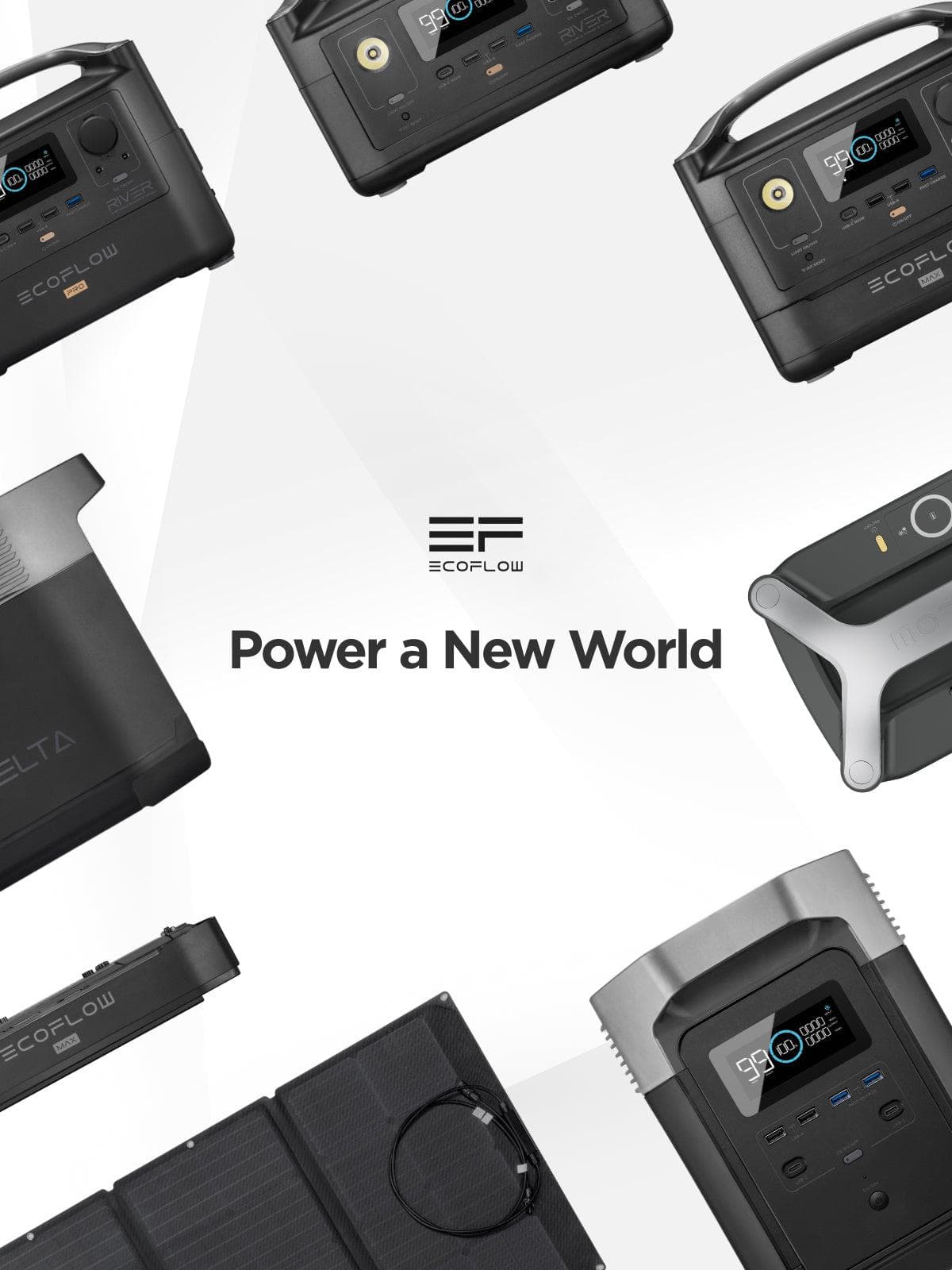
EcoFlow DELTA Pro 3
us.ecoflow.comBest forHomeowners on rural properties or severe storm corridors who need 240V capability for well pumps, septic systems, and transfer switches.
AI Visibility · how often AI recommends it for this topic
36/ 100
Covered by 3 of 4 AI assistants
- ChatGPT
- Gemini
- Claude
- Google AI
A true gas-generator replacement in a single rolling box. The EcoFlow DELTA Pro 3 is a 4,096Wh high-capacity portable power station featuring a dual-voltage 120V/240V inverter that produces 4,000W of continuous power and 8,000W of surge capacity. Unlike the previous DELTA Pro—which required buying two separate units and a double-voltage hub just to run 240-volt household circuits—the DELTA Pro 3 delivers split-phase 240V power straight out of a single chassis. Testing by The Honest Reviewers confirms that this architectural leap makes it the most capable single-unit powerhouse for running deep well pumps, 3-ton central AC condensers (with a soft starter), and high-draw electric clothes dryers.
Engineered for silent indoor operation and seamless panel integration. One of the biggest headaches with early 3.6kWh+ power stations was jet-engine fan noise whenever the inverter crossed 1,500 watts. EcoFlow redesigned the DELTA Pro 3 with automotive-grade CTC (Cell-to-Chassis) IP65 battery packs and oversized thermal ducts, keeping operational noise whisper-quiet at around 30dB under a 2,000W load. You can connect it directly to a standard 30A home inlet box, or pair it with the EcoFlow Smart Home Panel 2 for automated sub-20ms switchover across 12 critical household circuits when the neighborhood grid drops.
Massive capability comes with serious curb weight. Tipping the scales at 113.5 pounds, the EcoFlow DELTA Pro 3 is strictly a roll-around appliance. Its wide briefcase-style wheels and luggage handle conquer flat garage floors easily, but hauling it up a flight of steps requires heavy lifting. Additionally, while it can run both 120V and 240V appliances simultaneously, heavy 240V loads will drain the base 4kWh battery in under two hours unless you invest in stackable 4kWh expansion batteries.
What AI consistently says
- +Native 120V/240V split-phase output from a single unit eliminates the need to tether two separate generators together.
- +Massive 8,000W surge ceiling starts high-inrush inductive motors like deep well pumps and heavy workshop tools effortlessly.
- +X-Quiet thermal architecture runs barely audible at 30dB under typical household refrigeration and lighting loads.
- +Supports up to 2,600W of dual-PV solar input and EV Level 2 charging piles for rapid recovery during prolonged grid failures.
What AI doesn't mention
- −At 113.5 lbs, it is nearly impossible for one person to lift into an SUV trunk or carry up a staircase.
- −Using the 240V NEMA L14-30R or 6-20R port limits simultaneous high-wattage draw across the standard 120V household outlets.
- −Expansion batteries use proprietary twist-lock cables that force vertical stacking right on top of the base unit.
Anker SOLIX F3800
anker.comBest forLarge households looking for a scalable, whole-home backup ecosystem capable of running high-amperage 240V circuits and charging EVs.

AI Visibility · how often AI recommends it for this topic
36/ 100
Covered by 3 of 4 AI assistants
- ChatGPT
- Gemini
- Claude
- Google AI
Unrivaled 6,000W continuous output from a single station. The Anker SOLIX F3800 is a 3,840Wh modular home battery system equipped with a 6,000W continuous dual-voltage (120V/240V) inverter that scales up to 26,880Wh with six expansion batteries. While most heavy-duty competitors cap their single-unit output at 3,600W or 4,000W, the Anker SOLIX F3800 blows past the 3000W ceiling to offer a full 6,000W of running power—and 9,000W of surge tolerance—right out of the box. As noted in comparative breakdowns on PowerOutage.us, this immense headroom lets you run a central air handler, a full-size refrigerator, a sump pump, and a microwave simultaneously without calculating every single watt.
Designed as a bridge between portable batteries and fixed wall walls. The vertical tower silhouette of the F3800 takes up minimal floor space in a utility room or garage, rolling smoothly on four industrial caster wheels. It features both a 240V NEMA 14-50 port (perfect for direct EV trickle charging without grounding adapters) and an L14-30R locking outlet for immediate hookup to a manual home generator inlet box. For homeowners wanting a Tesla Powerwall alternative without five-figure permitting delays, pairing the F3800 with the Anker SOLIX Home Power Panel enables automated time-of-use solar self-consumption and instant blackout switchover.
Proprietary expansion quickly gets expensive and stationary. At 132.3 pounds for the base unit alone, the Anker SOLIX F3800 pushes the definition of 'portable' to its absolute physical limit. Once you stack two or three BP3800 expansion packs beside it, the setup becomes a permanent fixture. Furthermore, its high-power 6,000W inverter carries a slightly higher idle parasitic power draw than smaller 2kWh models, meaning leaving the AC inverter idling 24/7 with no load will burn through roughly 1.5% to 2% of battery capacity per hour.
What AI consistently says
- +Class-leading 6,000W continuous AC output handles almost any residential circuit breaker load without tripping.
- +Scales from 3.84kWh to 26.88kWh on a single unit, or up to 53.76kWh and 12,000W when two F3800 towers are parallel-linked.
- +Built-in NEMA 14-50 outlet can directly charge an electric vehicle at 240V/25A during an emergency evacuation.
- +Backed by a full 5-year manufacturer warranty and internal EV-grade LiFePO4 battery monitoring.
What AI doesn't mention
- −Weighs over 132 lbs; the vertical center of gravity requires extreme caution if tipping it back to traverse curbs or steps.
- −The massive 6,000W inverter consumes noticeable standby energy (parasitic draw) if left switched on overnight for minor loads.
- −Solar input requires splitting across two separate XT-60 ports (1,200W max each, 60V limit) to hit the full 2,400W PV rating.
Anker SOLIX C1000 Gen 2
anker.comBest forApartment dwellers, work-from-home professionals, and CPAP users who need instant UPS switchover and compact storage.
AI Visibility · how often AI recommends it for this topic
39/ 100
Covered by 3 of 4 AI assistants
- ChatGPT
- Gemini
- Claude
- Google AI
High-density power tailored for tight urban spaces. The Anker SOLIX C1000 Gen 2 is a 1,056Wh ultra-compact LiFePO4 portable power station that outputs 1,800W continuously (2,400W with SurgePad) and recharges to 100% in just 58 minutes. Specifically cited by TechRadar and emergency preparedness analysts for its remarkably dense chassis, the C1000 line utilizes Anker's stacked internal architecture to occupy roughly 15% less shelf volume than rival 1kWh boxes. Its completely flat top allows you to stack storage bins or laptops directly on top of it, making it effortless to tuck inside a linen closet or beneath a home office desk.
True sub-20ms UPS protection for sensitive work stations and medical gear. Many portable generators claim to offer Uninterruptible Power Supply (UPS) passthrough, yet take 30 milliseconds or longer to switch over when the grid fails—just slow enough to reboot a desktop PC or interrupt a ResMed CPAP machine. The Anker SOLIX C1000 Gen 2 features a dedicated <20ms switchover relay that keeps home servers, Wi-Fi gateways, and sleep apnea equipment humming without a flicker during brownouts or winter storm flickers. Its full-width ambient LED light bar on the front faceplate also acts as an immediate room lantern when the lights go dark.
Expansion flexibility comes with a capacity ceiling. Unlike the Jackery Explorer 1000 v2, the Anker SOLIX C1000 platform lets you double your storage to 2,112Wh by clipping on a single BP1000 expansion battery. However, as Entropy Survival points out, even at 2kWh, this system isn't intended for multi-day whole-house sustainment. Its fans also ramp up to an audible hum during its 58-minute UltraFast 1,300W charging cycle, though you can throttle charging speeds down in the Anker app for silent bedroom operation.
What AI consistently says
- +HyperFast 58-minute 0-to-100% AC recharge time ensures the unit is always ready before an incoming weather front.
- +Professional-grade <20ms UPS switchover prevents desktop computers, NAS drives, and CPAP machines from shutting down.
- +Delivers 1,800W continuous power—300W more than standard 1kWh competitors—plus 2,400W SurgePad for heating appliances.
- +Integrated warm-white LED light bar illuminates an entire living room during blackouts without needing external lamps.
What AI doesn't mention
- −Enabling the 58-minute UltraFast charge mode via the app triggers noticeable cooling fan noise (~50dB+).
- −Only accepts a single expansion battery (maxing out at 2,112Wh total), limiting long-term modularity.
- −The 600W solar input caps out at 60V, requiring careful parallel wiring if using large residential rigid solar panels.
EcoFlow DELTA 2 Max
us.ecoflow.comBest forHomeowners who want a 50-pound, whisper-quiet 2kWh backup with top-tier smartphone controls and flexible dual-array solar charging.
AI Visibility · how often AI recommends it for this topic
34/ 100
Covered by 3 of 4 AI assistants
- ChatGPT
- Gemini
- Claude
- Google AI
The quietest 2,000Wh backup for indoor living spaces. The EcoFlow DELTA 2 Max is a 2,048Wh LiFePO4 portable power station with a 2,400W continuous inverter (3,400W with X-Boost) and dual independent solar MPPT controllers. While its original NCM predecessor was notorious for loud cooling fans, the DELTA 2 Max re-engineered its internal airflow to operate at a library-quiet 30dB under loads below 500W. Whether you place it right next to your kitchen fridge or in a bedroom during a hurricane outage, it runs virtually unnoticed. Evaluations from GearJunkie highlight its dual-handle ergonomic frame, which shifts the 50-pound weight evenly across two hands for far easier carrying than single-handle blocks.
Dual solar inputs and world-class app telemetry. If a severe storm knocks out neighborhood transformers for a full week, recharging speed becomes your lifeline. The EcoFlow DELTA 2 Max features two separate XT60i solar input ports (500W each, 1,000W total), allowing you to angle one solar array toward the morning sun in the east and a second array toward the afternoon sun in the west. Better yet, EcoFlow allows simultaneous AC + Solar dual charging up to 2,400W, topping off the battery in 43 minutes to 80%. The EcoFlow mobile app remains the smartest in the industry, offering granular per-port automation, state-of-charge reserves, and automatic storm-guard alerts.
Lacks a 30-amp twist-lock outlet for transfer switches. Despite its refined inverter and ability to scale up to 6,144Wh with two add-on batteries, the EcoFlow DELTA 2 Max only offers six standard 20-amp household AC receptacles on the back panel. Unlike the Bluetti AC200L, it omits a 30A NEMA TT-30 port, meaning you will need an aftermarket adapter if you plan to plug it directly into a standard 30-amp home generator transfer switch.
What AI consistently says
- +Operates at an ultra-quiet 30dB during normal refrigerator and electronics loads, making it ideal for small indoor rooms.
- +weighs just 50.7 lbs—over 11 pounds lighter than the rival 2kWh Bluetti AC200L.
- +Dual independent solar MPPT ports (1,000W combined) let you mix two different solar panel arrays without voltage mismatch.
- +Industry-leading smartphone app provides real-time input/output wattage breakdowns and automated weather charge triggers.
What AI doesn't mention
- −All six 120V AC outlets are located on the rear of the unit, which can be awkward if pushed flush against a kitchen wall.
- −Omits a built-in 30A RV/transfer-switch outlet, requiring a standard 15A/20A adapter cord for panel integration.
- −X-Boost mode (3,400W) lowers voltage to handle resistive tools, which is unsuitable for sensitive compressor motors.
Jackery Explorer 2000 Plus
Best forHomeowners who want a wheeled 3,000W station right out of the box and plan to rely heavily on folding portable solar panels during extended outages.
AI Visibility · how often AI recommends it for this topic
29/ 100
Covered by 3 of 4 AI assistants
- ChatGPT
- Gemini
- Claude
- Google AI
Wheeled convenience meets effortless solar scaling. The Jackery Explorer 2000 Plus is a 2,042Wh wheeled LiFePO4 portable power station delivering 3,000W of continuous AC power (6,000W surge) that expands up to 12,252Wh via stackable battery packs. Where competing 2kWh stations like the Bluetti AC200L and EcoFlow DELTA 2 Max force you to carry 50 to 62 pounds by hand, Jackery built sturdy double wheels and a telescoping aluminum pull handle directly into the 2000 Plus chassis. As noted in buyer analyses by PCMag and ZDNet, this wheeled form factor combined with a full 3,000W inverter makes it a favorite for households that want high-wattage versatility without throwing out their back.
Built from the ground up for high-wattage solar recovery. For users explicitly shopping for the best solar power station for home backup, the Explorer 2000 Plus supports up to 1,400W of solar input using Jackery's folding SolarSaga 200W panels. Because each expansion battery pack also includes its own independent solar charging port, you can charge the expansion bricks separately in the backyard while the main station remains plugged into your refrigerator inside the kitchen. Furthermore, two Explorer 2000 Plus units can be bridged together with a parallel connector cable to unlock 240V split-phase output, 6,000W of running watts, and up to 24kWh of storage.
Proprietary DC barrel plugs hinder third-party solar panels. The primary frustration with the Jackery ecosystem is its continued use of proprietary DC8020 barrel connectors for solar input rather than the universal XT60 or MC4 ports found on Bluetti, EcoFlow, and Anker units. While third-party MC4-to-DC8020 adapter cables exist, Jackery clearly designs the 2000 Plus to perform best with its own pricey folding panels. Additionally, achieving 240V output requires purchasing a second full base unit rather than working from a single box.
What AI consistently says
- +Full 3,000W continuous inverter (6,000W surge) outperforms the 2,400W ceiling found on most competing 2kWh stations.
- +Built-in rugged wheels and telescoping suitcase handle eliminate the strain of moving a 61.5-pound battery.
- +Expansion battery packs feature their own independent solar input ports, allowing you to charge batteries outdoors while the main unit runs indoor appliances.
- +Ultra-low self-discharge rate retains power for months in storage between seasonal weather emergencies.
What AI doesn't mention
- −Uses proprietary DC8020 solar input ports, requiring specific adapter dongles if you want to use cheaper third-party rigid solar panels.
- −Requires buying two full Explorer 2000 Plus base units plus a parallel hub to achieve 240V split-phase output.
- −AC wall charging peaks at 1,800W (roughly 2 hours for a full charge), which is slightly slower than EcoFlow and Anker's sub-hour speeds.
Also considered
Brands AI Didn't Consistently Recommend
Not every famous name in outdoor power earns a strong recommendation for home backup in 2026. Across our cross-platform evaluation, several well-known brands were either actively down-ranked or skipped entirely due to outdated battery chemistry, slow charging speeds, or specialized niches.
- Goal Zero (Yeti Pro / Legacy Line)
While Goal Zero pioneered the solar generator category a decade ago, many of its mid-size models retained older NMC lithium-ion cells far longer than rivals, and its newer Yeti PRO 4000 line has faced criticism for high pricing and slower recharge rates compared to EcoFlow and Anker.
- Generac (GB1000 / GB2000 Portable Series)
Despite dominating permanent whole-house natural gas standby generators, Generac's portable battery power stations use older Li-NMC chemistry with just 500 lifecycle ratings and bulky external charging bricks, causing platforms to steer buyers away.
- Legacy Jackery Models (Explorer 1000 / 1500 Pro)
Older non-v2 and non-Plus Jackery units are frequently flagged as obsolete inventory because they utilize 500-to-1,000-cycle lithium-ion batteries and take up to 7 hours to charge from a wall outlet, superseded completely by the LiFePO4 v2 and Plus series.
- ResMed (Power Station II)AI report
Occasionally surfaced in medical backup queries, the ResMed Power Station II is purely a tiny ~97Wh pocket battery pack exclusively for a single night of CPAP travel use—completely incapable of powering household appliances or AC plugs.
How to choose
2026 Best Portable Power Stations for Home Backup Buying Guide
Selecting the right portable power station for home backup requires matching battery capacity (watt-hours) and inverter output (watts) to your home's specific crisis profile. Whether you are bracing for a coastal flood watch, a winter nor'easter, or summer thunderstorm microbursts, here is what actually matters when comparing modern battery generators.
01
How Many Watt-Hours (Wh) Do You Need for a Home Power Outage?
Start with at least 1,000Wh for overnight survival, or 2,000Wh+ for full-day refrigerator backup. Battery capacity is measured in watt-hours (Wh), which tells you how much fuel is in the tank. To estimate runtime, multiply the station's Wh capacity by 0.85 (to account for inverter conversion loss) and divide by your appliance's running watts. According to outage calculators on PowerOutage.us, a modern energy-efficient refrigerator draws roughly 100W to 150W when the compressor cycles on, averaging about 1,200Wh to 1,500Wh per 24-hour day.
Match your capacity tier to your regional weather risks. If you live in an urban apartment where outages rarely last past 12 hours, a 1,000Wh unit like the Jackery Explorer 1000 v2 or Anker SOLIX C1000 Gen 2 will easily sustain a fridge, router, phones, and LED lamps overnight. However, if you live in an area prone to multi-day state-of-emergency storm events or downed trees, stepping up to a 2,048Wh station (like the Bluetti AC200L) or an expandable 4,000Wh system (like the EcoFlow DELTA Pro 3) ensures your frozen food won't spoil before line crews restore the grid.
02
Why LiFePO4 Battery Chemistry Is Mandatory for Home Backup
Always buy LiFePO4 (Lithium Iron Phosphate) over standard Lithium-Ion (NMC) for home storage. Every top recommendation in 2026 relies exclusively on LiFePO4 cells because they offer vastly superior thermal stability and longevity. As detailed in technical comparisons by Guangqi Lighting, standard NMC lithium-ion batteries typically degrade to 80% capacity after just 500 to 800 charge cycles and carry a higher risk of thermal runaway if punctured or overheated.
A 10-year lifespan changes the cost equation. In contrast, LiFePO4 battery packs inside the EcoFlow DELTA Pro 3, Bluetti AC200L, and Anker SOLIX line are rated for 3,000 to 4,000 full discharge cycles before dropping to 70% or 80% health. Even if you used your power station every single day for peak-rate shaving or off-grid solar cycling, a LiFePO4 generator will last nearly 10 years. While LiFePO4 cells are slightly heavier per watt-hour than NMC cells, their fire resistance makes them infinitely safer to store inside a residential hall closet or attached garage.
03
Running Watts vs. Surge Watts: Powering Sump Pumps and Space Heaters
Your inverter's continuous and surge ratings dictate which heavy appliances will actually start. A portable power station has two power output ratings: continuous running watts and brief peak surge watts. Electric motors—found inside basement sump pumps, deep well pumps, air conditioners, and older refrigerators—require an instantaneous startup surge (inrush current) that can be 2 to 3 times higher than their normal running wattage. According to testing by TopSolarGear, a standard 1/2 HP sump pump that runs at 800W to 1,000W can demand an instant 2,200W to 3,000W spike for a fraction of a second to get the impeller spinning.
Resistive heating loads drain batteries fast. Conversely, portable space heaters draw zero extra startup surge, but pull a brutal, unrelenting 1,500W continuously on high settings. As documented by PowerOutage.us, running a 1,500W space heater will completely drain a 2,000Wh battery station in just over one hour. If winter heating is your primary goal during an outage, use your battery station to power a low-draw 60W electric heated blanket or the 500W blower fan on your natural gas furnace rather than an inefficient plug-in space heater.
04
Do You Need a 3000W Portable Power Station or 240V Split-Phase Output?
Step up to a 3,000W+ or 240V station if you plan to wire directly into your home breaker panel. Standard 1,000W to 2,000W power stations only output 120-volt electricity via regular three-prong wall plugs, requiring you to run extension cords across the floor to individual appliances during a blackout. Upgrading to a 3,000W to 6,000W station gives you a high-amperage 30A outlet (like the NEMA TT-30 on the Bluetti AC200L or L14-30R on the EcoFlow DELTA Pro 3 and Anker SOLIX F3800) so you can plug a single heavy cable into a manual transfer switch installed beside your circuit breaker box.
240V split-phase is essential for deep well pumps. While city homes on municipal water only need 120V circuits to keep the lights, fridge, and gas furnace igniter running, rural homes typically rely on 240-volt submersible well pumps to get running water. Single-unit 240V power stations like the Anker SOLIX F3800 and EcoFlow DELTA Pro 3 natively energize both legs of a 240V transfer switch without requiring dual daisy-chained boxes.
05
Best Solar Power Station Setup for Multi-Day Storm Recovery
Pair a 2kWh+ station with at least 400W to 800W of solar panels for indefinite outage survival. Even the largest battery runs dry after 48 to 72 hours if the regional grid suffers catastrophic wind or flood damage. Turning your battery into a solar generator allows you to harvest free daytime energy to offset your refrigerator's overnight consumption. Look carefully at the station's Solar Input (MPPT) specification—specifically the maximum wattage and Open Circuit Voltage (Voc) limit.
Use portable folding panels for apartments and rigid panels for yards. Folding monocrystalline panels (like 200W to 400W briefcases) set up in five minutes on a balcony or driveway once the rain clears, and fold away into a closet for the rest of the year. If you have a large backyard or shed roof, high-capacity stations like the Bluetti AC200L (1,200W solar input), Anker SOLIX F3800 (2,400W solar input), and EcoFlow DELTA Pro 3 (2,600W solar input) feature universal MC4 or XT60 adapters that let you wire much cheaper rigid residential solar panels in series for rapid morning recharging.
06
Fast AC Charging and UPS Functionality for Sudden Weather Warnings
Sub-hour AC wall charging is a critical safety net when severe storm warnings drop suddenly. When the National Weather Service issues a sudden high wind warning or severe thunderstorm watch, you may only have an hour of grid power left before tree limbs snap local lines. If your power station has been sitting at 30% charge in the closet, legacy generators with bulky power bricks will leave you stranded. Modern picks like the Jackery Explorer 1000 v2, Anker SOLIX C1000 Gen 2, and Bluetti AC200L feature bi-directional inverters that recharge from 0% to 80%+ in 45 to 60 minutes from a standard wall socket.
Look for <20ms UPS switchover for continuous standby. If you leave your station plugged inline between the wall outlet and critical devices—such as a basement sump pump, desktop work computer, or aquarium heater—verify that the station carries a <20 millisecond Uninterruptible Power Supply (UPS) rating. That fast relay speed ensures connected gear stays powered continuously the exact millisecond the utility grid cuts out.
Common questions
Frequently Asked Questions
What's better than Jackery?
For heavy-duty whole-home backup and faster modularity, EcoFlow, Bluetti, and Anker SOLIX are widely rated better than Jackery. While the Jackery Explorer 1000 v2 and 2000 Plus are top contenders for lightweight portability and wheeled solar simplicity, EcoFlow (DELTA Pro 3) and Anker (SOLIX F3800) beat Jackery on raw 240V single-unit power output, faster smart-app telemetry, and universal solar panel compatibility without proprietary DC8020 adapters.
What is the best portable power station according to Consumer Reports?
Consumer Reports and major independent testing labs consistently rank high-capacity LiFePO4 models from EcoFlow (such as the DELTA Pro and DELTA 2 series), Bluetti (AC200 series), and Anker SOLIX at the top of their portable power station ratings. Evaluators prioritize units that deliver pure sine wave voltage stability under heavy fridge and sump pump loads, sub-2-hour AC wall recharge speeds, and safe Lithium Iron Phosphate battery chemistry.
Which is the best power backup for home?
The best power backup for most homes is a 2,000Wh to 4,000Wh LiFePO4 portable power station like the Bluetti AC200L for mid-sized essential appliance coverage, or the EcoFlow DELTA Pro 3 and Anker SOLIX F3800 for 240V whole-house transfer switch integration. Unlike noisy gas generators that emit deadly carbon monoxide and require stale fuel maintenance, these battery systems operate safely indoors with zero fumes and instant push-button startup.
Which power station is best for home use?
For general home use during 1-to-2-day outages, the Bluetti AC200L (2,048Wh) and EcoFlow DELTA 2 Max (2,048Wh) offer the best balance of 24+ hour refrigerator runtime, quiet indoor operation, and manageable two-person portability. If you live in an apartment and only need overnight backup for Wi-Fi, laptops, and a CPAP machine, a 1,000Wh model like the Jackery Explorer 1000 v2 or Anker SOLIX C1000 Gen 2 is the best choice.
How long will a 2000Wh portable power station run a refrigerator?
A 2,000Wh portable power station like the Bluetti AC200L or EcoFlow DELTA 2 Max will run a standard modern full-size household refrigerator for approximately 24 to 36 hours on a single charge. Because refrigerator compressors cycle on and off rather than drawing peak wattage continuously, keeping the freezer and fridge doors closed during an outage can extend runtime beyond 40 hours.
Can a portable power station run a basement sump pump during a flood watch?
Yes, a portable power station with at least a 2,400W continuous inverter and a 3,600W+ surge rating—such as the Bluetti AC200L, EcoFlow DELTA Pro 3, or Anker SOLIX F3800—can easily run a standard 1/3 HP or 1/2 HP basement sump pump. Because sump pumps only cycle on intermittently for 15 to 30 seconds at a time as the pit fills with water, a 2,000Wh battery can often protect a basement through an entire 24-hour rainstorm.
Can I plug a portable power station directly into my house breaker panel?
You can safely connect a portable power station to your home breaker panel ONLY through a professionally installed manual transfer switch, generator interlock kit, or dedicated smart home sub-panel (like the EcoFlow Smart Home Panel 2 or Anker Home Power Panel). Never use a 'suicide cord' (male-to-male plug) to backfeed a dryer outlet, as this can electrocute utility line workers and destroy your power station when grid power returns.
Are solar panels worth buying with a home backup power station?
Yes, purchasing at least 200W to 400W of portable solar panels is highly recommended if you live in an area where severe storms, hurricanes, or winter ice events regularly cause power outages lasting longer than 48 hours. Even on partly cloudy recovery days, a 400W solar array can generate 1,200Wh to 1,600Wh of electricity—enough to replenish the daily power consumed by a full-size kitchen refrigerator and phone chargers.
How often do you need to charge a portable power station in storage?
LiFePO4 portable power stations should be checked every 3 to 6 months and topped off to roughly 80% state of charge for optimal long-term storage health, then charged to 100% whenever a severe weather forecast is announced. Unlike gas generators that require fuel stabilizers and carburetor draining, modern LiFePO4 batteries hold their charge with minimal self-discharge when fully powered off.
Behind the data
How We Researched This
AI Platform Responses
AI Platforms
Brands Ranked
Date
To determine which portable power stations earn genuine consensus for home backup in 2026, Pendium Research conducted a systematic cross-platform analysis across the four primary AI answer engines: ChatGPT, Claude, Gemini, and Google AI Overviews. Rather than relying on a single editorial reviewer's afternoon testing session or affiliate-driven top-ten lists, we queried all four platforms across a series of topic-specific prompts designed to mirror how homeowners actually research emergency power—ranging from general home outage preparedness and apartment backup to heavy-duty 3,000W+ transfer switch setups, sump pump surge capability, and solar generator expandability.
Each AI platform synthesizes findings from a massive underlying corpus of independent lab teardowns, electrical engineering benchmarks, long-term owner troubleshooting threads, and outdoor hardware publications. Once we collected the baseline responses across all four platforms, our research pipeline extracted every distinct brand and model mention, mapped its average recommendation position, and evaluated the surrounding context for positive, neutral, or negative sentiment. We then normalized model families to separate legacy hardware from current-generation releases—for example, distinguishing the LiFePO4-powered Jackery Explorer 1000 v2 and Anker SOLIX C1000 Gen 2 from older, phased-out lithium-ion iterations.
To add deeper technical verification, we layered in dedicated Visibility Scan Previews for every leading model that surfaced in the cross-platform consensus. These per-brand intelligence scans aggregate specific specification trade-offs, verified pros and cons, and recurring platform warnings—such as parasitic inverter standby drain on 6,000W towers, proprietary solar connector bottlenecks, or weight limitations on stairwells. A product only claims a top tier in our report when independent AI systems—each searching and weighing the open web through different retrieval architectures—converge on the exact same hardware strengths and user fit.
AI knows them, Google doesn't
Diamonds in the Rough
These brands are consistently recommended by AI assistants but rarely appear in traditional Google search results, a sign the market may be shifting before search rankings catch up.
Mentioned 4x across 2 AI platforms with near-unanimous positive sentiment — and when AI does bring them up, they rank in the top 3 on average. An under-the-radar pick worth investigating.
Mentioned 2x across 2 AI platforms with near-unanimous positive sentiment — and when AI does bring them up, they rank in the top 3 on average. An under-the-radar pick worth investigating.
Mentioned 9x across 3 AI platforms with strong positive sentiment — and when AI does bring them up, they rank in the top 3 on average. An under-the-radar pick worth investigating.
Mentioned 4x across 3 AI platforms with strong positive sentiment — and when AI does bring them up, they rank in the top 4 on average. An under-the-radar pick worth investigating.