





The verdict
Our Quick Picks
Across a series of topic-specific queries on ChatGPT, Claude, Gemini, and Google AI Overviews, modern stargazing recommendations split cleanly between traditional tabletop Dobsonians for raw optical power and automated smart telescopes for light-polluted backyard imaging. For pure glass-to-eye lunar and planetary views, the Sky-Watcher Heritage 130P is the clear frontrunner, while the ZWO Seestar S50 leads the growing category of app-controlled smart scopes.
- 1Best Overall Beginner TelescopeSky-Watcher Heritage 130P
A collapsible 130mm tabletop Dobsonian that pours every dollar into light-gathering mirror size rather than shaky tripods or finicky electronics.
- 2Best Value Smart TelescopeZWO Seestar S50
An all-in-one automated imaging rig that uses live-stacking sensors to punch through heavy city light pollution and send deep-sky photos straight to your phone.
- 3Best for Guided NavigationCelestron StarSense Explorer
A beginner-friendly optical telescope line that uses your smartphone's camera and plate-solving technology to point arrows directly toward planets and galaxies.
- 4Best Premium Smart TelescopeVaonis Vespera
A sleek, weather-resistant robotic observatory with a polished software ecosystem designed for effortless deep-sky astrophotography.
- 5Best Portable Smart TelescopeDwarfLab Dwarf 3
A book-sized, 1.3-kilogram dual-camera smart scope built for hikers, campers, and travelers who want automated night-sky capture in a backpack.
- 6Best Budget Astronomy BinocularsCelestron SkyMaster & Cometron Binoculars
Wide-field, high-aperture Porro prism binoculars in 7x50 and 15x70 configurations that offer an inexpensive, zero-setup entry point to lunar craters and star clusters.
- 7Best Handheld Stargazing BinocularsCanon IS AW Series Binoculars
High-magnification binoculars equipped with powered optical image stabilization that eliminates hand tremor without needing a heavy tripod.
- 8Best Night Sky Companion AppStellarium
The gold-standard planetarium software for identifying constellations, tracking lunar phases, and planning backyard observing sessions.
Side by side
At a Glance
| Specialty | AI Visibility |  ChatGPT |  Claude |  Gemini |  Google AI Overviews |
|---|---|---|---|---|---|
| Best Overall Beginner Telescope | 32 | ● | ● | ○ | ○ |
| Best Value Smart Telescope | 25 | ○ | ● | ○ | ● |
| Best for Guided Navigation | 31 | ○ | ○ | ● | ● |
| Best Premium Smart Telescope | 30 | ● | ● | ● | ○ |
| Best Portable Smart Telescope | 28 | ● | ● | ○ | ● |
| Best Budget Astronomy Binoculars | 56 | ● | ● | ● | ● |
| Best Handheld Stargazing Binoculars | 25 | ● | ● | ○ | ○ |
| Best Night Sky Companion App | 23 | ● | ● | ● | ○ |
Sky-Watcher Heritage 130P
skywatcherusa.comBest forBeginners, families, and visual astronomy purists who want the brightest, sharpest glass-to-eye views of the Moon and planets under $350.

AI Visibility · how often AI recommends it for this topic
32/ 100
Covered by 2 of 4 AI assistants
- ChatGPT
- Gemini
- Claude
- Google AI


Maximum optical aperture per dollar. The Sky-Watcher Heritage 130P is a collapsible tabletop Dobsonian reflector telescope that prioritizes a large 130mm parabolic primary mirror over computerized electronics or bulky tripods. Priced between $280 and $310, it puts nearly its entire manufacturing budget into light-gathering glass and a rock-solid wooden alt-azimuth base. Both ChatGPT and Claude highlight this design as the antidote to the frustrating "department store telescope" trap, where cheap lenses are paired with wobbly aluminum legs that vibrate whenever you touch the focuser. As detailed on skywatcherusa.com, the FlexTube strut system allows the optical tube to compress down to roughly half its operating length, making it easy to store in a closet or carry to a dark-sky campsite in the trunk of a compact car.
Crisp lunar craters and planetary detail. With a 650mm focal length and an f/5 focal ratio, the Heritage 130P delivers bright, wide-field views that excel on both the full moon and brighter deep-sky objects like the Orion Nebula or the Pleiades star cluster. When paired with a basic 10mm eyepiece or a 2x Barlow lens, it resolves the rings of Saturn, the cloud belts and four Galilean moons of Jupiter, and sharp mountain shadows along the lunar terminator. According to Best Telescope for Beginners in 2026: A No-Nonsense Guide, tabletop Dobsonians in the 130mm to 150mm range remain the undisputed starting point for families and hobbyists who want an authentic, glass-to-eye visual experience.
Manual operation requires an outdoor surface. Because the base sits low to the ground, you need to place the telescope on a sturdy picnic table, a concrete wall, or a heavy-duty milk crate to view comfortably without crouching. Furthermore, the open-truss tube design leaves the middle section of the light path exposed; if you observe from a suburban yard with neighbor porch lights or streetlights, wrapping a simple homemade foam light shroud around the struts significantly improves contrast.
What AI consistently says
- +130mm parabolic primary mirror gathers enough light to resolve Saturn's rings, Jupiter's moons, and bright star clusters
- +Sturdy tabletop Dobsonian wooden base eliminates the shaky vibrations common in cheap entry-level tripods
- +Collapsible FlexTube design shrinks the optical tube for easy closet storage and road-trip portability
- +Ready to observe out of the box in under two minutes with zero complex polar alignment required
What AI doesn't mention
- −The open-strut FlexTube design lets stray streetlamp glare enter the optical path unless you fashion a foam light shroud
- −Requires a steady outdoor table, sturdy crate, or short stool in the field since it does not include free-standing legs
- −Helical twist-focuser has slightly more play than rack-and-pinion focusers when using heavier aftermarket eyepieces
ZWO Seestar S50
zwoastro.comBest forCity dwellers, tech enthusiasts, and casual stargazers who want effortless, shareable images of the Moon, galaxies, and nebulae without learning manual astrophotography.
AI Visibility · how often AI recommends it for this topic
25/ 100
Covered by 2 of 4 AI assistants
- ChatGPT
- Gemini
- Claude
- Google AI
Automated astrophotography for light-polluted yards. The ZWO Seestar S50 is an all-in-one app-controlled smart telescope that replaces the traditional optical eyepiece with a Sony IMX462 digital CMOS sensor and automated live-stacking software. Priced between $400 and $500 (with its ultra-compact sibling, the Seestar S30, sitting even lower), it has completely disrupted entry-level astronomy. Gemini and Google AI Overviews frequently single out the Seestar line for suburban and urban residents who cannot see past heavy city skyglow with a traditional mirror. You simply set the 2.5-kilogram unit on its included carbon-fiber mini tripod, connect via Wi-Fi and Bluetooth to your smartphone or tablet, tap a target in the sky atlas, and watch the scope automatically slew, plate-solve its exact position, and track the rotation of the Earth.
Built-in filters reveal invisible nebulae and lunar detail. Inside the sealed 50mm apochromatic triplet optical tube, the Seestar S50 houses motorized dual-band light-pollution filters alongside a dedicated snap-on solar filter. As exposure after 10-second exposure stacks on your mobile screen, faint wisps of gas in the Lagoon Nebula or the spiral arms of the Whirlpool Galaxy emerge in full color—targets that would look like barely visible gray smudges through an ordinary backyard eyepiece. In dedicated Lunar and Solar modes, the onboard software uses high-frame-rate video tracking to lock onto the full moon, allowing you to record crisp craters and share images immediately to social media or family group chats, a standout feature highlighted in agenaastro.com.
Screen viewing replaces the traditional eyepiece. It is critical to understand that you never put your eye up to the ZWO Seestar S50; the entire experience happens on your phone or iPad screen. In addition, its modest 250mm focal length and 1080p vertical sensor orientation are optimized for wide-field deep-sky objects and the full lunar disk rather than high-magnification planetary close-ups. Jupiter and Saturn appear only as small, overexposed dots without discernible surface bands.
What AI consistently says
- +Automated plate-solving, tracking, and live-stacking allow total beginners to capture colorful deep-sky nebulae in minutes
- +Integrated dual-band light-pollution filter cuts through severe urban and suburban skyglow
- +Dedicated lunar tracking mode locks onto the Moon for high-contrast video and photo capture
- +Self-contained 2.5kg body includes a carbon-fiber tripod, internal battery, dew heater, and carry case under $500
What AI doesn't mention
- −Contains no optical eyepiece for direct glass-to-eye stargazing—all viewing occurs on a smartphone or tablet screen
- −Short 250mm focal length makes it poorly suited for resolving fine details on small planets like Mars, Jupiter, or Saturn
- −Internal six-hour battery drains noticeably faster in freezing winter temperatures when the built-in dew heater is active
Celestron StarSense Explorer
celestron.comBest forBeginners, parents with curious kids, and frustrated manual-scope owners who want real eyepiece viewing paired with foolproof GPS-style turn-by-turn sky navigation.

AI Visibility · how often AI recommends it for this topic
31/ 100
Covered by 2 of 4 AI assistants
- ChatGPT
- Gemini
- Claude
- Google AI
Smartphone plate-solving eliminates navigation frustration. The Celestron StarSense Explorer series is a line of manual optical telescopes equipped with a patented smartphone dock and mirror system that uses your phone's camera to recognize star patterns in real time. Ranging from $230 for entry-level refractors and tabletop models up to $550+ for larger Newtonian reflectors and Dobsonians, it bridges the gap between completely manual scopes and expensive motorized GoTo mounts. As noted across The Best Telescopes for Kids in 2026 — Outer Space Trip, the primary reason beginners abandon astronomy is the sheer difficulty of aiming a narrow telescope tube at invisible targets in the dark. The StarSense Explorer app solves this by projecting a bullseye onto your phone screen and displaying directional arrows that guide your hands until the object sits squarely in the eyepiece.
Real glass-to-eye optics with modern digital training wheels. Unlike fully digital smart scopes, the StarSense Explorer preserves the classic magic of looking through an actual optical eyepiece at live photons from space. Once the app's green bullseye confirms you are on target, you lean in to observe the crater Tycho on the full moon, the double star Albireo, or the Andromeda Galaxy with your own eyes. While you move the tube, the app provides audio facts and curated
What AI consistently says
- +Patented smartphone dock uses plate-solving camera recognition to guide you to targets with on-screen directional arrows
- +Operates without cell service, Wi-Fi, or telescope batteries once the StarSense Explorer app is installed on your phone
- +Preserves the authentic glass-to-eye visual stargazing experience while eliminating the steep learning curve of star-hopping
- +Available across multiple optical designs, from budget 80mm refractors to powerful 8-inch and 10-inch Dobsonians
What AI doesn't mention
- −A noticeable portion of the purchase price pays for the software license and dock rather than larger optical glass
- −Entry-level LT tripod models (such as the LT 80AZ and LT 114AZ) suffer from flimsy mounts and shaky focusers compared to the DX or Dobsonian versions
- −Older or budget smartphones without high-sensitivity night-mode cameras may struggle to plate-solve in heavily light-polluted skies
Vaonis Vespera
vaonis.comBest forAffluent beginners, design-conscious tech buyers, and aspiring astrophotographers who want wide-field automated mosaic imaging without building a complex modular camera rig.

AI Visibility · how often AI recommends it for this topic
30/ 100
Covered by 3 of 4 AI assistants
- ChatGPT
- Gemini
- Claude
- Google AI
Apple-level industrial design meets robotic astronomy. The Vaonis Vespera (spanning the Vespera II and Vespera Passengers/Pro lineup) is a luxury, fully automated smart observation station that blends a quadruplet apochromatic refractor with proprietary image-processing software. Priced from roughly $1,590 into the several thousands depending on the sensor edition, it targets buyers who want a museum-grade industrial object that handles complex deep-space astrophotography at the press of a single button. ChatGPT, Claude, and Gemini all position Vaonis as the high-end alternative to budget smart scopes, praising its sleek white minimalist shell, seamless silent motors, and IP43 weather-resistant housing.
Panoramic CovalENS mosaics and high-resolution sensors. Where entry-level smart telescopes restrict you to a rigid, postage-stamp field of view, the Vaonis Vespera features a patented "CovalENS" live-mosaic mode through its Singularity mobile app. This allows the telescope to automatically pan across large swaths of the sky and stitch multiple frames together in real time—capturing expansive structures like the entire Veil Nebula, the North America Nebula, or the full Pleiades cluster alongside a razor-sharp full moon. According to reviews on explorescientific.com, the upgraded 8.3-megapixel Sony IMX585 sensor in the Vespera II delivers markedly finer detail and lower background noise than first-generation smart scopes, plus it exports uncompressed 16-bit TIFF and FITS files for hobbyists who want to fine-tune their shots in Adobe Lightroom or PixInsight.
Premium pricing and accessory costs add up quickly. Despite its polished user interface and multi-user capability (up to eight family members can connect their tablets to the scope simultaneously during a backyard star party), the Vaonis Vespera represents a steep financial leap. Furthermore, essential add-ons like the hygrometer anti-fog sensor, dual-band light-pollution filters, solar filters, and a tall carbon-fiber tripod are frequently sold as pricey individual upgrades.
What AI consistently says
- +Quadruplet lanthanum glass optics and high-resolution Sony sensors capture publication-worthy deep-sky and lunar images
- +Patented CovalENS live-mosaic technology automatically stitches wide-field panoramas of massive nebulae and star clusters
- +Polished Singularity app supports up to eight connected phones or tablets simultaneously for group stargazing nights
- +Exports raw FITS and 16-bit TIFF image stacks for enthusiasts who want to learn advanced desktop post-processing
What AI doesn't mention
- −Costs three to four times more than the ZWO Seestar S50 while still lacking a direct optical eyepiece
- −Critical accessories like light-pollution filters, solar filters, and moisture sensors are sold separately at high markups
- −Non-removable internal battery requires plugging into an external USB-C power bank for all-night imaging marathons
DwarfLab Dwarf 3
dwarflab.comBest forCampers, hikers, frequent flyers, and multi-hobby outdoor enthusiasts who want a single pocketable device for moon viewing, wide-field astrophotography, and daytime birding.
AI Visibility · how often AI recommends it for this topic
28/ 100
Covered by 3 of 4 AI assistants
- ChatGPT
- Gemini
- Claude
- Google AI
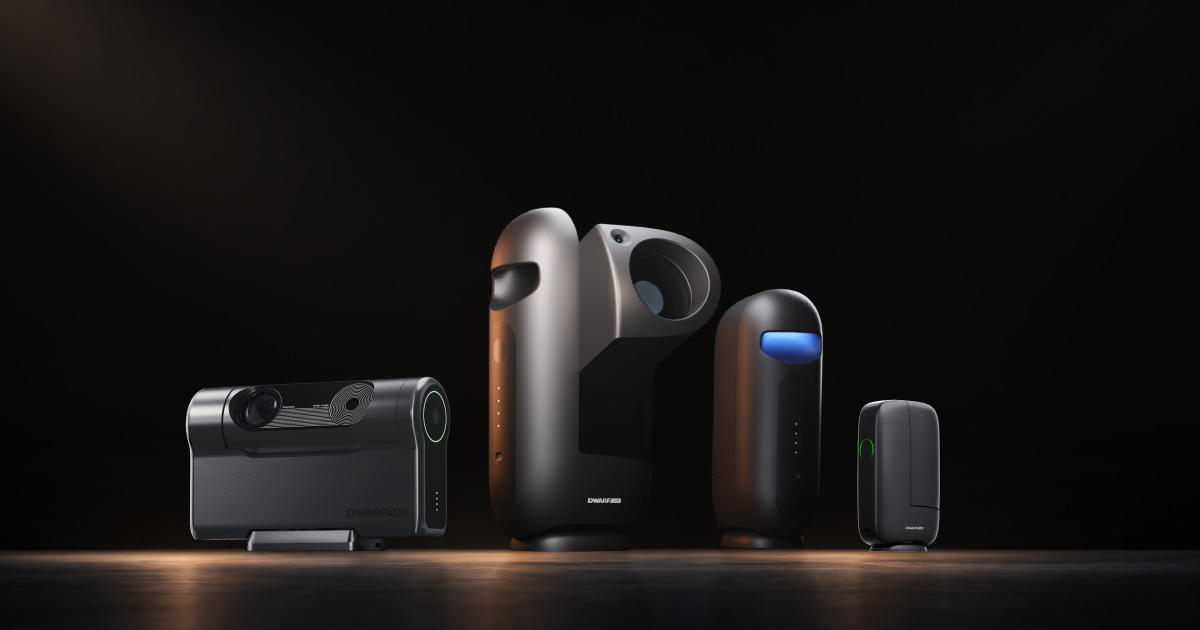
Book-sized dual-camera astronomy for travelers. The DwarfLab Dwarf 3 is an ultra-compact, 1.3-kilogram smart telescope that pairs a wide-angle finder camera with a 35mm periscope telephoto lens in a rectangular body no larger than a hardcover novel. Selling for around $500, it is engineered specifically for backpackers, road-trippers, and apartment dwellers who want an all-in-one imaging device that slips into a carry-on bag. ChatGPT, Claude, and Google AI Overviews consistently recommend the Dwarf 3 as the ultimate travel companion, noting that traditional optical tubes and heavy counterweights simply cannot match its grab-and-go footprint, a point echoed in Best Portable Telescope for Hiking, Camping & Road Trips (2026).
Day-to-night versatility with built-in filters. Because the Dwarf 3 utilizes a unique dual-camera layout alongside a low-noise Sony IMX678 Starvis 2 sensor, it functions equally well during daylight hours and after sunset. By day, its AI-powered object tracking follows birds in flight, wildlife, or distant mountain ridges; by night, it switches to equatorial or alt-azimuth astronomical tracking to capture the full moon, the Milky Way core, and large deep-sky complexes. Unlike its predecessor (the Dwarf II), the Dwarf 3 integrates internal motorized VIS, Astro, and Dual-Band filters directly inside the housing, plus magnetic snap-on solar filters for viewing sunspots and eclipses without loose adapter rings.
Small aperture limits fine planetary and small-galaxy detail. The trade-off for a 1.3-kilogram weight is a relatively small 35mm aperture and a 150mm focal length. While that wide field of view is fantastic for framing the entire Andromeda Galaxy, the Orion sword region, or the rising Beaver Moon over a horizon silhouette, it lacks the focal reach required to resolve tiny planetary disks or faint, compact planetary nebulae.
What AI consistently says
- +Weighs just 1.3 kilograms and packs into a padded lunchbox-sized case for hiking, camping, and airline travel
- +Dual-camera wide-angle and telephoto architecture simplifies framing and doubles as an AI-tracking daytime wildlife spotting scope
- +Upgraded Sony IMX678 sensor and built-in motorized dual-band filter deliver clean wide-field nebula captures
- +Supports Automated Mosaic mode and long-exposure equatorial tracking when tilted on a standard photographic tripod head
What AI doesn't mention
- −Small 35mm optical aperture gathers less light per second than 50mm competitors like the ZWO Seestar S50
- −Short 150mm focal length makes small galaxies and planets appear tiny within the wide-field frame
- −Does not include a tripod in the base box—requires a stable third-party camera tripod for long night exposures
Celestron SkyMaster & Cometron Binoculars
estesrockets.comBest forFirst-time stargazers, budget shoppers, and backyard moon watchers who want instant, intuitive wide-field views of the night sky without setting up a telescope.

AI Visibility · how often AI recommends it for this topic
56/ 100
Covered by 4 of 4 AI assistants
- ChatGPT
- Gemini
- Claude
- Google AI
Two-eyed depth perception before buying a telescope. Celestron's astronomy binocular lineup—led by the budget Cometron 7x50 ($40–$55) and the high-powered SkyMaster 15x70 ($90–$115)—represents the single most practical entry point into amateur stargazing. Both ChatGPT and Gemini emphasize that many newcomers are better served by a dedicated pair of wide-aperture Porro prism binoculars than a cheap, shaky sub-$150 telescope. As explained in Best Binoculars for Stargazing: What to Buy Before You Buy a Telescope, using both eyes provides natural brain-assisted contrast and an expansive five-to-seven-degree field of view—roughly ten to fourteen full moons wide—making it effortless to scan the Milky Way, trace constellations, and spot passing comets.
7x50 for handheld comfort vs. 15x70 for lunar immersion. The Celestron Cometron 7x50 uses a large 7mm exit pupil that matches the fully dilated human eye in dark skies, keeping the weight under 28 ounces so adults and kids can hold them steady by hand while reclining in a lawn chair. Step up to the Celestron SkyMaster 15x70, and the twin 70mm multi-coated objective lenses pull in nearly double the light, transforming the full moon into a three-dimensional sphere dotted with bright ray systems, maria (lava plains), and jagged crater walls. Publications like space.com and skyatnightmagazine.com regularly cite the SkyMaster 15x70 and Pro ED variants as staple tools that even veteran telescope owners keep in their gloveboxes.
High magnification demands a tripod and delicate handling. At 15x magnification and over three pounds of weight, the SkyMaster 15x70 cannot be held steady by hand for more than a few seconds before your natural pulse turns stars into squiggly lines; you must attach it to a standard camera tripod or monopod using the included adapter. Additionally, budget Porro prism binoculars are vulnerable to losing internal prism alignment (collimation) if dropped or rattled in shipping, which can cause double vision.
What AI consistently says
- +Wide field of view and right-side-up orientation make finding star clusters, comets, and lunar features intuitive for beginners
- +Cometron 7x50 offers a bright, lightweight handheld experience under $55 with zero setup time
- +SkyMaster 15x70 packs huge 70mm BaK-4 prism light-gathering lenses that reveal Jupiter's four largest moons and dense Milky Way star clouds
- +Doubles for daytime long-range terrestrial viewing, coastal ship spotting, and wildlife observation
What AI doesn't mention
- −The 15x70 model is too heavy and magnified for prolonged freehand viewing and requires a camera tripod for steady images
- −Plastic tripod adapter bracket included with the base SkyMaster 15x70 flexes under weight and is best upgraded to a metal mount
- −Budget Porro prisms can get knocked out of collimation if bumped, producing eye strain or double images of stars
Canon IS AW Series Binoculars
usa.canon.comBest forSerious binocular astronomers, birders, and effortless-setup enthusiasts willing to pay a premium for tripod-stable, high-magnification views in a handheld package.
AI Visibility · how often AI recommends it for this topic
25/ 100
Covered by 2 of 4 AI assistants
- ChatGPT
- Gemini
- Claude
- Google AI
Active optical stabilization freezes the night sky. Canon's Image Stabilized (IS) binoculars—specifically the 10x42 L IS WP, 15x50 IS AW, and 18x50 IS AW—are widely considered by ChatGPT and Claude to be the holy grail of handheld binocular astronomy. In standard binoculars, any magnification above 10x amplifies the tiny micro-tremors of your hands and heartbeat, smearing craters on the Moon and hiding faint stars unless you bolt the optics to a cumbersome tripod. Canon solves this using a vari-angle prism (or shift-lens mechanism) driven by internal gyroscopic sensors. The moment you press the stabilization button on top of the chassis, the jittering starfield locks completely still, floating as if suspended in glass.
Tripod-free 15x and 18x magnification. As highlighted in The best binoculars in 2025 for astronomy, wildlife, sports fans, and more and 12 Best Astronomy Binoculars (September 2026) Top Reviews, active stabilization boosts effective stellar resolution by up to two magnitudes compared to unstabilized glass of the exact same aperture. With the Canon 15x50 IS AW or 10x42 L IS, you can walk out onto your deck on a chilly November night, look straight up at the Beaver Moon supermoon or the Beehive Cluster, and resolve crisp pinpoint stars and lunar rilles without wrestling with tripod legs or craning your neck under an angled finder. Canon's field-flattener lenses and Super Spectra coatings also ensure that stars stay sharp right out to the edge of the frame rather than stretching into comet-like smears.
Heavy chassis and premium price tag. Luxury engineering comes at a steep cost: Canon IS binoculars dedicated to astronomy range from $900 to over $1,500, costing more than many complete 8-inch or 10-inch Dobsonian telescopes. They also weigh between 2.4 and 2.6 pounds (around 1,100 to 1,200 grams) and rely on AA batteries to run the stabilization gyros, which can fatigue your arms during twenty-minute overhead viewing sessions.
What AI consistently says
- +Gyro-controlled optical Image Stabilization (IS) instantly eliminates hand shake at 10x, 15x, and 18x magnifications
- +Allows high-power handheld observation of lunar craters, Jupiter's moons, and star clusters without a tripod
- +Precision field-flattener elements keep pinpoint stars distortion-free from the center to the extreme edges of the view
- +All-Weather (AW) and waterproof (WP) rubberized bodies withstand damp night air, heavy dew, and daytime marine or birding use
What AI doesn't mention
- −Priced between $900 and $1,600, putting them in the same budget bracket as large, high-end telescopes
- −At over 2.5 pounds, holding the 15x50 or 18x50 models overhead for extended periods still causes arm and shoulder fatigue
- −Electronic stabilization drains standard alkaline AA batteries rapidly in sub-freezing winter stargazing conditions (lithium AAs are strongly advised)
Stellarium
stellarium.orgBest forEvery stargazer—from naked-eye moon watchers and binocular beginners to advanced telescope owners planning their nightly observing list.
AI Visibility · how often AI recommends it for this topic
23/ 100
Covered by 3 of 4 AI assistants
- ChatGPT
- Gemini
- Claude
- Google AI
The definitive digital planetarium for every stargazer. Stellarium (available as a free open-source desktop suite and as the Stellarium Mobile app for iOS and Android) is not a piece of hardware, yet ChatGPT, Claude, and Gemini recommend it alongside almost every telescope and binocular purchase. Whether you own a manual Sky-Watcher Heritage 130P or a pair of 10x50 binoculars, knowing where and when to look is half the battle in amateur astronomy. As referenced by NASA outreach resources like nightsky.jpl.nasa.gov, Stellarium renders a realistic, real-time 3D simulation of the sky from your exact GPS coordinates, complete with accurate atmospheric glow, horizon landscapes, and over 600,000 stars in its base catalog.
AR sky pointing and ocular field-of-view simulation. On a smartphone, Stellarium Mobile uses your device's internal gyroscope and compass so you can hold the screen up to the night sky and immediately identify whether that bright point of light near the full moon is Jupiter, Venus, or the star Aldebaran. For telescope and binocular owners, one of its most valuable features is the Oculars tool: you can input the exact focal length of your telescope and the specs of your eyepieces (or your 10x50 binoculars) to preview the exact framing, magnification, and upside-down orientation you will see through your glass before stepping outside.
Red night-vision mode protects dark adaptation. Unlike standard weather apps or bright browser pages that bleach out your pupils' sensitivity to faint starlight, Stellarium includes a dedicated Red Night Mode that dims the entire interface into deep crimson wavelengths. While the base mobile app and full desktop version are free, unlocking advanced telescope control, hyper-dense star catalogs, and multi-day calendar planning on mobile requires a modest Stellarium Plus subscription or one-time upgrade.
What AI consistently says
- +Industry-standard planetarium software recommended universally across ChatGPT, Claude, and Gemini to accompany any optical gear
- +Sensor-driven mobile mode lets you point your phone at the sky to identify planets, constellations, satellites, and lunar phases instantly
- +Ocular simulation tool previews exactly how the Moon, planets, or galaxies will look inside your specific telescope eyepiece or binoculars
- +Dedicated Red Night Mode preserves your eyes' dark adaptation while star-hopping at the eyepiece
What AI doesn't mention
- −Smartphone compass calibration can drift near metal telescope tubes or car roofs, requiring occasional figure-eight recalibration
- −Advanced mobile features like extreme deep-sky catalogs and high-zoom planetary textures are gated behind the paid Stellarium Plus tier
Also considered
Brands AI Didn't Consistently Recommend
Not every popular or top-selling telescope on major retail sites earns a recommendation from AI systems. When cross-referencing expert astronomy forums, optical tests, and buyer feedback, ChatGPT, Claude, Gemini, and AI Overviews actively warn beginners away from several well-known models—or flag others as too expensive for casual use.
- Celestron PowerSeeker 127EQ (and AstroMaster 114EQ/130EQ)AI report
Despite being perennial e-commerce bestsellers, these specific entry-level models are heavily criticized in astronomy communities for using flawed 'Bird-Jones' spherical optical designs that are notoriously difficult to collimate, paired with complicated, shaky equatorial mounts that frustrate first-time users.
- Generic Department Store '600x Magnification' Refractors
Cheap $50–$90 plastic-lens refractors advertised by extreme magnification numbers rather than aperture size produce dim, blurry, chromatic-aberration-heavy smudges and come with flimsy tripods that cannot hold the Moon steady in the frame.
- Unistellar eQuinox 2 / eVscope 2AI report
While Claude notes that Unistellar's smart telescopes are technologically impressive and great for citizen-science programs, their $2,500 to $4,500+ price tags make them difficult to justify for most hobbyists when the $499 ZWO Seestar S50 and mid-tier Vaonis Vespera deliver comparable app-driven experiences for a fraction of the cost.
- Celestron AstroMaster 70AZ & NexStar SLT SeriesAI report
These models surface occasionally in older recommendations, but modern consensus notes that the manual 70AZ offers far less light-gathering power per dollar than a tabletop Dobsonian, while the motorized NexStar SLT line suffers from rapid AA battery drain and alignment complexity compared to newer StarSense Explorer or Seestar setups.
How to choose
2026 Best Telescopes and Binoculars for Stargazing and Moon Viewing Buying Guide
Choosing the right gear for viewing the full moon and night sky comes down to how you want to observe: with both eyes wide open through portable binoculars, with one eye pressed to a high-power telescope eyepiece, or on a glowing tablet screen via an automated smart camera. Use these essential buying criteria to match your budget and local light pollution to the right optical system.
01
Telescope vs. Binoculars for Stargazing Beginners
Start with binoculars for wide views, or a tabletop telescope for planets. Deciding between a telescope or binoculars for stargazing depends on your primary targets and storage space. Astronomy binoculars offer an upright, wide-angle field of view (typically 5 to 7 degrees across), zero setup time, and natural two-eyed comfort that makes learning constellations, scanning the Milky Way, and observing the full moon's major craters effortless. However, binoculars operate at low fixed magnifications (7x to 15x), meaning they cannot reveal the rings of Saturn or cloud bands on Jupiter.
Telescopes unlock high-power planetary and lunar close-ups. As outlined in Best Binoculars for Stargazing: What to Buy Before You Buy a Telescope, if your main goal is zooming in at 100x to 200x magnification to see Saturn's rings, lunar mountain peaks, and dense globular clusters, a tabletop Dobsonian telescope like the Sky-Watcher Heritage 130P is the better choice. Under $150, always buy quality binoculars over a cheap, wobbly tripod telescope; above $250, a dedicated beginner telescope becomes a true visual powerhouse.
02
What Are the Best 10x50 and Handheld Binoculars for Astronomy?
10x50 is the universal sweet spot for handheld stargazing. In binocular specifications, the first number represents magnification (10x makes the Moon appear ten times closer) and the second number represents the diameter of the front objective lenses in millimeters (50mm determines how much faint starlight is collected). According to Best Binoculars of Astronomy 2026 Award Winners and GearJunkie, a 10x50 configuration—or a 7x50 if you have very dark rural skies—delivers the maximum light-gathering aperture that an average adult can hold steady by hand without a tripod.
Look for BaK-4 Porro prisms and multi-coated glass. For the sharpest night-sky contrast and dual use as the best binoculars for stargazing and wildlife, choose models built with BaK-4 prism glass rather than cheaper BK-7 glass, which cuts off light around the edges of the exit pupil. Fully multi-coated (FMC) lenses are equally critical when observing a bright full moon, as anti-reflective coatings prevent internal ghosting and flare from washing out delicate crater shadows.
03
Optical vs. Smart Telescopes: Which Is Better for Light Pollution?
Smart telescopes dominate in bright cities; optical scopes win on raw visual immersion. If you live under heavy urban or suburban light pollution (Bortle class 7 to 9 skies), traditional optical telescopes struggle with faint galaxies and nebulae because human night vision cannot accumulate light over time. Smart telescopes like the ZWO Seestar S50, Vaonis Vespera, and DwarfLab Dwarf 3 solve this by taking dozens of 10-second digital exposures, applying internal light-pollution filters, and stacking them live on your smartphone screen to reveal vibrant colors invisible to the naked eye.
Optical telescopes still rule for the Moon and bright planets. Despite their deep-sky wizardry, smart telescopes have tiny sensors and short focal lengths that make planets look like tiny dots, and looking at a phone screen lacks the visceral thrill of seeing live photons with your own eye. As noted in 8 Best Beginner Telescopes (November 2026) Expert Reviews, because the Moon, Jupiter, and Saturn are extraordinarily bright, they cut right through city light pollution in a traditional optical telescope like the Sky-Watcher Heritage 130P or Celestron StarSense Explorer.
04
Why Aperture Beats Magnification for Viewing Planets and Galaxies
Aperture is the single most important specification on any telescope. Beginners are often misled by box claims bragging about "500x or 675x magnification," when in reality, any telescope can achieve absurd magnification simply by inserting a tiny eyepiece—resulting in a dark, blurry, useless image. The true measure of a telescope's power is its aperture: the diameter of its primary mirror or front lens, measured in millimeters or inches. A larger aperture collects more photons to make faint galaxies visible and resolves finer details on planetary surfaces.
Calculate your maximum useful magnification. A reliable rule of thumb highlighted in Best Telescopes for Beginners 2026: 12 Reviewed, $75–$500 is that a telescope's maximum useful magnification is roughly 2x per millimeter of aperture (or 50x per inch) under steady atmospheric conditions. Therefore, a 70mm refractor tops out around 140x, whereas a 130mm tabletop Dobsonian like the Heritage 130P cleanly supports up to 250x—plenty of power to separate Saturn's rings and track shadow transits across Jupiter.
05
How to Observe the Full Moon, Supermoons, and the 2026 Beaver Moon
Use a moon filter to tame blinding full-moon glare. While people constantly search for "is it a full moon tonight" or plan outdoor sessions around autumn events like the November full moon (traditionally called the Beaver Moon or a Beaver Moon supermoon when lunar perigee aligns with full phase), experienced astronomers know a counterintuitive secret: the exact night of a 100% full moon is actually the brightest and flattest time to view it through a telescope. Because sunlight hits a full moon straight on, craters lack dark shadows, and the concentrated glare through a 130mm telescope can feel like staring into a car headlight—making an inexpensive $15 screw-on neutral density (ND) Moon Filter essential for comfortable viewing.
Watch the lunar terminator three days before or after full phase. As detailed in Ultimate Beginner Refractor Telescope for Moon Photos (2026), the most dramatic three-dimensional views of lunar mountains, crater walls, and ancient lava rilles occur during a waxing or waning gibbous moon along the "terminator"—the dividing line between day and night on the lunar surface. During the full Beaver Moon supermoon itself, swap to 10x50 or 15x70 binoculars to admire the bright ejecta ray systems radiating hundreds of miles out from Tycho and Copernicus craters.
06
Essential Accessories: Moon Filters, Barlow Lenses, and Smartphone Adapters
Upgrade your kit with three affordable add-ons. Most beginner telescopes ship with two basic eyepieces (usually a wide-field 25mm for finding objects and a higher-power 10mm for closer inspection). According to 10 Best Astronomy Gear for Beginners in 2026: Top Starter Picks for Easy Stargazing, the highest-impact budget upgrade you can buy is a quality 2x Barlow lens ($30–$45), which sits between the focuser and your existing eyepieces to double their magnification, effectively giving you four focal lengths for the price of two.
Capture sharp moon photos with a rigid phone mount and red flashlight. If you use an optical telescope or tripod-mounted binoculars and want to photograph the full moon tonight, skip holding your phone freehand over the eyepiece. A clamp-style 3-axis smartphone eyepiece adapter (such as the Celestron NexYZ) holds your phone camera perfectly centered over the glass for razor-sharp lunar video and snapshots. Round out your field bag with a dim red LED head torch to preserve your night vision and the Stellarium app for real-time sky charts.
Common questions
Frequently Asked Questions
Which telescope is best to see planets and moons?
The Sky-Watcher Heritage 130P (or its larger 150P sibling) is the best beginner telescope to see planets and moons because its 130mm parabolic mirror gathers enough light and resolution to cleanly reveal Saturn's rings, Jupiter's cloud belts and four Galilean moons, and crisp lunar craters. For beginners who want digital help locating planets in the night sky, the Celestron StarSense Explorer DX 130AZ or 8-inch Dobsonian pairs strong planetary optics with a smartphone navigation dock. Avoid short-focal-length smart telescopes if planets are your main goal, as their wide-field digital sensors make planets appear very small.
What are the best binoculars for astronomy and stargazing?
The best binoculars for astronomy and stargazing are 10x50 or 7x50 Porro prism models like the Celestron Cometron 7x50 or Nikon Aculon 10x50 for handheld comfort, and the Celestron SkyMaster 15x70 for high-power tripod-mounted viewing. If budget is no obstacle, the Canon 15x50 IS AW and 10x42 L IS WP are the ultimate handheld astronomy binoculars because their battery-powered optical image stabilization completely eliminates hand shake at high magnifications without requiring a tripod.
What is the best telescope to use to see the Moon?
Almost any quality optical telescope provides spectacular views of the Moon, but the Sky-Watcher Heritage 130P tabletop Dobsonian and the Celestron StarSense Explorer LT 80AZ / DX 102AZ refractors are the best telescopes to see the Moon for beginners. They offer sharp contrast along lunar mountain ranges and crater walls without complicated setup. If you want to automatically photograph and share high-resolution images of the lunar disk on your phone, the ZWO Seestar S50 smart telescope includes a dedicated solar and lunar tracking mode.
What are the best telescopes for observing the Moon and taking lunar photos?
For visual lunar observing paired with smartphone photography, a tabletop Dobsonian like the Sky-Watcher Heritage 130P equipped with a 1.25-inch neutral density Moon filter and a 3-axis smartphone eyepiece clamp delivers the highest optical resolution per dollar. For effortless digital lunar imaging without an eyepiece, the ZWO Seestar S50 and DwarfLab Dwarf 3 smart telescopes automatically track the Moon across the sky and stack high-definition video frames directly on your mobile device.
Should a beginner buy a telescope or binoculars for stargazing first?
A beginner with a budget under $150—or someone who wants zero setup time and high portability for camping—should buy a pair of 10x50 astronomy binoculars first. Binoculars offer a wide, right-side-up field of view that makes learning constellations, scanning the Milky Way, and viewing the full moon effortless. If your budget is $250 to $500 and you specifically want to see high-magnification details like Saturn's rings, Jupiter's moons, and close-up lunar craters, skip straight to a tabletop Dobsonian telescope.
What is the best magnification for astronomy binoculars?
The best magnification for handheld astronomy binoculars is 7x to 10x paired with 50mm objective lenses (7x50 or 10x50). At magnifications above 10x—such as 12x60, 15x70, or 20x80—the natural micro-tremors of your hands and heartbeat cause stars to jitter and blur, meaning you must either mount the binoculars on a camera tripod or purchase electronic image-stabilized binoculars like the Canon 15x50 IS AW.
Is a full moon or supermoon the best time to use a telescope?
While a full moon or an autumn event like the November Beaver Moon supermoon is captivating to watch rising above the horizon with the naked eye or 10x50 binoculars, it is actually not the best phase for high-power telescope viewing. During a 100% full moon, sunlight shines directly down on the lunar surface, eliminating the dark shadows that give craters and mountains three-dimensional depth, while creating blinding glare in an eyepiece. For the sharpest telescope views, observe the Moon during its crescent, first-quarter, or gibbous phases along the day-night terminator line.
How can I check if there is a full moon tonight and plan my stargazing session?
The easiest way to check if there is a full moon tonight, track the exact rise time of the next full moon, and see which planets are visible from your backyard is to use the free Stellarium Mobile app or desktop software. In addition to displaying real-time lunar phase percentages and moonrise azimuths so you can plan around bright moonlight, Stellarium lets you point your phone at the sky to identify every visible planet, star cluster, and constellation.
Can you see galaxies and nebulae with a beginner telescope from the city?
With a traditional optical beginner telescope in a heavily light-polluted city, you can easily see the Moon, Jupiter, Saturn, Mars, and bright open star clusters, while most faint galaxies and nebulae will appear obscured by urban skyglow. If seeing colorful galaxies and nebulae from a city balcony or suburban yard is your priority, an automated smart telescope like the ZWO Seestar S50 or Vaonis Vespera is a much better choice because its digital sensor uses multi-minute live image stacking and built-in light-pollution filters to reveal deep-sky targets.
Behind the data
How We Researched This
AI Platform Responses
AI Platforms
Brands Ranked
Date
To determine which telescopes and binoculars truly deliver for beginner stargazing and moon viewing in 2026, Pendium Research conducted a systematic cross-platform analysis across the four leading AI answer engines: ChatGPT, Claude, Gemini, and Google AI Overviews. Rather than relying on a single reviewer's subjective backyard test or affiliate-driven retail rankings, our methodology captures the synthesized consensus of AI systems that continuously index expert optical benchmarks, amateur astronomy forums, astrophysics outreach guides, and long-term owner feedback across the web.
We executed a series of topic-specific queries spanning beginner optical telescopes, smart telescopes, handheld and tripod-mounted astronomy binoculars, and lunar observation setups. From each response, our pipeline extracted every distinct brand and model recommendation, tracked its exact ranking position within the answer, evaluated the sentiment and specific technical justifications provided, and cataloged the underlying web sources cited by the models. Because AI platforms frequently reference products at different levels of granularity—for example, citing the parent brand Sky-Watcher in one prompt, the Sky-Watcher Heritage line in another, and the specific Sky-Watcher Heritage 130P model in a third—we normalized and clustered related entities to reflect true product-line consensus while preserving model-specific nuances.
Following the primary query sweep, we layered in per-brand Visibility Scan Previews for each top-performing product surfaced during the research. This secondary deep-dive step isolates what each AI platform consistently praises (such as parabolic mirror quality, plate-solving accuracy, or live-stacking light-pollution rejection) alongside the honest limitations and buyer caveats that surface in technical discussions (such as open-tube stray light issues, battery drain in cold weather, or the absence of a physical optical eyepiece).
In a category notorious for misleading marketing—where flimsy plastic-lens telescopes advertise meaningless magnification numbers to unsuspecting buyers—cross-platform AI agreement serves as a powerful filter. When ChatGPT, Claude, Gemini, and AI Overviews independently converge on a tabletop Dobsonian like the Sky-Watcher Heritage 130P for visual value and the ZWO Seestar S50 for automated smart imaging, shoppers gain a data-backed shortlist vetted against the collective knowledge of the modern astronomy community.
AI knows them, Google doesn't
Diamonds in the Rough
These brands are consistently recommended by AI assistants but rarely appear in traditional Google search results, a sign the market may be shifting before search rankings catch up.
Mentioned 3x across 3 AI platforms with near-unanimous positive sentiment — and when AI does bring them up, they rank in the top 3 on average. An under-the-radar pick worth investigating.
Mentioned 2x across 2 AI platforms with near-unanimous positive sentiment — and when AI does bring them up, they rank in the top 3 on average. An under-the-radar pick worth investigating.
Mentioned 3x across 2 AI platforms with near-unanimous positive sentiment — and when AI does bring them up, they rank in the top 4 on average. An under-the-radar pick worth investigating.
Mentioned 3x across 3 AI platforms with positive sentiment — and when AI does bring them up, they rank in the top 5 on average. An under-the-radar pick worth investigating.